ED moves Delhi HC against trial court’s ruling in National Herald case
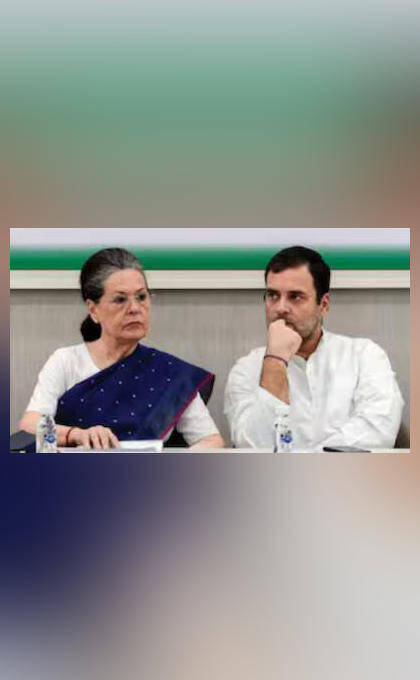
The Enforcement Directorate (ED) has taken a significant step in the ongoing National Herald case by approaching the Delhi High Court to challenge a trial court order. The trial court had earlier declined to take cognisance of the money laundering complaint filed against prominent Congress leaders, including Sonia Gandhi, Rahul Gandhi, and others. This move by the ED is a clear indication that the agency is determined to pursue the case and ensure that those accused of wrongdoing are held accountable.
At the heart of the National Herald case is the allegation that assets worth over ₹2,000 crore belonging to Associated Journals Limited (AJL) were wrongfully taken over. AJL is the company that publishes the National Herald newspaper, which was founded by Jawaharlal Nehru in 1938. The newspaper has a long history and was once a prominent voice in Indian politics. However, in recent years, it has been at the centre of a bitter controversy surrounding the acquisition of its assets by a company called Young Indian Private Limited (YI).
The ED’s case against the Gandhis and others revolves around the allegation that YI, a company in which Sonia and Rahul Gandhi have a significant stake, acquired a 99% stake in AJL through a dubious transaction. The agency claims that this transaction was, in fact, a sham and was designed to allow the Gandhis and their associates to gain control of AJL’s valuable assets, including prime real estate in Delhi and other parts of the country.
The trial court’s decision to decline cognisance of the ED’s complaint was seen as a significant setback for the agency. However, by challenging this order in the Delhi High Court, the ED is seeking to revive the case and ensure that the accused are brought to justice. The High Court’s decision will be closely watched, as it will have significant implications for the case and the future of the National Herald newspaper.
The National Herald case has been a long-running saga, with the ED’s investigation spanning several years. The agency has been probing the financial transactions surrounding the acquisition of AJL’s assets and has alleged that the Gandhis and their associates have been involved in a complex web of money laundering and other financial irregularities.
The case has also been the subject of intense political controversy, with the Congress party accusing the Bharatiya Janata Party (BJP) government of using the ED’s investigation as a means of targeting its leaders. The Congress has maintained that the case is a politically motivated witch-hunt and that the ED’s allegations are baseless.
Despite the political overtones, the ED’s investigation has uncovered some disturbing facts about the financial dealings surrounding the National Herald case. The agency has alleged that the Gandhis and their associates have been involved in a series of complex financial transactions, including the use of shell companies and other dubious entities to acquire and control AJL’s assets.
The ED’s case is based on the allegation that the acquisition of AJL’s assets by YI was a result of a series of dubious transactions, including the issuance of unsecured loans and the transfer of funds through shell companies. The agency claims that these transactions were designed to allow the Gandhis and their associates to gain control of AJL’s assets without actually paying for them.
The National Herald case has significant implications for Indian politics and the country’s financial system. The case highlights the need for greater transparency and accountability in financial dealings, particularly when it comes to the acquisition of valuable assets such as real estate and other properties.
The ED’s move to challenge the trial court’s order in the Delhi High Court is a significant development in the case. The agency’s determination to pursue the case and ensure that those accused of wrongdoing are held accountable is a positive step towards promoting transparency and accountability in Indian politics and finance.
As the case continues to unfold, it will be interesting to see how the Delhi High Court rules on the ED’s appeal. The court’s decision will have significant implications for the case and the future of the National Herald newspaper. One thing is certain, however: the National Herald case will continue to be a major talking point in Indian politics and finance for some time to come.
In conclusion, the ED’s move to challenge the trial court’s order in the Delhi High Court is a significant development in the National Herald case. The agency’s determination to pursue the case and ensure that those accused of wrongdoing are held accountable is a positive step towards promoting transparency and accountability in Indian politics and finance. As the case continues to unfold, it will be interesting to see how the Delhi High Court rules on the ED’s appeal.
About the Author