ED moves Delhi HC against trial court’s ruling in National Herald case
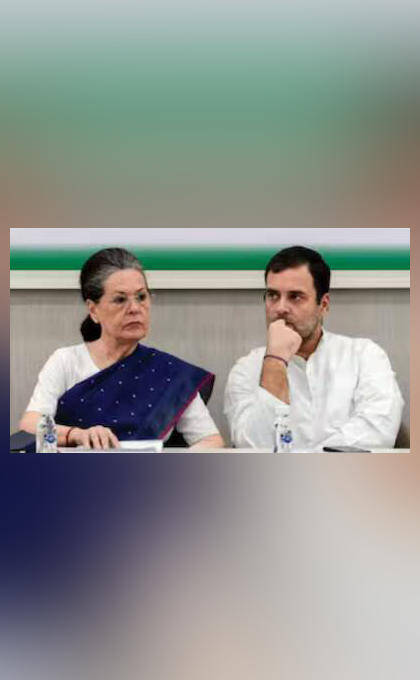
The Enforcement Directorate (ED) has taken a significant step in the National Herald case, approaching the Delhi High Court to challenge a trial court order that declined to take cognisance of the money laundering complaint against prominent Congress leaders, including Sonia Gandhi, Rahul Gandhi, and others. The ED’s move comes after the trial court’s ruling, which has been perceived as a setback for the agency’s investigation into the alleged money laundering and fraudulent activities surrounding the National Herald case.
At the heart of the controversy is the alleged wrongful takeover of assets worth over ₹2,000 crore belonging to Associated Journals Limited (AJL), a company that was originally founded by Jawaharlal Nehru in 1937. The ED has been investigating allegations that the Gandhi family, along with other Congress leaders, misused their positions to acquire control of AJL’s assets, including prime real estate in various cities across India.
The National Herald case has been a long-standing point of contention between the Congress party and the Bharatiya Janata Party (BJP), with the latter accusing the Gandhis of engaging in corrupt practices to amass wealth and assets. The case has also sparked a heated debate about the role of politics and power in shaping the Indian economy and the distribution of wealth.
The ED’s investigation into the National Herald case has been ongoing for several years, with the agency alleging that the Gandhis and other Congress leaders used a complex web of financial transactions and shell companies to launder money and acquire control of AJL’s assets. The agency has also accused the Gandhis of using their influence and positions to secure loans and other financial benefits for themselves and their associates.
The trial court’s ruling, which declined to take cognisance of the ED’s money laundering complaint, has been seen as a significant setback for the agency’s investigation. The court’s decision has been perceived as a vindication of the Gandhis and other Congress leaders, who have consistently maintained that the allegations against them are baseless and politically motivated.
However, the ED’s decision to approach the Delhi High Court challenging the trial court’s ruling suggests that the agency is determined to pursue the investigation and bring those responsible to justice. The ED’s move is likely to be seen as a significant escalation of the case, with the agency seeking to overturn the trial court’s decision and secure a fresh hearing into the allegations.
The National Herald case has significant implications for Indian politics and the economy. The case has raised important questions about the use of power and influence to amass wealth and assets, and the need for greater transparency and accountability in the country’s economic and political systems. The case has also highlighted the importance of a free and independent press in holding those in power to account and ensuring that the rule of law is upheld.
As the Delhi High Court hears the ED’s appeal, the country will be watching with great interest. The case has the potential to be a major turning point in Indian politics, with significant implications for the Congress party and its leaders. The case also raises important questions about the role of the ED and other investigative agencies in holding those in power to account and ensuring that the rule of law is upheld.
In conclusion, the ED’s decision to approach the Delhi High Court challenging the trial court’s ruling in the National Herald case is a significant development in the ongoing investigation. The case has significant implications for Indian politics and the economy, and raises important questions about the use of power and influence to amass wealth and assets. As the case unfolds, it will be important to watch for further developments and to ensure that the rule of law is upheld and that those responsible are held to account.
About the Author