ED moves Delhi HC against trial court’s ruling in National Herald case
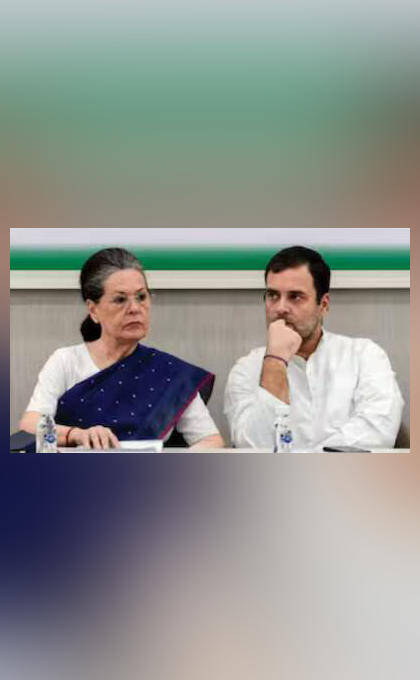
The Enforcement Directorate (ED) has taken a significant step in the National Herald case, approaching the Delhi High Court to challenge a trial court order that declined to take cognisance of the money laundering complaint against prominent Congress leaders, including Sonia Gandhi and Rahul Gandhi. The ED’s move comes after the trial court’s ruling, which has been perceived as a setback for the agency’s investigation into the alleged irregularities in the acquisition of assets worth over ₹2,000 crore belonging to Associated Journals Limited (AJL).
The National Herald case has been a long-standing controversy, with allegations of wrongdoing and impropriety levelled against the Gandhi family and other Congress leaders. The ED’s investigation into the matter has been ongoing, with the agency alleging that the assets of AJL were wrongfully taken over, resulting in a significant financial gain for the accused individuals. The ED’s complaint, filed under the Prevention of Money Laundering Act (PMLA), had sought to initiate proceedings against the accused, but the trial court’s order has put a roadblock in the agency’s path.
The trial court’s ruling, which declined to take cognisance of the ED’s complaint, has been challenged by the agency on the grounds that it was erroneous and not in line with the provisions of the PMLA. The ED has argued that the trial court failed to appreciate the evidence collected during the investigation, which allegedly establishes a clear case of money laundering against the accused individuals. The agency has also contended that the trial court’s order has undermined the ED’s authority to investigate and prosecute cases under the PMLA.
The National Herald case has its roots in the 1930s, when the newspaper was founded by Jawaharlal Nehru. Over the years, the newspaper’s ownership and control changed hands, with the AJL being formed in 1937 to manage the publication. However, in 2008, the AJL was on the verge of closure due to financial difficulties, when the Young Indian Private Limited (YI) was formed, with Sonia Gandhi and Rahul Gandhi as its major stakeholders. The YI then acquired a significant stake in the AJL, allegedly using funds from dubious sources.
The ED’s investigation into the National Herald case has revealed that the YI had acquired 99% of the AJL’s shares, valued at over ₹2,000 crore, for a mere ₹50 lakh. This transaction has been alleged to be a sham, with the ED contending that the YI had used funds from questionable sources to acquire the AJL’s assets. The agency has also alleged that the Gandhi family and other Congress leaders had used their influence and positions to facilitate the transfer of funds and assets, resulting in a significant financial gain for themselves.
The ED’s challenge to the trial court’s ruling in the Delhi High Court is likely to be a protracted and complex legal battle. The agency will have to establish that the trial court’s order was erroneous and that the evidence collected during the investigation establishes a clear case of money laundering against the accused individuals. The High Court’s decision will have significant implications for the National Herald case, with the possibility of the ED’s complaint being revived and the accused individuals facing prosecution under the PMLA.
In conclusion, the ED’s move to challenge the trial court’s ruling in the National Herald case is a significant development in the ongoing investigation. The agency’s determination to pursue the case and bring the accused individuals to justice is a testament to its commitment to combating financial crimes and protecting the integrity of the Indian economy. As the case unfolds, it will be interesting to see how the Delhi High Court rules on the ED’s challenge and whether the accused individuals will ultimately face prosecution under the PMLA.
About the Author