ED moves Delhi HC against trial court’s ruling in National Herald case
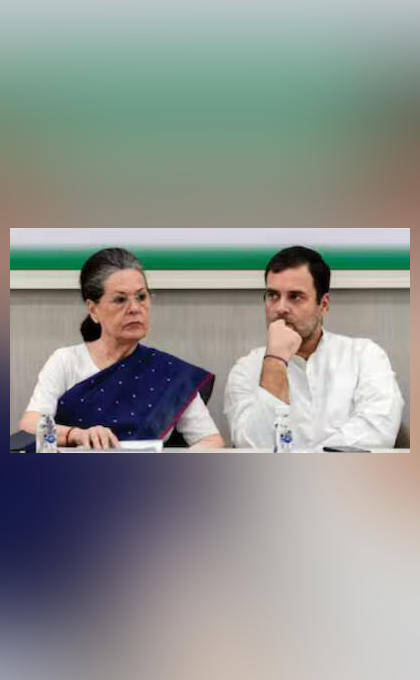
The Enforcement Directorate (ED) has taken a significant step in the National Herald case, approaching the Delhi High Court to challenge a trial court order. The order in question had declined to take cognisance of the money laundering complaint filed against prominent Congress leaders, including Sonia Gandhi, Rahul Gandhi, and others. This development marks a crucial turn in the long-standing case, which has been at the center of political and legal debates in India.
At the heart of the National Herald case is the allegation that assets worth over ₹2,000 crore belonging to Associated Journals Limited (AJL) were wrongfully taken over. AJL is the company that published the National Herald newspaper, which was founded by Jawaharlal Nehru in 1938. The newspaper played a significant role in India’s struggle for independence and was a beacon of nationalist thought and ideology. However, over the years, the newspaper’s operations ceased, and the company’s assets, including prime real estate in various cities, remained largely unused.
The controversy began when it was alleged that Young Indian Private Limited (YIPL), a company in which Sonia Gandhi and Rahul Gandhi have a majority stake, acquired a significant portion of AJL’s assets, essentially taking control of the valuable real estate owned by AJL. This acquisition was questioned, with allegations that YIPL had undervalued the assets and that the transaction was a means to launder money and acquire valuable properties at throwaway prices.
The Enforcement Directorate, tasked with investigating financial crimes, including money laundering, took up the case and filed a complaint against the Congress leaders and others involved in the transaction. However, in a significant setback to the ED, a trial court declined to take cognisance of the complaint, essentially ruling that there was not enough evidence to proceed with the prosecution.
The trial court’s ruling has now been challenged by the ED in the Delhi High Court, marking a new chapter in the legal battle. The ED’s move indicates its determination to pursue the case, believing that there are sufficient grounds to investigate the allegations of money laundering and wrongdoing in the acquisition of AJL’s assets by YIPL.
The National Herald case is not just a legal issue but has significant political undertones. The case has been a point of contention between the ruling Bharatiya Janata Party (BJP) and the Congress, with each side accusing the other of political vendetta. The BJP and its allies have alleged that the Gandhi family has been involved in corrupt practices, using their political influence to acquire wealth and assets. On the other hand, the Congress has countered that the case is a politically motivated witch-hunt, aimed at tarnishing the image of the Gandhi family and the party.
The legal battle in the National Herald case is complex and involves intricate details of corporate law, money laundering regulations, and political nuances. The ED will have to present robust evidence to support its allegations of money laundering and wrongdoing, while the defendants will argue that the transactions were legitimate and within the bounds of the law.
As the case moves to the Delhi High Court, it is expected that the legal proceedings will be closely watched by political observers, legal experts, and the general public. The outcome of the case could have significant implications, not just for the individuals involved but also for the political landscape of India.
In conclusion, the Enforcement Directorate’s decision to challenge the trial court’s ruling in the National Herald case in the Delhi High Court is a significant development. The case represents a complex interplay of legal, political, and financial issues, and its outcome could have far-reaching consequences. As the legal battle unfolds, it remains to be seen how the Delhi High Court will rule on the ED’s appeal and what implications this will have for the individuals and entities involved.
About the Author