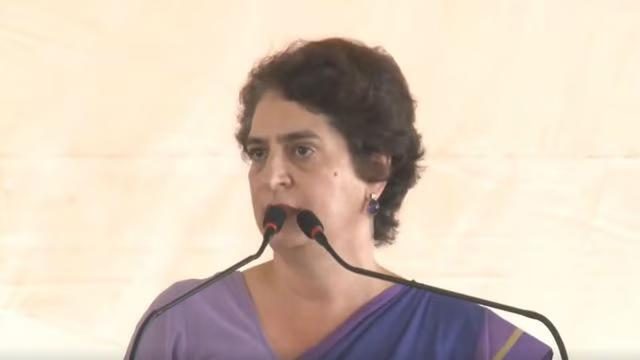
Drama is not discussing huge issues: Priyanka on PM’s drama remark
In a recent statement, Prime Minister Narendra Modi emphasized the need for “delivery, not drama” in Parliament. However, Congress MP Priyanka Gandhi Vadra has countered this comment, stating that drama is not about creating a spectacle, but rather about allowing discussions on issues that matter to the public. According to Priyanka, huge concerns such as the election situation, the Special Intensive roll, and Delhi’s severe air pollution demand open debate and discussion in Parliament.
Priyanka’s statement comes at a time when the country is facing numerous challenges that require urgent attention and action. The election situation, for instance, has been a subject of controversy, with many raising concerns about the integrity of the electoral process. The Special Intensive roll, which aims to revise electoral rolls, has also been a topic of debate, with some arguing that it could lead to the disenfranchisement of certain groups. Meanwhile, Delhi’s air pollution has reached alarming levels, posing serious health risks to its residents.
In this context, Priyanka’s call for open debate and discussion in Parliament is timely and relevant. She stressed that these issues demand attention and action from the government, and that Parliament is the appropriate forum for discussing them. “Let us discuss them. What is the Parliament for?” she asked, highlighting the importance of parliamentary debates in addressing public concerns.
Priyanka’s statement also underscores the need for accountability and transparency in governance. By emphasizing the importance of discussion and debate, she is highlighting the role of Parliament as a check on the executive and a forum for holding the government accountable. This is particularly important in a democracy, where the government is expected to be responsive to the needs and concerns of its citizens.
Moreover, Priyanka’s response to the Prime Minister’s comment also reflects the ongoing debate about the role of opposition in Parliament. While the Prime Minister may view opposition protests and debates as “drama,” Priyanka and other opposition leaders see them as essential to holding the government accountable and ensuring that the voices of citizens are heard.
In recent years, the Indian Parliament has witnessed numerous disruptions and protests, with opposition parties raising concerns about various issues, including economic policies, social justice, and environmental protection. While some may view these disruptions as “drama,” they are, in fact, an essential part of the democratic process, allowing opposition parties to highlight important issues and hold the government accountable.
Furthermore, Priyanka’s statement highlights the need for a more nuanced understanding of the concept of “drama” in the context of parliamentary debates. While the Prime Minister may see drama as a negative phenomenon, Priyanka and other opposition leaders view it as an essential part of the democratic process, allowing for the expression of diverse perspectives and the highlighting of important issues.
In conclusion, Priyanka Gandhi Vadra’s response to the Prime Minister’s comment on “drama” in Parliament highlights the importance of discussion, debate, and accountability in governance. By emphasizing the need for open debate on issues that matter to the public, she is underscoring the role of Parliament as a forum for addressing public concerns and holding the government accountable. As the country faces numerous challenges, it is essential that Parliament provides a platform for discussing and addressing these issues, rather than simply focusing on “delivery” without debate or discussion.
The ongoing debate about the role of opposition in Parliament and the concept of “drama” in parliamentary debates is likely to continue, with different perspectives and opinions being expressed. However, one thing is clear: in a democracy, the voices of citizens must be heard, and Parliament must provide a platform for discussing and addressing the issues that matter to them.
About the Author