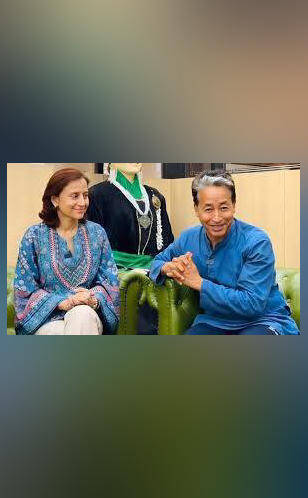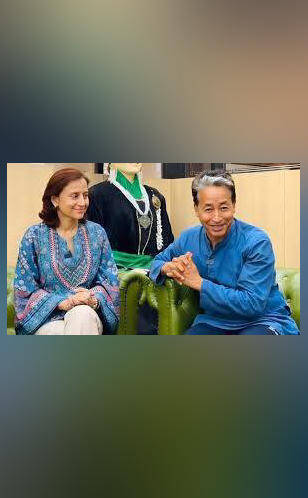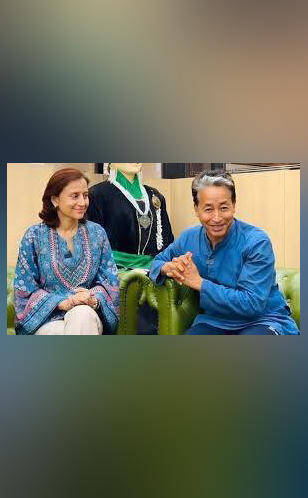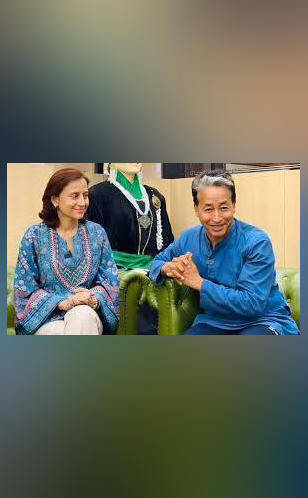
Didn’t feel like watching R-Day parade for 1st time: Wangchuk’s wife
As India celebrated its 74th Republic Day on January 26, a sense of patriotism and national pride filled the air. The annual Republic Day parade, held in the capital city of New Delhi, is a grand spectacle that showcases the country’s rich cultural heritage, military prowess, and technological advancements. However, this year, the wife of a prominent Indian citizen, Sonam Wangchuk, expressed a sentiment that was quite different from the usual enthusiasm and excitement.
Gitanjali, Wangchuk’s wife, took to social media to share her thoughts on the Republic Day parade, stating that she didn’t feel motivated to watch it for the first time. This statement is significant, given that she had never missed watching the parade before. Her words reflect a sense of disillusionment and disappointment, which is evident in her statement: “It’s sad, but I don’t know how much to feel proud of what’s showcased anymore! What to believe and what not to!”
Wangchuk, a renowned education reformer and innovator, has been in Jodhpur jail since September 2025. His imprisonment has sparked widespread debate and concern among his supporters and the general public. Gitanjali’s statement suggests that the current state of affairs in the country has left her feeling uncertain and disconnected from the national celebrations.
The Republic Day parade is an event that is typically marked by grandeur and pomp, with the country’s military, cultural, and social achievements on full display. The parade features elaborate floats, marching contingents, and flypasts by the Indian Air Force. However, this year, Gitanjali’s lack of enthusiasm for the event highlights the growing sense of discontent and disillusionment among some sections of Indian society.
Gitanjali’s statement also raises important questions about the nature of patriotism and national pride. Is it possible to feel proud of one’s country while also being critical of its government and institutions? Can one celebrate the country’s achievements while also acknowledging its shortcomings and injustices? These are complex and nuanced issues that require careful consideration and reflection.
In recent years, India has witnessed a growing trend of dissent and protest, with many citizens expressing their dissatisfaction with the government’s policies and actions. The imprisonment of Sonam Wangchuk, a respected and accomplished individual, has only added to the sense of disillusionment and frustration among many Indians.
As the country moves forward, it is essential to acknowledge and address the concerns and criticisms of its citizens. The government and institutions must work to restore the trust and faith of the people, by ensuring that the rights and freedoms of all citizens are protected and respected. Only then can the country truly celebrate its achievements and progress, with a sense of pride and unity.
In conclusion, Gitanjali’s statement serves as a reminder that the relationship between citizens and their country is complex and multifaceted. While it is natural to feel proud of one’s country and its achievements, it is also essential to acknowledge and address the challenges and injustices that exist. As India continues to evolve and grow, it is crucial to foster a sense of critical patriotism, one that balances pride and celebration with critique and reflection.
Source: https://x.com/GitanjaliAngmo/status/2015790605637747092
About the Author