Didn’t feel like watching R-Day parade for 1st time: Wangchuk’s wife
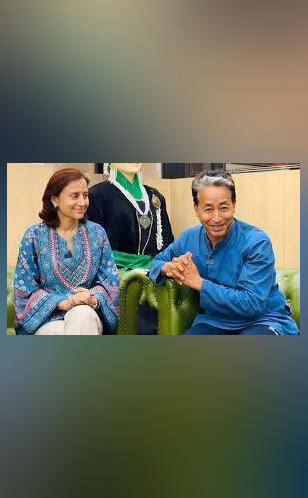
As India celebrated its 74th Republic Day on January 26, a sense of patriotism and national pride filled the hearts of millions of citizens across the country. However, for Gitanjali, the wife of renowned education reformer Sonam Wangchuk, this year’s celebrations were different. In a poignant statement, she revealed that she didn’t feel motivated to watch the Republic Day parade for the first time, a tradition she had never missed before.
Gitanjali’s words were laced with a sense of sadness and disillusionment, as she expressed her concerns about the current state of affairs in the country. “It’s sad, but I don’t know how much to feel proud of what’s showcased anymore! What to believe and what not to!” she said, highlighting the confusion and uncertainty that many Indians are feeling today. Her statement was a clear indication that the usual enthusiasm and excitement associated with Republic Day had given way to skepticism and doubt.
For those who may not be aware, Sonam Wangchuk, Gitanjali’s husband, has been in Jodhpur jail since September 2025. Wangchuk, who is known for his innovative approaches to education and his role in inspiring the movie “3 Idiots,” has been a vocal advocate for social and environmental causes. His imprisonment has sparked widespread outrage and concern among his supporters, who see it as an attempt to silence his voice and stifle dissent.
Gitanjali’s statement must be seen in the context of her husband’s imprisonment and the broader social and political climate in India today. The country is witnessing a growing trend of dissenting voices being suppressed, and the space for free speech and expression is shrinking. The government’s response to criticism and opposition has been increasingly heavy-handed, with many activists, journalists, and intellectuals facing harassment, arrests, and even imprisonment.
In this backdrop, Gitanjali’s reluctance to watch the Republic Day parade is not just a personal sentiment but also a reflection of the deep-seated concerns that many Indians are feeling today. The parade, which is meant to showcase the country’s military might, cultural diversity, and national pride, has become a symbol of the government’s attempts to project a sense of unity and cohesion. However, for many, this projection rings hollow, and the parade has become a reminder of the growing chasm between the government’s rhetoric and the reality on the ground.
Gitanjali’s statement also highlights the sense of disconnection that many Indians are feeling from the national narrative. The government’s emphasis on nationalism and patriotism has created a sense of exclusion, where those who question or criticize the government’s policies are seen as anti-national or unpatriotic. This has led to a situation where many citizens are feeling disillusioned and disconnected from the national discourse, and are struggling to find their place within the dominant narrative.
As India celebrates its Republic Day, it is essential to recognize the concerns and sentiments expressed by Gitanjali and many others like her. The country’s journey towards becoming a truly democratic and inclusive society is far from over, and there are many challenges that need to be addressed. The government must recognize the importance of free speech, dissent, and opposition, and create a space for diverse voices and perspectives to be heard.
In conclusion, Gitanjali’s statement is a powerful reminder of the need for critical reflection and introspection on the part of the government and citizens alike. As we celebrate our Republic Day, we must also acknowledge the shortcomings and challenges that our country faces, and work towards creating a more just, equitable, and inclusive society. Only then can we truly feel proud of what our country showcases, and believe in the values and principles that our Constitution enshrines.
News Source: https://x.com/GitanjaliAngmo/status/2015790605637747092
About the Author