Crocodile tears: Shivraj on Congress’ ‘MGNREGA Bachao’ protest
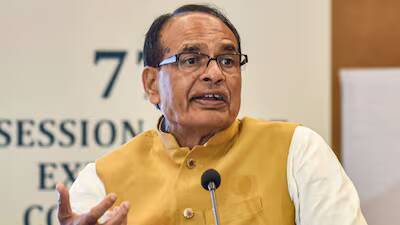
The Indian political landscape is no stranger to controversies and heated debates. The latest development in this regard is the accusation leveled by Union Minister Shivraj Singh Chouhan against the Congress party. Chouhan has accused the Congress of shedding “crocodile tears” over the replacement of the Mahatma Gandhi National Rural Employment Guarantee Act (MGNREGA) with the Vishwakarma Bhasha Gramin Rozgar Abhiyan (VB-G RAM G) Act. This accusation comes at a time when the Congress party has vowed to launch a nationwide protest, dubbed ‘MGNREGA Bachao’, starting from January 5.
At the heart of the controversy is the MGNREGA, a flagship program of the Indian government aimed at providing guaranteed employment to rural laborers. The program, which was enacted in 2005, provides a legal guarantee of 100 days of employment to rural laborers, thereby serving as a vital safety net for the most vulnerable sections of society. However, the recent announcement of replacing MGNREGA with the VB-G RAM G Act has sparked widespread criticism, with many arguing that the new legislation undermines the very principles of the original program.
The Congress party, in particular, has been vocal in its criticism of the move, with many of its leaders arguing that the replacement of MGNREGA is a betrayal of the trust of rural laborers. The party has vowed to launch a nationwide protest, starting from January 5, to highlight the issue and to pressurize the government to reconsider its decision. However, according to Union Minister Shivraj Singh Chouhan, the Congress’s clamor is purely political and lacks substance.
Chouhan’s remarks are significant, as they reflect the government’s stance on the issue. According to him, the Congress party’s criticism of the replacement of MGNREGA is nothing but a political gimmick, aimed at garnering support and sympathy from the rural electorate. He argued that the Congress party, during its time in power, had consistently reduced the budget for MGNREGA, thereby undermining the program’s effectiveness. This, Chouhan claimed, is a clear indication that the Congress party is not genuinely concerned about the welfare of rural laborers, but is rather using the issue as a political tool to further its own interests.
The accusation leveled by Chouhan against the Congress party is not without merit. A closer examination of the Congress party’s track record on MGNREGA reveals a mixed picture. While the party did enact the legislation in 2005, its implementation and funding have been inconsistent over the years. There have been instances where the party, during its time in power, has reduced the budget for MGNREGA, citing fiscal constraints and other priorities. This has led to criticism that the party is not committed to the program’s success and is using it as a political tool to further its own interests.
However, it is also important to note that the replacement of MGNREGA with the VB-G RAM G Act has raised concerns among many stakeholders, including rural laborers, activists, and academics. Many have argued that the new legislation undermines the principles of MGNREGA, including the guarantee of 100 days of employment and the provision of a minimum wage. The new legislation, according to critics, is vague and lacks clarity, which could lead to confusion and exploitation of rural laborers.
In conclusion, the controversy surrounding the replacement of MGNREGA with the VB-G RAM G Act is a complex issue, with multiple perspectives and interests at play. While the Congress party’s criticism of the move has been dismissed by Union Minister Shivraj Singh Chouhan as “crocodile tears”, it is clear that the issue is not just about politics, but also about the welfare and livelihoods of rural laborers. As the ‘MGNREGA Bachao’ protest gets underway, it remains to be seen how the government will respond to the criticism and whether it will reconsider its decision to replace MGNREGA.
The issue highlights the need for a nuanced and informed discussion about the role of MGNREGA in rural development and the implications of replacing it with a new legislation. It is essential to consider the perspectives of all stakeholders, including rural laborers, activists, and academics, to ensure that any changes to the program are in the best interests of those it is intended to benefit.
As the debate continues, one thing is clear: the fate of MGNREGA and the welfare of rural laborers are too important to be reduced to political posturing and point-scoring. It is time for a constructive and informed discussion about the issue, one that prioritizes the interests of rural laborers and the principles of social justice.
About the Author