Crocodile tears: Shivraj on Congress’ ‘MGNREGA Bachao’ protest
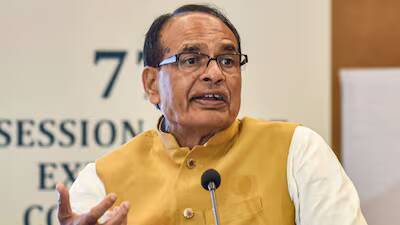
The recent announcement of the replacement of the Mahatma Gandhi National Rural Employment Guarantee Act (MGNREGA) with the Vishwakarma Bharat-Rural Action and Manpower Generation (VB-G RAM G) Act has sparked a heated debate in the country. The Congress party has been vocal in its criticism of the move, with many of its leaders accusing the government of trying to undermine the welfare of rural workers. However, Union Minister Shivraj Singh Chouhan has hit back at the Congress, accusing the party of shedding “crocodile tears” over the issue.
According to Chouhan, the Congress’s opposition to the replacement of MGNREGA is purely political and not driven by any genuine concern for the welfare of rural workers. “The Congress’s clamour is purely political…This is the same Congress that, from time to time, reduced the budget for MGNREGA,” he said. Chouhan’s remarks came after the Congress vowed to launch the ‘MGNREGA Bachao’ protest from January 5, in an effort to mobilize public opinion against the government’s decision.
The MGNREGA, which was introduced by the Congress-led UPA government in 2006, guarantees 100 days of wage employment per year to rural households. The scheme has been widely hailed as a vital social safety net for rural workers, providing them with a minimum level of economic security and protecting them from poverty and hunger. However, the government has argued that the scheme has been plagued by corruption, inefficiency, and mismanagement, and that the new VB-G RAM G Act will help to address these issues and provide more effective support to rural workers.
The Congress, however, has rejected this argument, claiming that the government’s decision to replace MGNREGA is driven by a desire to undermine the welfare of rural workers and to benefit corporate interests. The party has accused the government of trying to dismantle the social safety net provided by MGNREGA and to leave rural workers vulnerable to exploitation by employers.
Chouhan’s accusation that the Congress is shedding “crocodile tears” over the issue is likely to escalate the debate and to further polarize opinion on the matter. The Congress has long been a strong supporter of MGNREGA, and the party’s leaders have argued that the scheme has been a vital lifeline for rural workers. However, Chouhan’s remarks suggest that the government is not convinced by the Congress’s arguments and is determined to push ahead with its plans to replace MGNREGA with the VB-G RAM G Act.
The ‘MGNREGA Bachao’ protest, which is scheduled to begin on January 5, is likely to be a major test of the Congress’s ability to mobilize public opinion against the government’s decision. The party has vowed to take its campaign to the streets, with protests and rallies planned in towns and villages across the country. The government, however, appears to be unmoved by the Congress’s threats, with Chouhan and other ministers arguing that the replacement of MGNREGA is necessary to provide more effective support to rural workers.
As the debate over MGNREGA continues to rage, it is clear that the issue has become a major political flashpoint. The Congress is determined to make the issue a major plank of its campaign against the government, while the government is equally determined to push ahead with its plans to replace MGNREGA with the VB-G RAM G Act. The outcome of the debate is far from certain, but one thing is clear: the fate of MGNREGA and the welfare of rural workers hang in the balance.
The government’s decision to replace MGNREGA has also sparked concerns among rural workers, who fear that they will lose their livelihoods and their economic security. Many rural workers have come to rely on MGNREGA as a vital source of income, and the prospect of losing this support is a daunting one. The Congress has argued that the government’s decision will have a devastating impact on rural workers, who will be left without a safety net and vulnerable to poverty and hunger.
However, the government has argued that the VB-G RAM G Act will provide more effective support to rural workers, by providing them with skills training and other forms of support. The government has also argued that the new Act will help to address the issues of corruption and inefficiency that have plagued MGNREGA, and to ensure that rural workers receive the support they need.
As the debate over MGNREGA continues, it is clear that the issue is complex and multifaceted. While the Congress has argued that the government’s decision is driven by a desire to undermine the welfare of rural workers, the government has argued that the replacement of MGNREGA is necessary to provide more effective support to rural workers. The outcome of the debate is far from certain, but one thing is clear: the fate of MGNREGA and the welfare of rural workers hang in the balance.
In conclusion, the debate over MGNREGA is a complex and contentious issue, with both sides presenting strong arguments. While the Congress has accused the government of shedding “crocodile tears” over the issue, the government has argued that the replacement of MGNREGA is necessary to provide more effective support to rural workers. As the ‘MGNREGA Bachao’ protest gets underway, it is clear that the issue will continue to be a major political flashpoint, with the fate of MGNREGA and the welfare of rural workers hanging in the balance.
About the Author