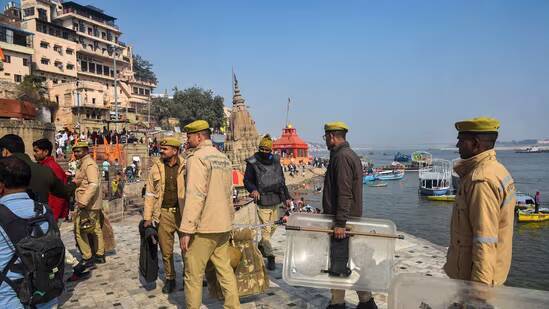
Broken idols brought from outside: UP CM Yogi amid row over Manikarnika Ghat renovation
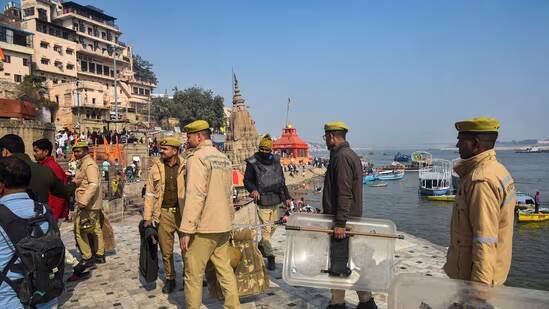
The redevelopment of Manikarnika Ghat in Varanasi has sparked a controversy, with opposition parties alleging that the government is destroying historic idols and statues in the process. However, Uttar Pradesh Chief Minister Yogi Adityanath has come out strongly in defense of his government, claiming that broken idols were brought from outside to malign India’s heritage.
Speaking on the issue, CM Yogi Adityanath stated, “It is being claimed that idols are being demolished. There cannot be a bigger lie than this.” He further emphasized that the renovation work at Manikarnika Ghat is being carried out with utmost care and respect for the cultural and historical significance of the site. The Chief Minister’s comments come amid a row over the alleged destruction of idols and statues, including the Rani Ahilyabai Holkar statue, which has been a topic of controversy.
The opposition has been quick to attack the government over the issue, with many leaders accusing the government of being insensitive to the cultural heritage of the country. The Rani Ahilyabai Holkar statue, in particular, has been a point of contention, with many alleging that it was destroyed during the renovation work. However, the government has maintained that the statue was not destroyed and that it is being relocated to a new site as part of the redevelopment plan.
The controversy surrounding the Manikarnika Ghat renovation has sparked a wider debate about the preservation of cultural heritage sites in India. Many have expressed concern that the government’s efforts to redevelop and modernize these sites are often carried out without proper consideration for their historical and cultural significance. The use of heavy machinery and construction equipment has been particularly criticized, with many arguing that it can cause irreparable damage to the delicate structures and artifacts found at these sites.
CM Yogi Adityanath’s claim that broken idols were brought from outside to malign India’s heritage has added a new dimension to the controversy. While the Chief Minister has not provided any evidence to support his claim, it has sparked a heated debate about the role of external factors in the controversy. Some have speculated that the broken idols may have been planted at the site to discredit the government and create a controversy.
The Manikarnika Ghat renovation is part of a larger effort by the government to redevelop and modernize the city of Varanasi. The project aims to improve the infrastructure and amenities at the ghat, while also preserving its cultural and historical significance. However, the controversy surrounding the project has highlighted the challenges of balancing development with preservation.
As the controversy continues to unfold, it is clear that the issue of preserving cultural heritage sites is a complex and sensitive one. While the government has a responsibility to develop and modernize these sites, it is equally important to ensure that their historical and cultural significance is preserved. The use of sensitive and sustainable development practices, combined with a deep understanding of the cultural and historical context of these sites, is essential to achieving this balance.
In conclusion, the controversy surrounding the Manikarnika Ghat renovation has highlighted the need for a nuanced and sensitive approach to preserving cultural heritage sites in India. While the government has a role to play in developing and modernizing these sites, it is equally important to ensure that their historical and cultural significance is preserved. As the debate continues, it is hoped that a solution can be found that balances development with preservation, and ensures that the cultural heritage of India is protected for future generations.
Source: https://x.com/PTI_News/status/2012458022187192360
About the Author