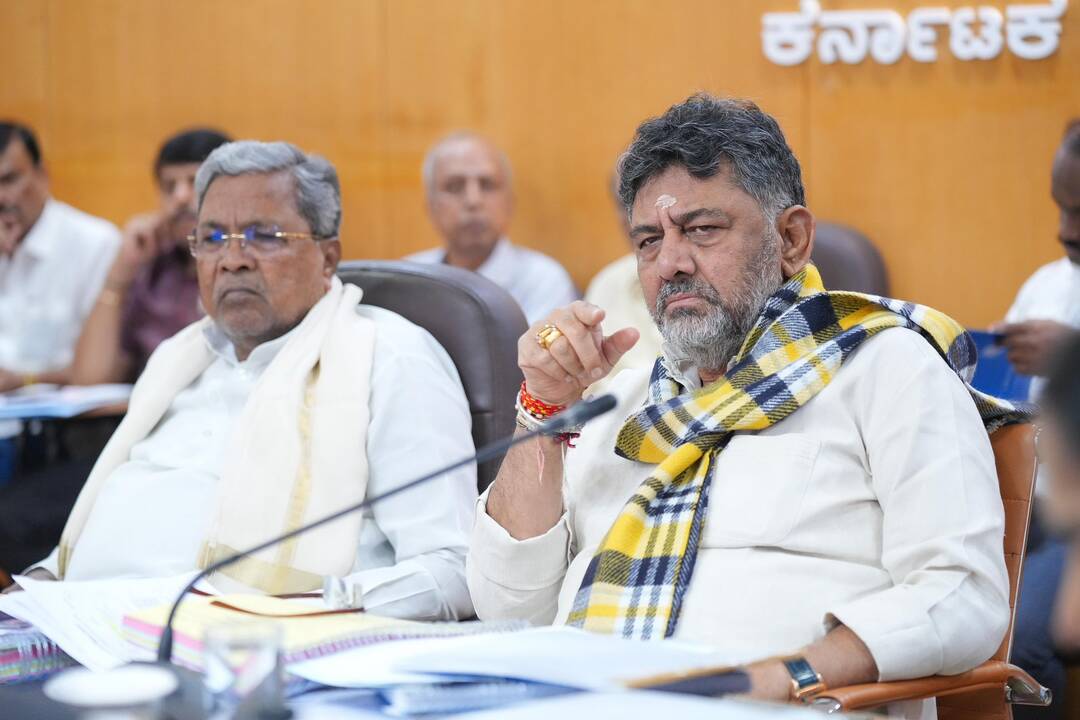
BJP twisting my comments: K’taka Dy CM on ‘We don’t want Keralites’ remark
The recent controversy surrounding Karnataka Deputy Chief Minister DK Shivakumar’s comment on Keralites has taken a new turn. On Tuesday, Shivakumar clarified his statement, saying that it was not aimed at the people of Kerala, but rather at the Kerala government’s interference in the Kogilu demolition drive. The Deputy Chief Minister accused the Kerala BJP chief, Rajeev Chandrasekhar, of twisting his words and misleading the public.
The controversy began when Shivakumar made a statement saying “we don’t want Keralites” in the context of the Kogilu demolition drive. The statement was quickly picked up by the media and sparked a heated debate, with many accusing Shivakumar of being anti-Keralite. However, the Deputy Chief Minister has now come out to clarify his statement, saying that it was taken out of context and misrepresented by the BJP.
According to Shivakumar, the statement was aimed at the Kerala government’s interference in the Kogilu demolition drive, which is a matter of internal affairs of Karnataka. He said that the Kerala government had no business interfering in the matter, and that the people of Karnataka would not tolerate such interference. Shivakumar emphasized that his statement was not directed at the people of Kerala, but rather at the state government’s actions.
Shivakumar also stressed his cordial ties with the people of Kerala, saying that he respects them and values their contributions to Karnataka’s economy and society. He pointed out that many Keralites have made Karnataka their home, and have been an integral part of the state’s growth and development. The Deputy Chief Minister said that he would continue to maintain good relations with the people of Kerala and would even campaign in the upcoming Kerala polls.
The controversy has once again highlighted the sensitive nature of inter-state relations in India. The country is a diverse and complex nation, with different states having their own unique cultures, languages, and traditions. While this diversity is a strength, it can also lead to misunderstandings and conflicts. The Kogilu demolition drive is a case in point, with the Karnataka government’s actions being seen as an attack on the livelihoods of Keralites who have settled in the state.
The BJP has been quick to capitalize on the controversy, with Rajeev Chandrasekhar accusing Shivakumar of being anti-Keralite. However, Shivakumar has hit back, saying that the BJP is twisting his words and misleading the public. The Deputy Chief Minister has also accused the BJP of trying to create a communal divide between the people of Karnataka and Kerala.
The controversy has also raised questions about the role of politicians in shaping public discourse. While politicians have a responsibility to represent the interests of their constituents, they also have a duty to promote harmony and understanding between different communities. The Kogilu demolition drive is a complex issue, with multiple stakeholders and interests involved. Politicians like Shivakumar and Chandrasekhar have a responsibility to approach the issue with sensitivity and nuance, rather than resorting to divisive rhetoric.
In conclusion, the controversy surrounding Shivakumar’s comment on Keralites is a complex issue with multiple layers. While the statement was initially seen as anti-Keralite, the Deputy Chief Minister has clarified that it was aimed at the Kerala government’s interference in the Kogilu demolition drive. The controversy has highlighted the sensitive nature of inter-state relations in India, and the need for politicians to approach such issues with sensitivity and nuance. As the controversy continues to unfold, it remains to be seen how the people of Karnataka and Kerala will respond to the competing narratives of the BJP and the Karnataka government.
About the Author