BJP assessing ‘what went wrong’ despite sweeping BMC elections: Report
The Bharatiya Janata Party (BJP) has emerged as the clear winner in the recently concluded Brihanmumbai Municipal Corporation (BMC) elections, winning 89 seats, the highest number of seats a party has won alone since 2002. However, despite this impressive performance, the party is reportedly assessing what went wrong, as it had set its sights on winning 110 seats. According to a report by Hindustan Times, BJP leaders believe that the reasons for this shortfall could be attributed to a lack of coordination within the Mumbai unit and the party’s inability to effectively counter the “Mumbai pride” pitch of the Thackeray cousins.
The BMC elections, which were held on February 21, saw the BJP making significant gains, with the party winning 89 seats, followed by the Shiv Sena, which won 84 seats. The Congress and the Nationalist Congress Party (NCP) performed poorly, winning 31 and 9 seats respectively. Despite the BJP’s impressive performance, the party’s state leadership is reportedly unhappy with the outcome, as it had hoped to win a clear majority of 110 seats.
According to BJP leaders, one of the main reasons for the party’s failure to reach its target was a lack of coordination within the Mumbai unit. The party’s Mumbai unit has been plagued by infighting and factionalism, which is believed to have affected the party’s performance in the elections. The lack of coordination and communication between different factions of the party is said to have resulted in a lackluster campaign, which failed to effectively reach out to voters and counter the opposition’s narrative.
Another reason cited by BJP leaders for the party’s shortfall is its inability to effectively counter the “Mumbai pride” pitch of the Thackeray cousins. The Thackeray cousins, Aaditya and Uddhav, had launched a high-profile campaign, which emphasized the need to protect Mumbai’s identity and culture. The BJP, on the other hand, had focused on issues such as corruption and governance, which failed to resonate with voters in the same way. The party’s inability to counter the Thackeray cousins’ narrative is believed to have cost it dearly, as many voters were swayed by the emotional appeal of the “Mumbai pride” pitch.
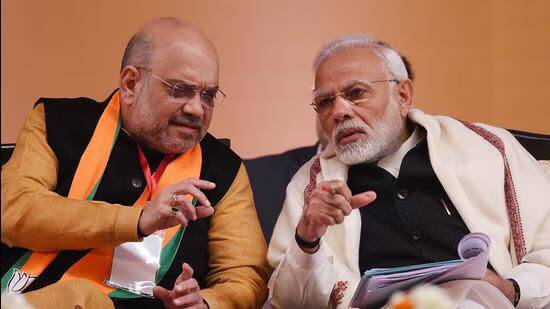
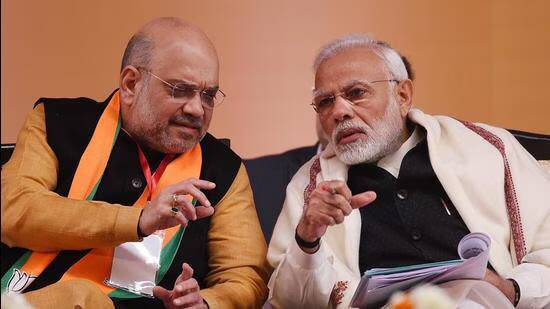
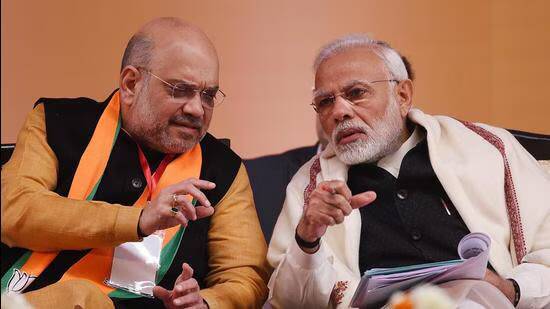
The BJP’s performance in the BMC elections is also being seen as a reflection of the party’s national leadership’s influence on local politics. The party’s national leadership, including Prime Minister Narendra Modi and BJP president Amit Shah, had campaigned extensively in Mumbai, highlighting the party’s development agenda and attacking the opposition for its alleged corruption and misgovernance. However, despite the high-profile campaign, the party was unable to fully capitalize on the momentum, due to the lack of coordination and effective messaging at the local level.
The outcome of the BMC elections has significant implications for the BJP’s national ambitions. The party has been trying to expand its footprint in Maharashtra, which is a crucial state in the country’s politics. The BJP’s performance in the BMC elections is being seen as a test of its ability to win elections in urban areas, where the party has traditionally been weak. While the party’s performance in the BMC elections is a positive sign, the fact that it was unable to reach its target of 110 seats is a cause for concern.
In conclusion, the BJP’s performance in the BMC elections is a mixed bag. While the party has emerged as the clear winner, its failure to reach its target of 110 seats is a cause for concern. The party’s state leadership is reportedly unhappy with the outcome, and an assessment of what went wrong is underway. The reasons for the party’s shortfall are believed to be a lack of coordination within the Mumbai unit and the party’s inability to effectively counter the “Mumbai pride” pitch of the Thackeray cousins. As the BJP looks to build on its performance in the BMC elections, it will need to address these issues and develop a more effective strategy for winning elections in urban areas.
About the Author