$700 bn total imports, $500 bn from US alone?: Tharoor on trade deal
The recent trade deal between India and the United States has sparked a heated debate among politicians, economists, and trade experts. While announcing the trade deal, US President Donald Trump claimed that Prime Minister Narendra Modi committed to buying “$500 billion worth of US energy, technology, agricultural, coal, and many other products”. This statement has raised eyebrows, with many questioning the feasibility and implications of such a massive commitment.
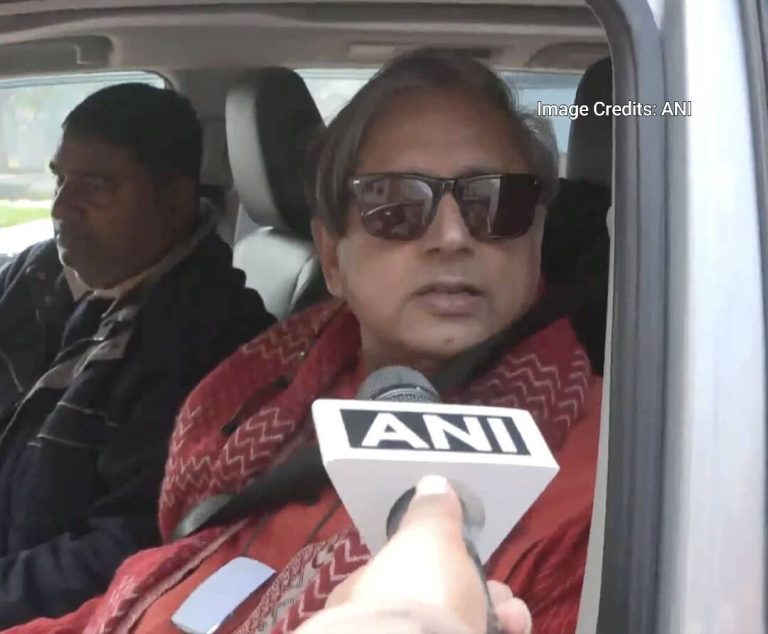
Seeking clarity on this, Congress MP Shashi Tharoor expressed his concerns, saying, “Our entire import bill is $700 billion, so are we going to stop buying from every other country?” Tharoor’s statement highlights the potential risks and challenges associated with such a large trade commitment. In this blog post, we will delve into the details of the trade deal, examine the implications of Tharoor’s statement, and explore the potential consequences of India’s trade relations with the United States.
Firstly, let’s examine the numbers. India’s total import bill is approximately $700 billion, which is a significant amount. If the country were to commit to buying $500 billion worth of products from the United States alone, it would account for over 70% of its total import bill. This raises questions about the viability of such a large commitment and the potential impact on India’s trade relations with other countries.
Tharoor’s statement also highlights the potential risks of over-reliance on a single trade partner. If India were to stop buying from every other country, it would not only harm its relationships with other nations but also limit its access to a diverse range of products and technologies. Moreover, it would also make the country vulnerable to fluctuations in the US economy and trade policies.
Another important aspect to consider is the impact on India’s domestic industries. If the country were to import $500 billion worth of products from the United States, it could potentially harm its own domestic manufacturing sector. Indian industries, such as textiles, pharmaceuticals, and automotive, could suffer significantly if they are unable to compete with cheaper imports from the United States.
Furthermore, the trade deal also raises questions about the terms and conditions of the agreement. What are the conditions under which India has agreed to buy $500 billion worth of products from the United States? Are there any concessions or incentives that India has secured in return? These are important questions that need to be answered to ensure that the trade deal is fair and beneficial to both countries.
It is also worth noting that the trade deal is not just about buying and selling products; it is also about the geopolitical implications of such an agreement. The United States has been seeking to strengthen its ties with India as a counterbalance to China’s growing influence in the region. The trade deal could be seen as a strategic move by the United States to deepen its economic and political ties with India.
In conclusion, the trade deal between India and the United States has sparked a heated debate about the implications of such a massive commitment. Tharoor’s statement highlights the potential risks and challenges associated with over-reliance on a single trade partner. While the trade deal may have its benefits, it is essential to carefully examine the terms and conditions of the agreement to ensure that it is fair and beneficial to both countries.
As India navigates its trade relations with the United States, it is crucial to consider the potential consequences of such a large commitment. The country must ensure that its trade policies are aligned with its domestic priorities and that its industries are protected from unfair competition. Moreover, India must also diversify its trade relationships with other countries to avoid over-reliance on a single partner.
In the end, the success of the trade deal will depend on the ability of both countries to negotiate a fair and mutually beneficial agreement. As the details of the trade deal become clearer, it is essential to monitor the developments closely and ensure that the agreement serves the interests of both India and the United States.
News source: https://x.com/ANI/status/2018584610888937726
About the Author