$700 bn total imports, $500 bn from US alone?: Tharoor on trade deal
The recent trade deal between India and the United States has sparked a heated debate, with many questioning the feasibility of the claims made by US President Donald Trump. While announcing the deal, Trump stated that Prime Minister Narendra Modi had committed to buying “$500 billion worth of US energy, technology, agricultural, coal, and many other products”. This statement has raised eyebrows, with many wondering if India is planning to drastically shift its import dynamics in favor of the US.
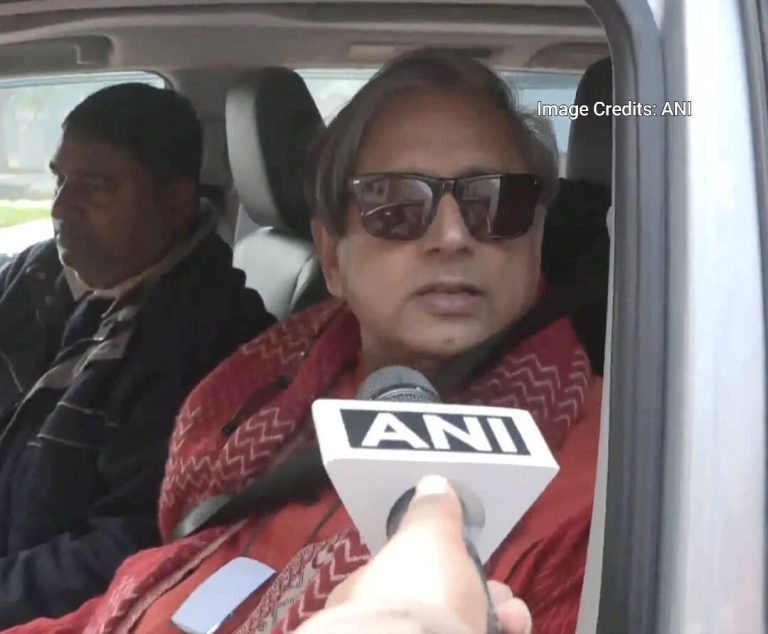
Congress MP Shashi Tharoor was among the first to seek clarity on this matter, posing a pertinent question that has left many scratching their heads. “Our entire import bill is $700 billion, so are we going to stop buying from every other country?” Tharoor asked, highlighting the improbability of India’s import bill being dominated by a single country, even if it is a major economic power like the US.
To put things into perspective, India’s total imports for the fiscal year 2020-21 stood at approximately $700 billion. This includes a diverse range of products, from crude oil and petroleum products to electronics, machinery, and agricultural commodities. The idea that half of this amount, or $500 billion, would be allocated to imports from the US alone seems unrealistic, to say the least.
Tharoor’s concern is not unfounded, as such a drastic shift in India’s import patterns would have significant implications for the country’s trade relationships with other nations. India has long been a proponent of multilateral trade, with a diverse range of trade agreements and partnerships with countries across the globe. To suddenly prioritize the US over other trading partners would not only be a departure from this approach but also potentially harm India’s economic interests.
Furthermore, it is worth examining the products that Trump mentioned in his statement. Energy, technology, agricultural products, coal, and other goods are all significant components of India’s import bill. However, the idea that India would commit to buying $500 billion worth of these products from the US alone is questionable. For instance, India is one of the largest importers of crude oil, with the majority of its imports coming from countries like Saudi Arabia, Iraq, and the United Arab Emirates. Would India really stop buying oil from these countries and instead rely solely on the US?
Similarly, India’s agricultural imports are also diverse, with the country relying on a range of countries for products like pulses, edible oils, and wheat. Would India really commit to buying $500 billion worth of agricultural products from the US, potentially disrupting its relationships with other agricultural exporters?
The answer to these questions lies in the details of the trade deal, which have not been made public yet. It is possible that Trump’s statement was exaggerated or taken out of context, and that the actual terms of the deal are more nuanced. However, until more information is available, it is difficult to say for certain what India’s commitments are and how they will impact the country’s trade relationships.
In conclusion, Tharoor’s question highlights the need for clarity on the trade deal between India and the US. While the deal has been touted as a major breakthrough, the claims made by Trump have raised more questions than answers. As India navigates its trade relationships with the US and other countries, it is essential to prioritize transparency and ensure that the country’s economic interests are protected.
For now, we can only speculate about the implications of this deal and how it will impact India’s import dynamics. One thing is certain, however: the devil is in the details, and it is essential to carefully examine the terms of the deal before making any conclusions.
News source: https://x.com/ANI/status/2018584610888937726
About the Author