Why Mumbai’s Air is Getting Worse?
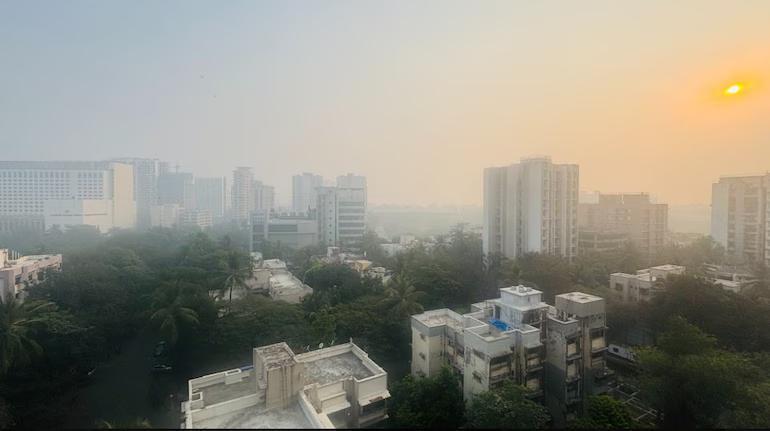
Mumbai, the financial capital of India, has been grappling with deteriorating air quality in recent days. The city’s Air Quality Index (AQI) has witnessed a significant spike, leaving residents concerned about the impact on their health and wellbeing. The sudden deterioration in air quality can be attributed to a combination of local pollution sources and seasonal weather shifts. In this blog post, we will delve into the factors contributing to the worsening air quality in Mumbai and explore potential solutions to mitigate this issue.
One of the primary factors contributing to the poor air quality in Mumbai is the surge in roadwork across the city. After the monsoon season, road construction and repair activities have picked up pace, resulting in higher levels of road dust in the air. The increased dust particles in the air are not only a nuisance but also a significant health hazard, particularly for people with respiratory issues. The road dust is rich in particulate matter (PM), which can cause a range of health problems, including asthma, lung cancer, and cardiovascular disease.
Another major factor contributing to the poor air quality in Mumbai is the rapid pace of construction across the city. The construction sector is a significant source of pollution, with activities such as excavation, drilling, and demolition releasing large amounts of dust and debris into the air. The construction boom in Mumbai has led to an increase in the number of construction sites, resulting in higher levels of air pollution. Furthermore, the lack of effective dust control measures at construction sites exacerbates the problem, allowing large amounts of dust to escape into the atmosphere.
Industrial fumes from heavy industries and refineries along the eastern corridor of Mumbai are also a significant contributor to the city’s poor air quality. The eastern corridor is home to several large-scale industrial establishments, including oil refineries, power plants, and chemical factories. These industries release large amounts of pollutants, including particulate matter, nitrogen oxides, and volatile organic compounds, into the air. The pollutants from these industries can travel long distances, affecting not only the surrounding areas but also the entire city.
The seasonal weather shifts also play a significant role in the deterioration of Mumbai’s air quality. During the winter months, the city experiences a temperature inversion, where a layer of cool air is trapped under a layer of warm air. This temperature inversion prevents the pollutants from escaping, allowing them to accumulate near the ground and worsen the air quality. Additionally, the wind patterns during the winter months are often calm, which reduces the dispersion of pollutants and allows them to build up in the atmosphere.
The poor air quality in Mumbai has significant implications for the health and wellbeing of its residents. Exposure to poor air quality can cause a range of health problems, including respiratory issues, cardiovascular disease, and even cancer. Children, older adults, and people with pre-existing medical conditions are particularly vulnerable to the effects of air pollution. Furthermore, the poor air quality can also have economic implications, including reduced productivity, increased healthcare costs, and decreased quality of life.
So, what can be done to mitigate the poor air quality in Mumbai? Firstly, the authorities must take immediate action to reduce the levels of road dust in the air. This can be achieved by implementing effective dust control measures, such as sprinkling water on construction sites and using dust-suppressing chemicals. Additionally, the authorities must ensure that construction sites are complying with environmental regulations and taking necessary measures to minimize dust emissions.
Secondly, the authorities must take steps to reduce the pollution from industrial sources. This can be achieved by implementing stricter emissions standards, increasing the use of clean energy sources, and promoting the use of pollution-control technologies. Furthermore, the authorities must ensure that industries are complying with environmental regulations and taking necessary measures to minimize their environmental impact.
Finally, the residents of Mumbai must also play a role in mitigating the poor air quality. This can be achieved by reducing their own contribution to air pollution, such as using public transport, carpooling, or using eco-friendly modes of transport. Additionally, residents can also take steps to reduce their exposure to poor air quality, such as wearing masks, staying indoors during peak pollution hours, and using air purifiers.
In conclusion, the poor air quality in Mumbai is a complex issue that requires a multi-faceted approach to resolve. The surge in roadwork, construction, and industrial activities, combined with seasonal weather shifts, has contributed to the deterioration of the city’s air quality. To mitigate this issue, the authorities must take immediate action to reduce pollution from various sources, while residents must also take steps to reduce their own contribution to air pollution and minimize their exposure to poor air quality.
About the Author