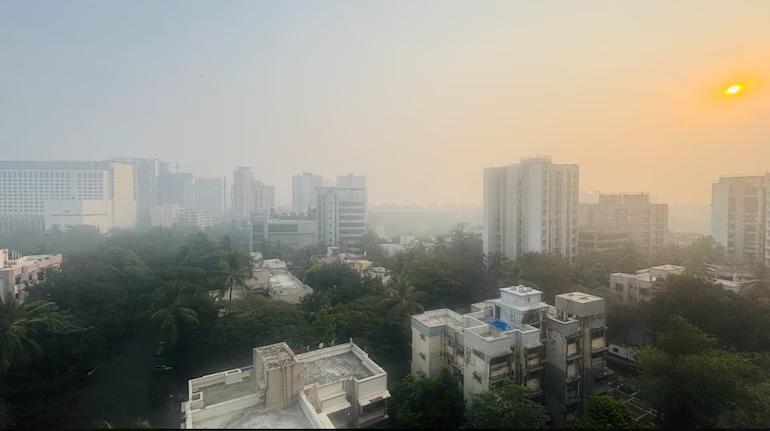
Why Mumbai’s Air is Getting Worse?
Mumbai, the financial capital of India, is known for its fast-paced lifestyle, bustling streets, and iconic landmarks. However, in recent days, the city has been grappling with a severe air pollution crisis. The air quality in Mumbai has deteriorated significantly, leaving citizens worried about their health and well-being. According to recent reports, the city’s Air Quality Index (AQI) has reached alarming levels, making it one of the most polluted cities in the country.
The sudden spike in air pollution can be attributed to a combination of local pollution sources and seasonal weather shifts. One of the primary factors contributing to the poor air quality is the increase in roadwork across the city. After the monsoon season, road construction and repair activities have picked up pace, resulting in higher levels of road dust in the air. This, in turn, has led to a significant increase in particulate matter (PM) in the air, making it difficult for citizens to breathe.
Another major factor contributing to the poor air quality is the surge in construction activities across the city. Mumbai is witnessing a construction boom, with numerous high-rise buildings, infrastructure projects, and redevelopment initiatives underway. While these projects are expected to transform the city’s landscape and boost economic growth, they are also generating massive amounts of dust, debris, and other pollutants. The construction sector is a significant contributor to air pollution, and the lack of effective dust control measures has exacerbated the problem.
Industrial fumes from heavy industries and refineries along the eastern corridor are also a major contributor to the city’s poor air quality. The eastern corridor of Mumbai is home to several large-scale industrial units, including oil refineries, chemical plants, and manufacturing facilities. These industries release massive amounts of pollutants, including particulate matter, nitrogen oxides, and volatile organic compounds (VOCs), into the air, further deteriorating the city’s air quality.
The seasonal weather shifts have also played a significant role in the recent spike in air pollution. During the winter months, the city experiences a temperature inversion, where a layer of cool air is trapped under a layer of warm air, preventing pollutants from escaping. This phenomenon, combined with the lack of strong winds, has led to a buildup of pollutants in the air, making the city’s air quality even worse.
The consequences of poor air quality are severe and far-reaching. Exposure to polluted air can lead to a range of health problems, including respiratory diseases, cardiovascular issues, and even cancer. Children, older adults, and people with pre-existing medical conditions are particularly vulnerable to the effects of air pollution. Furthermore, poor air quality can also have significant economic and social impacts, including reduced productivity, increased healthcare costs, and decreased quality of life.
So, what can be done to address the issue of poor air quality in Mumbai? Firstly, the city’s authorities must take immediate action to reduce the levels of road dust and construction-related pollution. This can be achieved by implementing effective dust control measures, such as using water sprinklers, covering construction sites, and enforcing strict regulations on construction activities.
Secondly, the government must take steps to reduce industrial pollution by enforcing stricter emission norms and encouraging the adoption of cleaner technologies. This can include promoting the use of renewable energy sources, such as solar and wind power, and providing incentives for industries to invest in pollution control equipment.
Thirdly, the city’s citizens must also play a role in reducing air pollution. This can be achieved by adopting eco-friendly habits, such as using public transport, carpooling, or cycling, and reducing energy consumption. Citizens can also participate in awareness campaigns and advocacy initiatives to push for policy changes and stricter regulations on pollution.
In conclusion, the recent spike in air pollution in Mumbai is a wake-up call for the city’s authorities, citizens, and industries. The causes of poor air quality are complex and multifaceted, but with collective action and a commitment to sustainability, it is possible to improve the city’s air quality and create a healthier, more livable environment for all.
About the Author