Why Mumbai’s Air is Getting Worse?
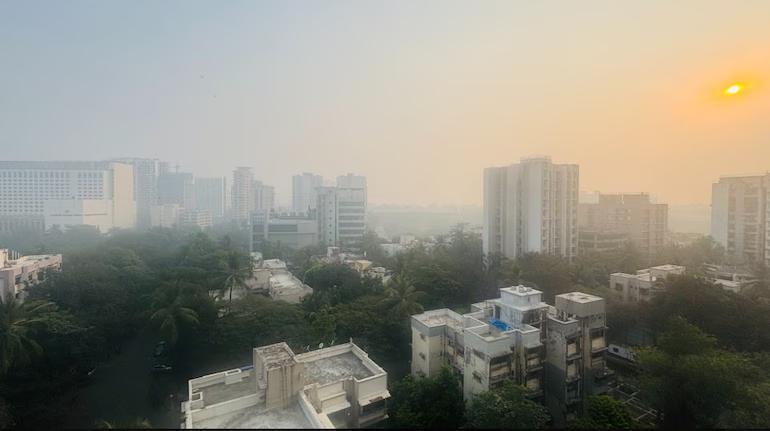
Mumbai, the financial capital of India, has been grappling with a severe air pollution crisis in recent days. The city’s air quality has deteriorated significantly, leaving its residents gasping for breath. The sudden spike in air pollution has been attributed to a combination of local pollution sources and seasonal weather shifts. In this blog post, we will delve into the reasons behind the worsening air quality in Mumbai and explore the factors contributing to this crisis.
One of the primary reasons for the poor air quality in Mumbai is the increase in roadwork activities after the monsoon season. As the rains subsided, construction and repair work on roads picked up pace, resulting in higher levels of road dust across the city. The fine particles and dust emitted during roadwork activities are a significant contributor to air pollution, causing respiratory problems and other health issues for the city’s inhabitants. The Mumbai Metropolitan Region Development Authority (MMRDA) and the Brihanmumbai Municipal Corporation (BMC) have been undertaking various infrastructure projects, including road widening, flyover construction, and Metro work, which have led to an increase in dust pollution.
Another major factor contributing to the poor air quality in Mumbai is the surge in construction activities across the city. The construction sector is a significant source of air pollution, with activities such as excavation, drilling, and demolition releasing large amounts of particulate matter, including PM2.5 and PM10, into the atmosphere. These particles are known to cause respiratory problems, cardiovascular disease, and even cancer. The construction boom in Mumbai has led to an increase in the number of building sites, resulting in a significant rise in air pollution levels.
Industrial fumes from heavy industries and refineries along the eastern corridor of Mumbai are also a major contributor to the city’s poor air quality. The eastern part of the city is home to several industrial estates, including the Tata Oil Mills, the Hindustan Petroleum refinery, and the Bharat Petroleum refinery, among others. These industries emit large amounts of toxic gases, including sulfur dioxide, nitrogen oxides, and particulate matter, which contribute significantly to air pollution. The industrial activities in this region have been ongoing for decades, but the lack of effective pollution control measures has exacerbated the problem.
In addition to these local pollution sources, seasonal weather shifts have also played a role in the worsening air quality in Mumbai. During the winter months, the city experiences a temperature inversion, where a layer of cool air is trapped under a layer of warm air, preventing the pollutants from escaping. This phenomenon, combined with the lack of wind, leads to a concentration of pollutants in the air, making it difficult for the city’s residents to breathe.
The air quality in Mumbai has been monitored by various agencies, including the System of Air Quality and Weather Forecasting and Research (SAFAR), which has reported extremely high levels of particulate matter, including PM2.5 and PM10, in the city’s air. The Air Quality Index (AQI) has been consistently high, often exceeding the safe limits set by the Central Pollution Control Board (CPCB). The AQI is a measure of the level of air pollution in a given area, and it takes into account the concentrations of various pollutants, including particulate matter, nitrogen dioxide, ozone, and carbon monoxide.
The poor air quality in Mumbai has significant implications for the health and well-being of its residents. Exposure to high levels of air pollution can lead to respiratory problems, such as asthma, bronchitis, and chronic obstructive pulmonary disease (COPD). It can also increase the risk of cardiovascular disease, stroke, and even cancer. Children, older adults, and people with pre-existing medical conditions are particularly vulnerable to the effects of air pollution.
To address the air pollution crisis in Mumbai, the city’s authorities need to take immediate action. Some of the measures that can be taken include:
- Implementing strict pollution control measures, such as installing air pollution control devices in industries and construction sites
- Enhancing public transportation and promoting the use of electric and hybrid vehicles
- Increasing the number of green spaces and parks in the city to absorb pollutants
- Implementing a comprehensive waste management system to reduce waste burning and dumping
- Conducting regular monitoring of air quality and taking prompt action when pollution levels exceed safe limits
In conclusion, the air quality in Mumbai has deteriorated significantly due to a combination of local pollution sources and seasonal weather shifts. Roadwork, construction activities, and industrial fumes from heavy industries and refineries are major contributors to the city’s poor air quality. To address this crisis, the city’s authorities need to take immediate action to implement pollution control measures, promote sustainable transportation, and increase green spaces. It is essential for the residents of Mumbai to come together to demand action from their authorities and to take individual steps to reduce their contribution to air pollution.
About the Author