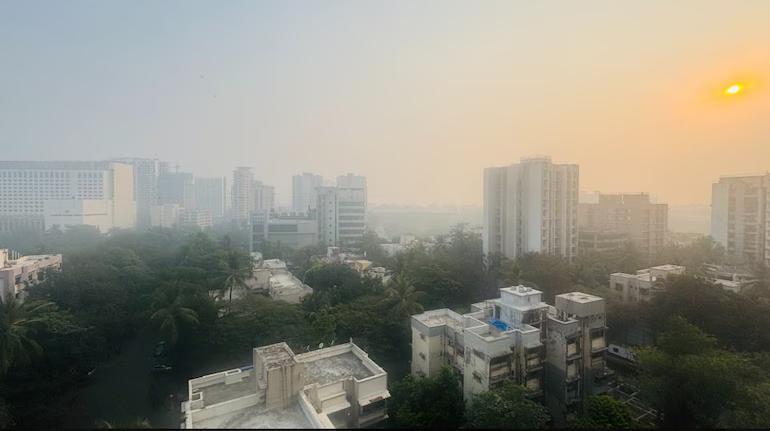
Why Mumbai’s air is getting worse?
Mumbai, the financial capital of India, is known for its vibrant culture, bustling streets, and iconic landmarks. However, in recent days, the city has been grappling with a severe air pollution crisis. The air quality in Mumbai has deteriorated significantly, leaving residents gasping for breath. According to recent reports, the city’s Air Quality Index (AQI) has reached alarming levels, posing a significant threat to the health and well-being of its citizens.
So, what’s behind the sudden decline in Mumbai’s air quality? The answer lies in a combination of local pollution sources and seasonal weather shifts. One of the primary reasons is the surge in roadwork across the city, which has led to a significant increase in road-dust levels. After the monsoon, roadwork picked up, and construction activities resumed with full force, resulting in higher levels of particulate matter (PM) in the air.
Another major factor contributing to the poor air quality in Mumbai is the proliferation of construction activities across the city. The construction sector is a significant contributor to air pollution, with activities such as excavation, drilling, and demolition releasing large amounts of dust and particulate matter into the air. The city’s rapid urbanization and infrastructure development have led to a boom in construction, resulting in a corresponding increase in air pollution.
Industrial fumes from heavy industries and refineries along the eastern corridor are also a significant contributor to Mumbai’s poor air quality. The city is home to several major industrial hubs, including the Mumbai-Pune industrial belt, which is home to numerous factories, refineries, and power plants. These industries release large amounts of pollutants, including particulate matter, nitrogen oxides, and volatile organic compounds (VOCs), into the air, contributing to the city’s poor air quality.
Seasonal weather shifts also play a significant role in Mumbai’s air pollution crisis. During the winter months, the city experiences a temperature inversion, where a layer of cool air is trapped under a layer of warm air, preventing pollutants from dispersing. This phenomenon, combined with the lack of rainfall during the winter months, allows pollutants to accumulate in the air, leading to a deterioration in air quality.
The impact of poor air quality on human health is well-documented. Exposure to high levels of air pollution can lead to a range of health problems, including respiratory diseases such as asthma and chronic obstructive pulmonary disease (COPD), cardiovascular disease, and even cancer. Children, the elderly, and people with pre-existing medical conditions are particularly vulnerable to the effects of air pollution.
So, what can be done to address Mumbai’s air pollution crisis? The first step is to implement stricter regulations on pollution-emitting activities, such as construction and industrial operations. The government can also promote the use of clean energy sources, such as solar and wind power, to reduce the city’s reliance on fossil fuels.
Additionally, the city can invest in green infrastructure, such as parks and gardens, to help absorb pollutants and improve air quality. Increasing the use of electric and hybrid vehicles can also help reduce air pollution from transportation sources.
Individuals can also play a role in reducing air pollution by making conscious choices in their daily lives. Using public transport, carpooling, or cycling can help reduce the number of vehicles on the road, while avoiding the use of diesel generators and firecrackers can also help reduce air pollution.
In conclusion, Mumbai’s air pollution crisis is a complex issue that requires a multi-faceted approach to solve. The city’s poor air quality is a result of a combination of local pollution sources and seasonal weather shifts, and addressing it will require the collective efforts of the government, industries, and individuals. By implementing stricter regulations, promoting clean energy, and investing in green infrastructure, Mumbai can improve its air quality and create a healthier, more sustainable environment for its citizens.
About the Author