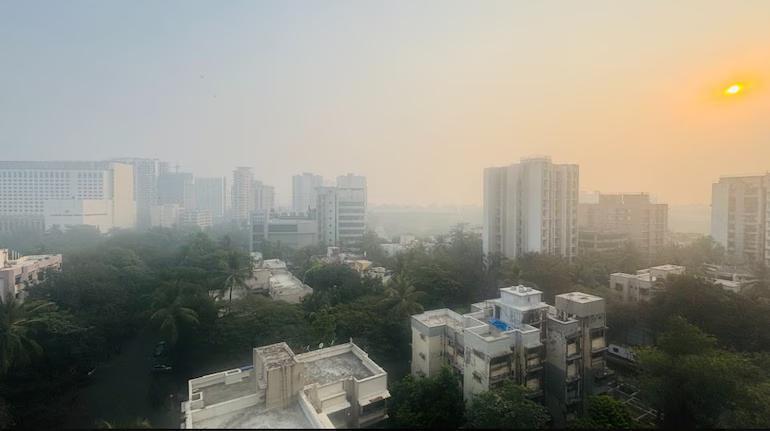
Why Mumbai’s Air is Getting Worse?
Mumbai, the financial capital of India, is known for its vibrant culture, rich history, and bustling streets. However, in recent days, the city has been grappling with a severe air pollution crisis. The air quality in Mumbai has deteriorated significantly, leaving residents gasping for breath. The sudden spike in air pollution has raised concerns among citizens, and it’s essential to understand the reasons behind this alarming trend.
One of the primary factors contributing to the worsening air quality in Mumbai is the increase in roadwork and construction activities across the city. After the monsoon season, roadwork picked up pace, leading to a significant rise in road-dust levels. The construction of new buildings, roads, and infrastructure projects has resulted in the release of massive amounts of particulate matter, including dust, dirt, and other pollutants into the air. This has not only affected the air quality but also caused inconvenience to commuters, pedestrians, and residents living in nearby areas.
Another major factor contributing to the poor air quality in Mumbai is the surge in construction activities across the city. The construction boom in Mumbai has led to an increase in the number of building sites, which has resulted in the release of pollutants like dust, diesel fumes, and other toxic gases into the air. The construction industry is a significant contributor to air pollution, and the lack of effective regulations and enforcement has exacerbated the problem.
Industrial fumes from heavy industries and refineries along the eastern corridor of Mumbai are also a significant source of air pollution. These industries release large amounts of pollutants, including particulate matter, nitrogen oxides, and volatile organic compounds, into the air. The eastern corridor of Mumbai is home to several heavy industries, including oil refineries, chemical plants, and power plants, which are major contributors to air pollution.
Seasonal weather shifts have also played a role in the worsening air quality in Mumbai. During the winter months, the city experiences a temperature inversion, which traps pollutants close to the ground, making the air quality worse. The lack of strong winds and rainfall during this period also prevents the dispersion of pollutants, leading to a buildup of toxic gases and particulate matter in the air.
The impact of poor air quality on human health is well-documented. Exposure to air pollutants can cause a range of health problems, including respiratory diseases, cardiovascular diseases, and even cancer. The elderly, children, and people with pre-existing medical conditions are particularly vulnerable to the effects of air pollution. The economic impact of air pollution is also significant, with studies suggesting that it can lead to lost productivity, increased healthcare costs, and decreased quality of life.
So, what can be done to address the air pollution crisis in Mumbai? The first step is to implement effective regulations and enforcement mechanisms to control pollution from construction sites, industries, and vehicles. The municipal corporation and state government must work together to develop and implement policies that promote sustainable development, reduce pollution, and improve air quality.
Increasing the use of clean energy sources, such as solar and wind power, can also help reduce air pollution. The government can incentivize the use of clean energy by offering subsidies, tax breaks, and other benefits to industries and individuals who adopt renewable energy sources.
Improving public transportation and promoting the use of electric vehicles can also help reduce air pollution. The government can invest in modern, efficient, and environmentally friendly public transportation systems, such as bus rapid transit (BRT) systems and metro rail networks. Encouraging the use of electric vehicles can also help reduce air pollution, and the government can offer incentives, such as tax breaks and subsidies, to promote their adoption.
Finally, increasing public awareness and education about air pollution can help build a movement to address the crisis. The government, NGOs, and community groups can work together to educate people about the causes and effects of air pollution and promote behaviors that reduce pollution, such as carpooling, using public transportation, and reducing energy consumption.
In conclusion, the air quality in Mumbai has deteriorated significantly due to a combination of local pollution sources and seasonal weather shifts. Roadwork, construction activities, industrial fumes, and seasonal weather shifts have all contributed to the worsening air quality. To address this crisis, it’s essential to implement effective regulations, promote sustainable development, increase the use of clean energy sources, improve public transportation, and educate the public about air pollution. By working together, we can build a cleaner, healthier, and more sustainable Mumbai for future generations.
About the Author