Tata Group donates ₹758 crore to BJP, weeks after approval for semiconductor units: Report
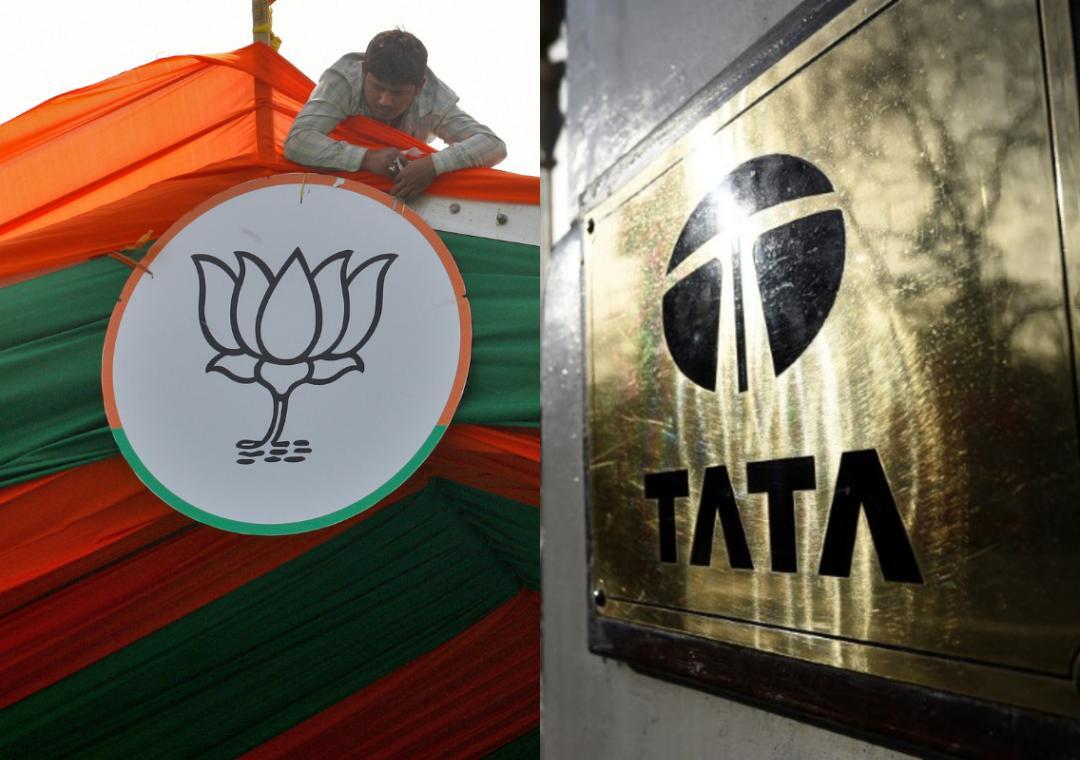
In a shocking revelation, the Tata Group, one of India’s largest conglomerates, has been reported to have donated a staggering ₹758 crore to the Bharatiya Janata Party (BJP) in April 2024. This massive donation comes just weeks after the group received approval for two of its semiconductor units, with subsidies worth ₹44,000 crore. The donations, made just days before the 2024 Lok Sabha elections, have raised eyebrows and sparked controversy over the relationship between corporate giants and political parties in India.
According to reports, the donations made by the Tata Group accounted for nearly 83% of the group’s total contributions, with the Congress party receiving a mere 8.4%. The donations were sourced from 15 different Tata companies, highlighting the group’s deep pockets and extensive influence in Indian politics. The sheer scale of the donations has led to questions about the motivations behind such a massive contribution, with many speculating that it may be linked to the approval of the semiconductor units.
The semiconductor units in question are part of the Indian government’s efforts to boost domestic manufacturing and reduce dependence on foreign imports. The approval of these units, with subsidies worth ₹44,000 crore, is a significant development in the Indian electronics industry. However, the fact that the Tata Group donated such a large amount to the BJP just weeks after receiving this approval has raised concerns about the potential for quid pro quo.
The timing of the donations is also significant, coming as it does just days before the 2024 Lok Sabha elections. The BJP, which is seeking to retain power, has been facing intense competition from opposition parties, and the donations from the Tata Group could be seen as a significant boost to its campaign coffers. The fact that the Congress party received only a fraction of the amount donated to the BJP has also led to accusations of bias and favoritism.
The Tata Group’s donations to the BJP are not unprecedented, but the scale of the current donation is unprecedented. In the past, the group has made significant contributions to various political parties, including the BJP and the Congress. However, the fact that this donation comes just weeks after the approval of the semiconductor units has raised questions about the group’s motivations and the potential for influence peddling.
The relationship between corporate giants and political parties in India is complex and often opaque. While companies like the Tata Group are entitled to make donations to political parties, the scale and timing of such donations can raise concerns about the potential for undue influence. The fact that the Tata Group donated such a large amount to the BJP just weeks after receiving approval for its semiconductor units has sparked controversy and raised questions about the integrity of the political process.
In India, political parties are required to disclose their donations, but the details of such donations are often not made public. The Election Commission of India has rules in place to regulate political donations, but these rules are often criticized for being inadequate and ineffective. The lack of transparency in political donations has led to concerns about the potential for corruption and influence peddling.
The donation of ₹758 crore by the Tata Group to the BJP is a significant development in Indian politics, and it has sparked controversy and debate. While the group is entitled to make donations to political parties, the scale and timing of this donation have raised questions about the potential for undue influence and the relationship between corporate giants and political parties in India. As the country heads into the 2024 Lok Sabha elections, this development is likely to be closely watched and debated.
In conclusion, the donation of ₹758 crore by the Tata Group to the BJP has sparked controversy and raised questions about the relationship between corporate giants and political parties in India. The timing of the donation, just weeks after the approval of the semiconductor units, has led to speculation about the potential for quid pro quo and influence peddling. As India heads into the 2024 Lok Sabha elections, this development is likely to be closely watched and debated, and it highlights the need for greater transparency and accountability in political donations.
About the Author