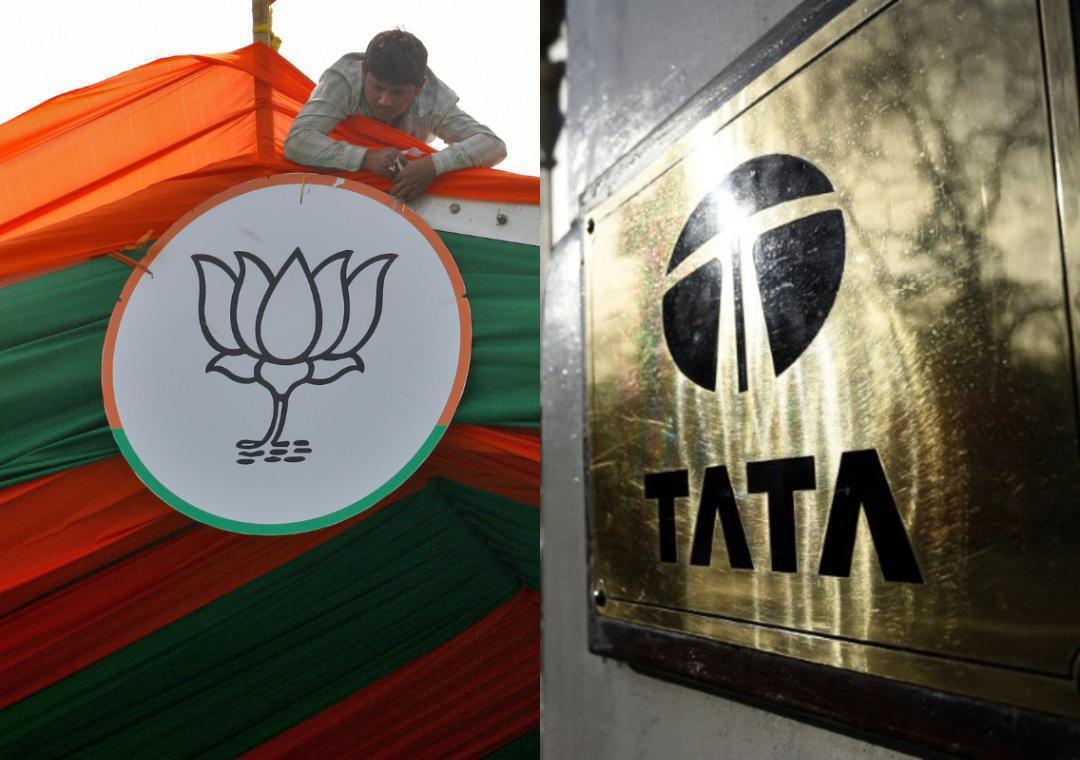
Tata Group donates ₹758 crore to BJP, weeks after approval for semiconductor units: Report
In a shocking revelation, the Tata Group, one of India’s largest and most respected conglomerates, has been reported to have donated a staggering ₹758 crore to the Bharatiya Janata Party (BJP) in April 2024. This massive donation comes just weeks after the group received a significant subsidy of ₹44,000 crore for two of its semiconductor units. The timing of the donation, made just days before the 2024 Lok Sabha elections, has raised eyebrows and sparked controversy.
According to reports, the donations accounted for nearly 83% of the group’s total contributions, with the Congress party receiving a mere 8.4%. The donations were sourced from 15 different Tata companies, highlighting the extensive reach and influence of the conglomerate. This significant contribution to the BJP has led to speculation about the potential quid pro quo and the implications of such large-scale donations on the country’s political landscape.
The semiconductor units, which received the substantial subsidy, are a crucial part of the Indian government’s efforts to boost the country’s electronics manufacturing sector. The subsidy, worth ₹44,000 crore, is one of the largest ever granted by the government, and it is expected to play a significant role in establishing India as a major player in the global semiconductor industry. However, the proximity of the donation to the subsidy approval has raised questions about the potential conflict of interest and the influence of corporate interests on government decisions.
The Tata Group, founded by Jamsetji Tata in 1868, is one of India’s oldest and most respected business conglomerates. With interests spanning multiple sectors, including steel, automobiles, aviation, and hospitality, the group has played a significant role in shaping the country’s economy. However, the recent donation has cast a shadow on the group’s reputation and raised concerns about the increasing influence of corporate interests on Indian politics.
The donation, made just before the 2024 Lok Sabha elections, has also sparked debate about the role of money in politics. The sheer scale of the donation has led to accusations that the BJP is being fueled by corporate interests, rather than the will of the people. The fact that the Congress party received only a fraction of the amount donated to the BJP has further exacerbated the concerns about the disproportionate influence of corporate donations on the electoral process.
The Indian government has been attempting to boost the country’s semiconductor industry, with the aim of reducing dependence on foreign imports and establishing India as a major player in the global electronics manufacturing sector. The subsidy granted to the Tata Group’s semiconductor units is part of this effort, and it is expected to create thousands of jobs and stimulate economic growth. However, the controversy surrounding the donation has raised questions about the transparency and accountability of the government’s decision-making process.
In recent years, there has been a growing concern about the increasing influence of corporate interests on Indian politics. The Tata Group’s donation has brought this issue to the forefront, highlighting the need for greater transparency and accountability in the electoral process. The fact that the donation was made just before the elections has led to speculation about the potential quid pro quo and the implications of such large-scale donations on the country’s political landscape.
The opposition parties have been quick to criticize the donation, accusing the BJP of being beholden to corporate interests. The Congress party, in particular, has been vocal in its criticism, arguing that the donation is a clear example of the BJP’s proximity to big business. The controversy has also sparked a wider debate about the role of money in politics and the need for electoral reforms to prevent the undue influence of corporate interests.
In conclusion, the Tata Group’s donation of ₹758 crore to the BJP has sparked a major controversy, raising questions about the influence of corporate interests on Indian politics. The proximity of the donation to the subsidy approval for the group’s semiconductor units has led to speculation about the potential quid pro quo and the implications of such large-scale donations on the country’s political landscape. As the country grapples with the challenges of electoral reforms and the need for greater transparency and accountability, the Tata Group’s donation has brought the issue to the forefront, highlighting the need for a more nuanced and informed debate about the role of money in politics.
About the Author