Tata Group donates ₹758 crore to BJP, weeks after approval for semiconductor units: Report
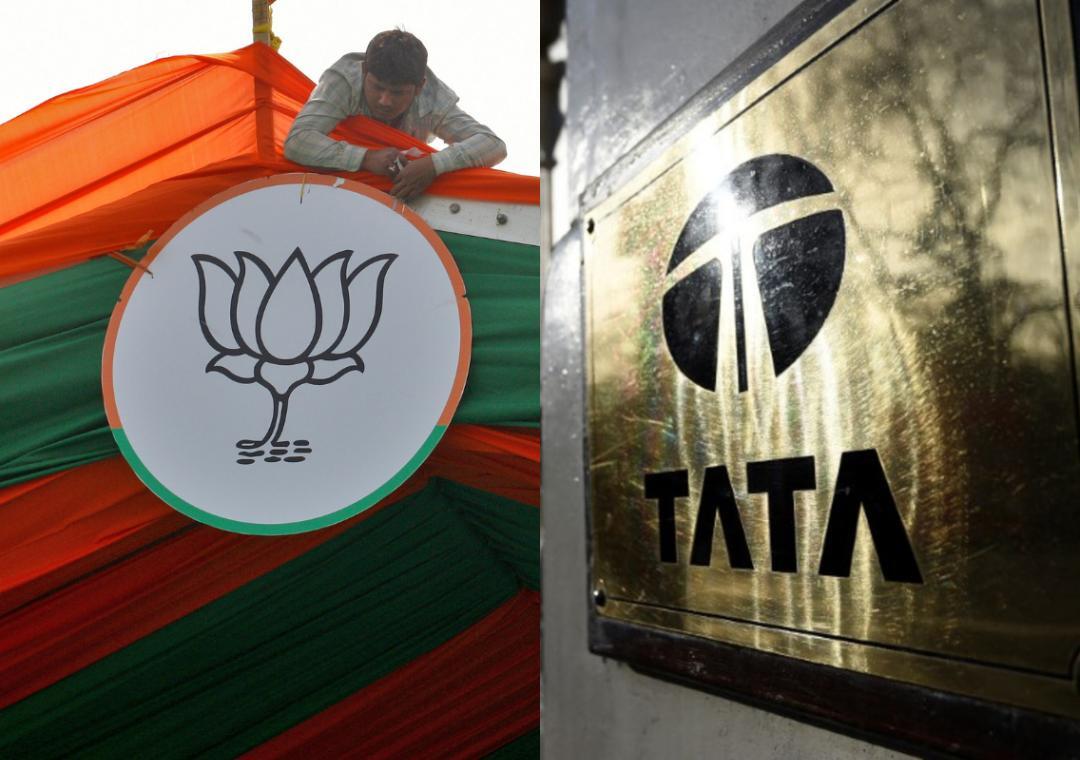
In a shocking revelation, the Tata Group, one of India’s largest conglomerates, has donated a staggering ₹758 crore to the Bharatiya Janata Party (BJP) in April 2024. This massive donation comes just weeks after the company received approval for two of its semiconductor units, with subsidies totaling ₹44,000 crore. The timing of this donation has raised eyebrows, with many questioning the potential quid pro quo involved in this transaction.
According to reports, the donations were made just days before the 2024 Lok Sabha elections, and they accounted for nearly 83% of the group’s total contributions. In contrast, the Congress party received a mere 8.4% of the total donations made by the Tata Group. The donations were sourced from 15 different Tata companies, highlighting the vast reach and influence of the conglomerate.
The approval for the two semiconductor units was granted in March 2024, with the government providing subsidies worth ₹44,000 crore. This move was seen as a significant boost to the Indian electronics manufacturing sector, with the Tata Group poised to play a major role in the production of semiconductors. However, the subsequent donation to the BJP has raised concerns about the potential for crony capitalism and the undue influence of corporate interests on politics.
The Tata Group’s donation to the BJP is not only significant in terms of its amount but also in terms of its timing. Coming just before the Lok Sabha elections, this donation can be seen as an attempt to curry favor with the ruling party. The fact that the Congress party received only a fraction of the donations made by the Tata Group has also raised questions about the impartiality of the conglomerate.
The Indian economy has long been plagued by the issue of crony capitalism, with large corporations often using their influence to secure favorable treatment from the government. The Tata Group’s donation to the BJP can be seen as a classic example of this phenomenon, where a large corporation uses its financial muscle to secure benefits and favors from the ruling party.
The semiconductor industry is a critical sector for the Indian economy, with the government actively promoting its growth through various incentives and subsidies. The Tata Group’s foray into this sector is seen as a significant development, with the company poised to play a major role in the production of semiconductors. However, the controversy surrounding the donation to the BJP has raised concerns about the potential for the government to favor the conglomerate over other players in the industry.
The impact of this donation on the Indian politics and economy cannot be overstated. The fact that a single corporation can donate such a large amount to a political party raises serious questions about the integrity of the electoral process. It also highlights the need for greater transparency and accountability in the funding of political parties.
In recent years, there has been a growing demand for electoral reforms in India, with many calling for greater transparency in the funding of political parties. The Tata Group’s donation to the BJP has brought this issue back into the spotlight, with many arguing that the current system of political funding is ripe for abuse.
The BJP has been quick to defend the donation, with party spokespersons arguing that the donation was made voluntarily and that there was no quid pro quo involved. However, the opposition parties have been scathing in their criticism, with many accusing the BJP of indulging in crony capitalism.
The Congress party has been particularly vocal in its criticism, with party leaders arguing that the donation was a clear example of the BJP’s attempts to buy influence and favor from large corporations. The party has also demanded greater transparency in the funding of political parties, with many calling for a cap on corporate donations.
As the controversy surrounding the Tata Group’s donation to the BJP continues to unfold, one thing is clear: the issue of crony capitalism and the influence of corporate interests on politics is not going away anytime soon. The Indian economy and politics will continue to be shaped by the complex and often opaque relationships between large corporations and political parties.
In conclusion, the Tata Group’s donation of ₹758 crore to the BJP is a significant development that raises serious questions about the integrity of the electoral process and the influence of corporate interests on politics. As the debate surrounding this issue continues to unfold, one thing is clear: the need for greater transparency and accountability in the funding of political parties has never been more pressing.
About the Author