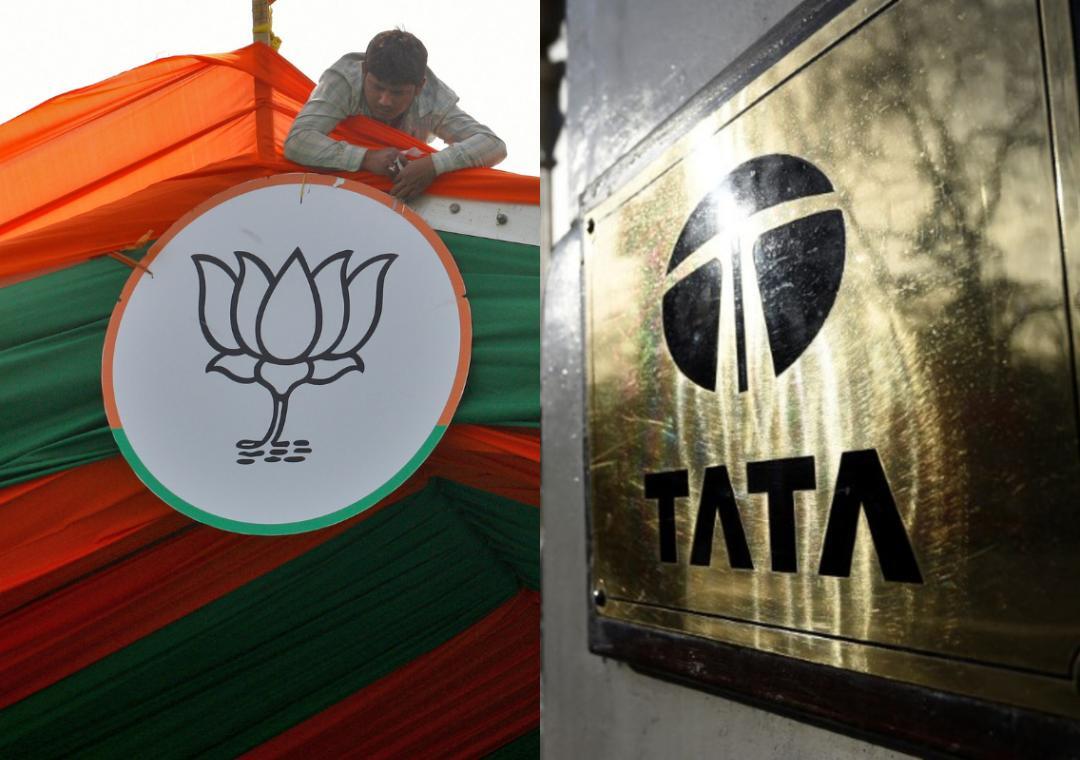
Tata Group donates ₹758 crore to BJP, weeks after approval for semiconductor units: Report
In a shocking revelation, the Tata Group, one of India’s largest conglomerates, has been reported to have donated a staggering ₹758 crore to the Bharatiya Janata Party (BJP) in April 2024. This massive donation comes just weeks after the group received a significant subsidy of ₹44,000 crore for two of its semiconductor units. The news has sparked controversy and raised questions about the relationship between corporate giants and political parties in India.
According to reports, the donations were made just days before the 2024 Lok Sabha elections, with the BJP being the primary beneficiary. The amount donated to the BJP accounts for nearly 83% of the group’s total contributions, with the Congress party receiving a mere 8.4%. The donations were sourced from 15 different Tata companies, highlighting the group’s extensive reach and influence in the Indian economy.
The timing of the donations has raised eyebrows, as it comes shortly after the government approved subsidies for two of Tata’s semiconductor units. The subsidies, worth ₹44,000 crore, are part of the Indian government’s efforts to promote the growth of the semiconductor industry in the country. The fact that the Tata Group donated such a large amount to the BJP just weeks after receiving these subsidies has led to allegations of quid pro quo and favoritism.
The relationship between corporate giants and political parties in India has always been a subject of debate. While companies are free to donate to political parties, the sheer scale of the Tata Group’s donation has raised concerns about the potential for undue influence. The fact that the donation was made just before the elections has also sparked speculation about the group’s motivations and the potential benefits it may receive from the government in return.
The Tata Group’s donation to the BJP is not an isolated incident. In recent years, there have been several instances of corporate giants donating large sums to political parties, often with questionable timing. This has led to accusations of crony capitalism and corruption, with many arguing that such donations can compromise the integrity of the political process.
The Indian government has introduced several measures to increase transparency in political funding, including the introduction of electoral bonds. However, critics argue that these measures do not go far enough and that more needs to be done to prevent the undue influence of corporate giants on the political process.
In the case of the Tata Group’s donation to the BJP, the sheer scale of the amount has raised questions about the group’s motivations and the potential benefits it may receive from the government. The fact that the donation was made just weeks after the government approved subsidies for two of Tata’s semiconductor units has led to allegations of favoritism and quid pro quo.
As India continues to grow and develop, it is essential that the country’s corporate giants and political parties maintain a transparent and arm’s-length relationship. The Tata Group’s donation to the BJP has highlighted the need for greater transparency and accountability in political funding, and it is up to the government and regulatory bodies to ensure that such donations do not compromise the integrity of the political process.
In conclusion, the Tata Group’s donation of ₹758 crore to the BJP has sparked controversy and raised questions about the relationship between corporate giants and political parties in India. The timing of the donation, just weeks after the government approved subsidies for two of Tata’s semiconductor units, has led to allegations of favoritism and quid pro quo. As India continues to grow and develop, it is essential that the country’s corporate giants and political parties maintain a transparent and arm’s-length relationship, and that the government and regulatory bodies ensure that such donations do not compromise the integrity of the political process.
About the Author