Tata Group donates ₹758 crore to BJP, weeks after approval for semiconductor units: Report
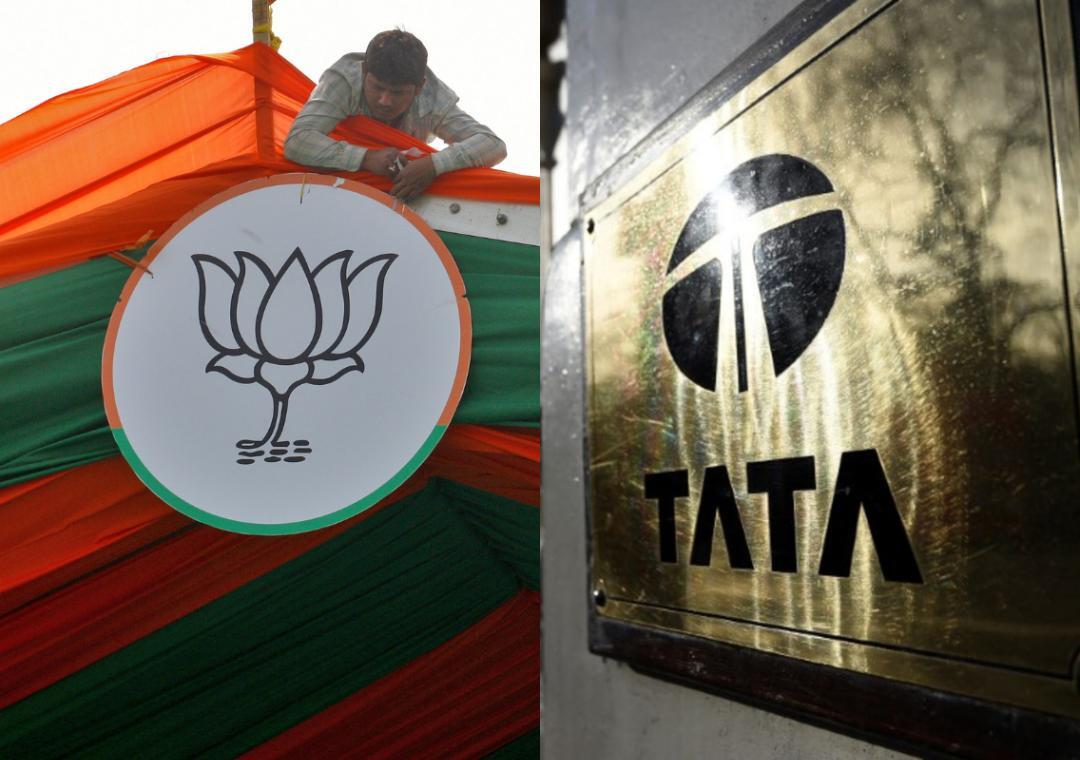
In a shocking revelation, the Tata Group, one of India’s largest conglomerates, has donated a staggering ₹758 crore to the Bharatiya Janata Party (BJP) in April 2024, just weeks after receiving approval for two of its semiconductor units. This massive donation, made just days before the 2024 Lok Sabha elections, has raised eyebrows and sparked controversy over the close ties between corporate giants and political parties.
According to reports, the Tata Group’s donation of ₹758 crore accounted for nearly 83% of the group’s total contributions, with the Congress party receiving a meager 8.4%. The donations were sourced from 15 Tata companies, highlighting the extensive reach and influence of the conglomerate. The timing of the donation, coming just weeks after the approval for the semiconductor units, has led many to question the motivations behind such a large contribution.
The approval for the semiconductor units, worth ₹44,000 crore in subsidies, is a significant development for the Tata Group, which has been expanding its presence in the technology sector. The subsidies, provided by the government, are aimed at promoting the growth of the semiconductor industry in India and reducing the country’s dependence on foreign imports. However, the proximity of the donation to the approval has raised concerns about the potential for quid pro quo arrangements between the government and corporate entities.
The semiconductor industry is a critical sector for India’s economic growth, with the government aiming to increase domestic production and reduce reliance on imports. The approval for the Tata Group’s semiconductor units is a significant step towards achieving this goal, but the accompanying donation to the BJP has raised questions about the transparency and accountability of such deals.
The Tata Group’s donation to the BJP is not an isolated incident, with many corporate entities making significant contributions to political parties in India. However, the sheer size of the donation and the timing, coming just before the elections, have sparked concerns about the influence of corporate money on politics. The fact that the Congress party received only 8.4% of the total donations, compared to the BJP’s 83%, has also raised questions about the impartiality of the electoral process.
The issue of corporate donations to political parties is a complex one, with many arguing that such contributions can lead to undue influence and corruption. The lack of transparency in the electoral funding process has been a long-standing concern, with many calling for greater accountability and disclosure of donations. The Tata Group’s donation to the BJP has brought this issue back into the spotlight, highlighting the need for more stringent regulations and oversight.
In recent years, there have been efforts to increase transparency in electoral funding, including the introduction of electoral bonds and the requirement for parties to disclose their donations. However, the effectiveness of these measures has been debated, with many arguing that they do not go far enough in addressing the issue of corporate influence on politics.
The Tata Group’s donation to the BJP has also sparked concerns about the potential for conflicts of interest and the impact on the country’s democratic processes. The fact that the conglomerate received significant subsidies for its semiconductor units just weeks before making the donation has raised questions about the potential for quid pro quo arrangements. This has led many to call for greater scrutiny of such deals and more stringent regulations to prevent the abuse of power and influence.
In conclusion, the Tata Group’s donation of ₹758 crore to the BJP, coming just weeks after the approval for its semiconductor units, has raised significant concerns about the close ties between corporate giants and political parties. The sheer size of the donation and the timing, coming just before the elections, have sparked questions about the influence of corporate money on politics and the potential for conflicts of interest. As India continues to navigate the complex landscape of electoral funding and corporate influence, it is essential that greater transparency and accountability are ensured to protect the integrity of the country’s democratic processes.
About the Author