Substitution of Sole Arbitator Warranted Once Mandate Ends: SC
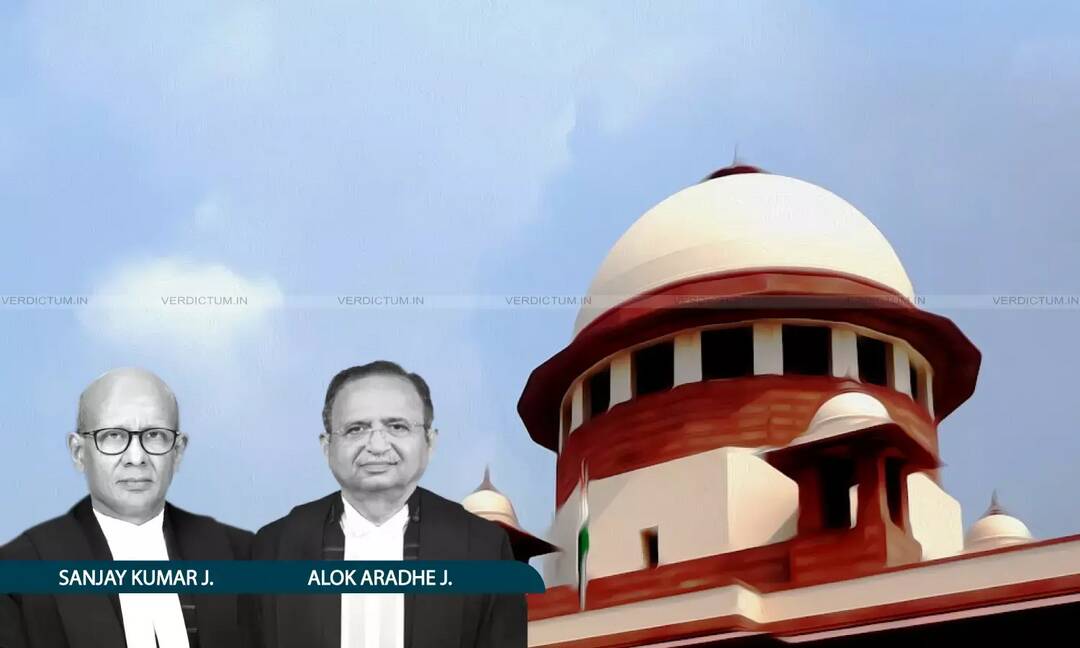
The Supreme Court of India has recently made a significant ruling regarding the substitution of a sole arbitrator in arbitration proceedings. The Court has held that the substitution of a sole arbitrator is warranted when their mandate ceases to exist. This judgment has far-reaching implications for arbitration proceedings in India and provides clarity on the termination of an arbitrator’s mandate.
The Court explained that on the expiry of the initial or extended period, the arbitrator cannot proceed, and their mandate terminates, subject to a court order passed in a proceeding under Section 29A(4) of the Arbitration and Conciliation Act. This means that once the arbitrator’s mandate comes to an end, they can no longer continue with the arbitration proceedings, and a new arbitrator must be appointed to take their place.
The Court’s ruling is based on the principle that an arbitrator’s mandate is limited to a specific period, and once that period expires, the arbitrator can no longer exercise their powers. The Court also emphasized that the termination of an arbitrator’s mandate is not dependent on the outcome of the arbitration proceedings, but rather on the expiry of the specified period.
This judgment is significant because it provides clarity on the issue of substitution of arbitrators in India. In the past, there has been some uncertainty regarding the circumstances under which a sole arbitrator can be substituted. The Court’s ruling makes it clear that the substitution of a sole arbitrator is warranted when their mandate ceases to exist, and that a new arbitrator must be appointed to take their place.
The Court’s decision is also consistent with the principles of fairness and justice. The arbitrator’s mandate is limited to a specific period to ensure that the arbitration proceedings are completed in a timely manner. If the arbitrator’s mandate were to continue indefinitely, it could lead to delays and inefficiencies in the arbitration process.
The Court’s ruling is also consistent with the Arbitration and Conciliation Act, which provides for the termination of an arbitrator’s mandate in certain circumstances. Section 29A(4) of the Act provides that the mandate of an arbitrator shall terminate if the arbitrator fails to deliver an award within the specified period. The Court’s ruling makes it clear that the termination of an arbitrator’s mandate under this section is subject to a court order.
The implications of the Court’s ruling are significant. It means that parties to an arbitration agreement must be aware of the expiry date of the arbitrator’s mandate and take steps to appoint a new arbitrator if the mandate is about to expire. Failure to do so could result in delays and inefficiencies in the arbitration process.
In conclusion, the Supreme Court’s ruling that the substitution of a sole arbitrator is warranted once their mandate ceases to exist is a significant development in the field of arbitration in India. The ruling provides clarity on the issue of substitution of arbitrators and is consistent with the principles of fairness and justice. It is also consistent with the Arbitration and Conciliation Act, which provides for the termination of an arbitrator’s mandate in certain circumstances.
The Court’s decision is a reminder that arbitration proceedings must be conducted in a timely and efficient manner, and that the expiry of an arbitrator’s mandate is an important milestone in the arbitration process. Parties to an arbitration agreement must be aware of the expiry date of the arbitrator’s mandate and take steps to appoint a new arbitrator if the mandate is about to expire.
Overall, the Supreme Court’s ruling is a welcome development in the field of arbitration in India, and it is likely to have a positive impact on the conduct of arbitration proceedings in the country.
About the Author