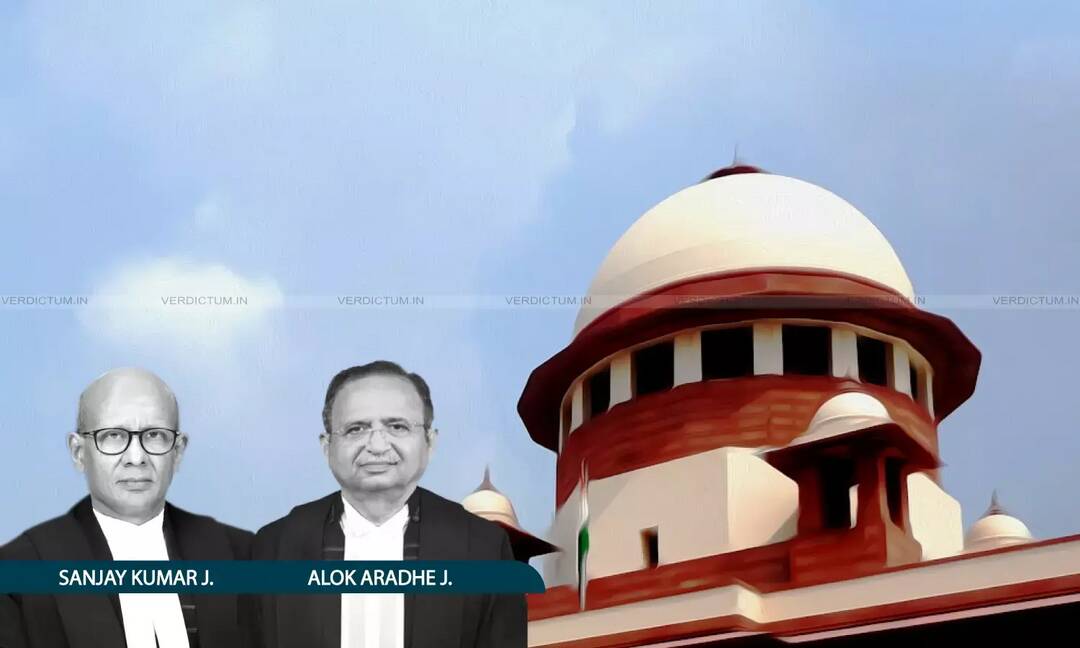
Substitution of Sole Arbitator Warranted Once Mandate Ends: SC
The Supreme Court of India has recently made a significant ruling regarding the substitution of a sole arbitrator in arbitration proceedings. The Court has held that the substitution of a sole arbitrator is warranted when their mandate ceases to exist. This judgment has far-reaching implications for arbitration proceedings in India and provides clarity on the role of the court in such situations.
The Court explained that on the expiry of the initial or extended period, the arbitrator cannot proceed, and their mandate terminates, subject to a court order passed in a proceeding under Section 29A(4) of the Arbitration and Conciliation Act. This means that once the arbitrator’s mandate ends, they can no longer continue with the arbitration proceedings, and a new arbitrator needs to be appointed.
The Supreme Court’s ruling is based on the principle that an arbitrator’s mandate is limited to a specific period, and once that period expires, their authority to act as an arbitrator comes to an end. This is to ensure that arbitration proceedings are conducted in a timely and efficient manner, and that parties are not left in a state of uncertainty due to delays.
The Court’s decision is also in line with the provisions of the Arbitration and Conciliation Act, which provides for the termination of an arbitrator’s mandate in certain circumstances. Section 29A(4) of the Act states that the mandate of an arbitrator shall terminate if the arbitrator fails to deliver the award within the specified period or extended period.
The implications of this ruling are significant, as it provides clarity on the role of the court in arbitration proceedings. The Court has made it clear that once an arbitrator’s mandate ends, the parties cannot continue with the arbitration proceedings without the appointment of a new arbitrator. This ensures that arbitration proceedings are conducted in a fair and transparent manner, and that the rights of all parties are protected.
The ruling also highlights the importance of timely completion of arbitration proceedings. The Court has emphasized that arbitration proceedings should be completed within the specified period, and that delays can have serious consequences, including the termination of the arbitrator’s mandate.
In addition, the ruling provides guidance on the procedure to be followed when an arbitrator’s mandate ends. The Court has stated that in such cases, the parties should approach the court for the appointment of a new arbitrator. This ensures that the arbitration proceedings are not delayed further and that the parties can proceed with the dispute resolution process without any hindrance.
The Supreme Court’s decision is a significant development in the field of arbitration in India. It provides clarity on the role of the court in arbitration proceedings and highlights the importance of timely completion of arbitration proceedings. The ruling is also in line with the principles of fairness and transparency, and ensures that the rights of all parties are protected.
In conclusion, the Supreme Court’s ruling on the substitution of a sole arbitrator when their mandate ceases to exist is a significant development in the field of arbitration in India. The ruling provides clarity on the role of the court in arbitration proceedings and highlights the importance of timely completion of arbitration proceedings. The decision is also in line with the principles of fairness and transparency, and ensures that the rights of all parties are protected.
About the Author