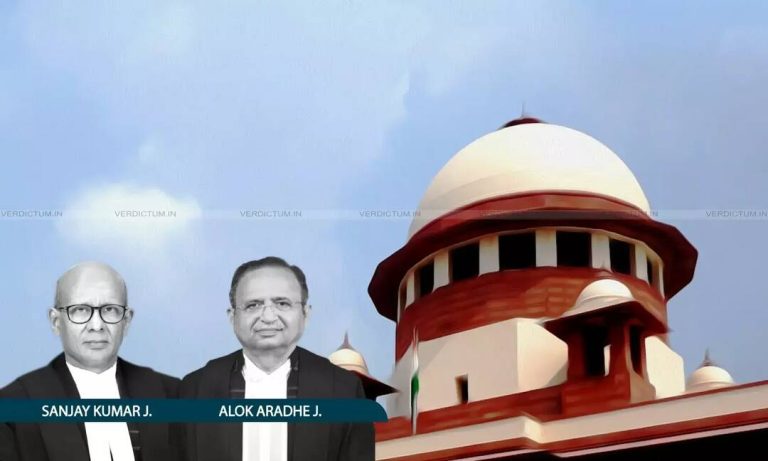
Substitution of sole arbitrator warranted once mandate ends: SC
The Supreme Court of India has recently made a significant ruling regarding the substitution of a sole arbitrator in arbitration proceedings. The Court has held that the substitution of a sole arbitrator is warranted when their mandate ceases to exist. This decision has far-reaching implications for arbitration proceedings in India and provides clarity on the role of the arbitrator and the courts in such proceedings.
The Court explained that on the expiry of the initial or extended period, the arbitrator cannot proceed, and their mandate terminates, subject to a court order passed in a proceeding under Section 29A(4) of the Arbitration and Conciliation Act. This means that once the arbitrator’s mandate comes to an end, they can no longer continue with the arbitration proceedings, and a new arbitrator needs to be appointed to take over the proceedings.
The Supreme Court’s decision is based on the principle that an arbitrator’s mandate is limited to a specific period, and once that period expires, the arbitrator’s authority to continue with the proceedings also comes to an end. The Court has made it clear that the arbitrator’s mandate is not automatic and requires a court order to extend or terminate it.
The implications of this decision are significant, as it provides clarity on the role of the arbitrator and the courts in arbitration proceedings. It also ensures that arbitration proceedings are conducted in a fair and efficient manner, without any unnecessary delays or complications.
The Supreme Court’s decision is also in line with the principles of natural justice, which require that arbitration proceedings be conducted in a fair and impartial manner. The substitution of a sole arbitrator once their mandate ends ensures that the arbitration proceedings are not biased or influenced by any external factors, and that the parties to the dispute have a fair opportunity to present their case.
In recent years, there has been a growing trend towards arbitration as a means of resolving disputes, particularly in commercial and contractual matters. The Supreme Court’s decision is likely to have a positive impact on this trend, as it provides clarity and certainty on the role of the arbitrator and the courts in arbitration proceedings.
The decision is also likely to reduce the scope for delays and complications in arbitration proceedings, which can often be time-consuming and costly. By providing clarity on the role of the arbitrator and the courts, the Supreme Court’s decision is likely to promote efficiency and fairness in arbitration proceedings, which is essential for maintaining the integrity of the arbitration process.
In conclusion, the Supreme Court’s decision on the substitution of a sole arbitrator once their mandate ends is a significant development in the field of arbitration law. The decision provides clarity and certainty on the role of the arbitrator and the courts in arbitration proceedings and is likely to have a positive impact on the trend towards arbitration as a means of resolving disputes.
The decision is also a reminder of the importance of ensuring that arbitration proceedings are conducted in a fair and efficient manner, without any unnecessary delays or complications. By providing clarity on the role of the arbitrator and the courts, the Supreme Court’s decision is likely to promote confidence in the arbitration process and encourage parties to use arbitration as a means of resolving disputes.
Read the full judgment here: Mohan Lal Fatehpuria v. MS Bharat Textiles & Ors. (2025) INSC 1409
About the Author