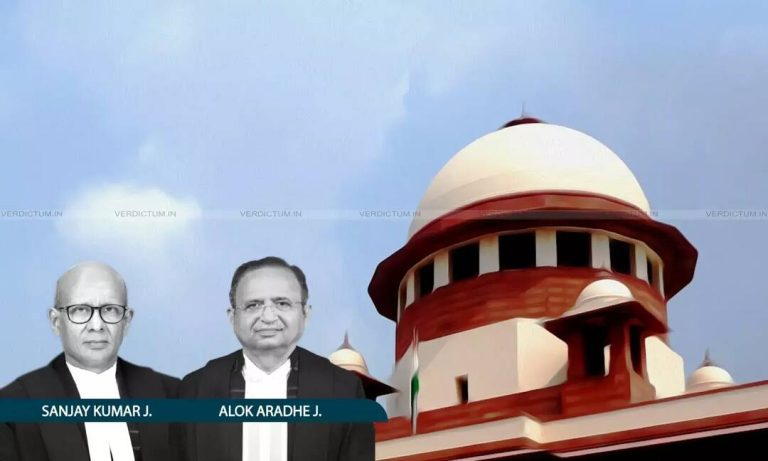
Substitution of sole arbitrator warranted once mandate ends: SC
The Supreme Court of India has recently made a significant ruling regarding the substitution of a sole arbitrator in arbitration proceedings. The Court has held that the substitution of a sole arbitrator is warranted when their mandate ceases to exist. This judgment has far-reaching implications for arbitration proceedings in India and provides clarity on the role of the arbitrator and the court’s power to intervene in such cases.
The Court explained that on the expiry of the initial or extended period, the arbitrator cannot proceed, and their mandate terminates, subject to a court order passed in a proceeding under Section 29A(4) of the Arbitration and Conciliation Act. This means that once the arbitrator’s mandate ends, they can no longer continue with the arbitration proceedings, and a new arbitrator must be appointed to take their place.
The Supreme Court’s ruling is based on the principles of arbitration law, which emphasize the importance of fairness, impartiality, and efficiency in the arbitration process. The Court noted that the arbitrator’s mandate is a critical component of the arbitration process, and its termination can have significant consequences for the parties involved.
The Court’s decision is likely to have a significant impact on arbitration proceedings in India. It provides clarity on the role of the arbitrator and the court’s power to intervene in cases where the arbitrator’s mandate has ended. The ruling also highlights the importance of ensuring that arbitration proceedings are conducted in a fair and efficient manner, with minimal delays and disruptions.
In the context of Indian arbitration law, the Supreme Court’s ruling is consistent with the principles of the Arbitration and Conciliation Act, 1996. The Act provides for the appointment of arbitrators, the conduct of arbitration proceedings, and the role of the court in arbitration matters. The Act also emphasizes the importance of fairness, impartiality, and efficiency in the arbitration process.
The Supreme Court’s decision is also consistent with international best practices in arbitration. The United Nations Commission on International Trade Law (UNCITRAL) Model Law on International Commercial Arbitration, which has been widely adopted by countries around the world, provides for the termination of the arbitrator’s mandate in certain circumstances, including the expiry of the initial or extended period.
In addition to providing clarity on the role of the arbitrator and the court’s power to intervene, the Supreme Court’s ruling also highlights the importance of ensuring that arbitration proceedings are conducted in a timely and efficient manner. The Court noted that delays and disruptions in arbitration proceedings can have significant consequences for the parties involved, including increased costs, lost opportunities, and damage to reputation.
To avoid such delays and disruptions, parties to arbitration agreements should ensure that they have a clear understanding of the arbitrator’s mandate and the procedures for substituting the arbitrator in case their mandate ends. This can be achieved by including clear provisions in the arbitration agreement regarding the appointment, tenure, and substitution of the arbitrator.
In conclusion, the Supreme Court’s ruling on the substitution of a sole arbitrator once their mandate ends is a significant development in Indian arbitration law. The ruling provides clarity on the role of the arbitrator and the court’s power to intervene in cases where the arbitrator’s mandate has ended. It also highlights the importance of ensuring that arbitration proceedings are conducted in a fair, efficient, and timely manner, with minimal delays and disruptions.
The ruling is likely to have a significant impact on arbitration proceedings in India, and parties to arbitration agreements should take note of the Court’s decision when negotiating and drafting their arbitration agreements. By including clear provisions regarding the appointment, tenure, and substitution of the arbitrator, parties can help ensure that their arbitration proceedings are conducted in a fair, efficient, and timely manner.
About the Author