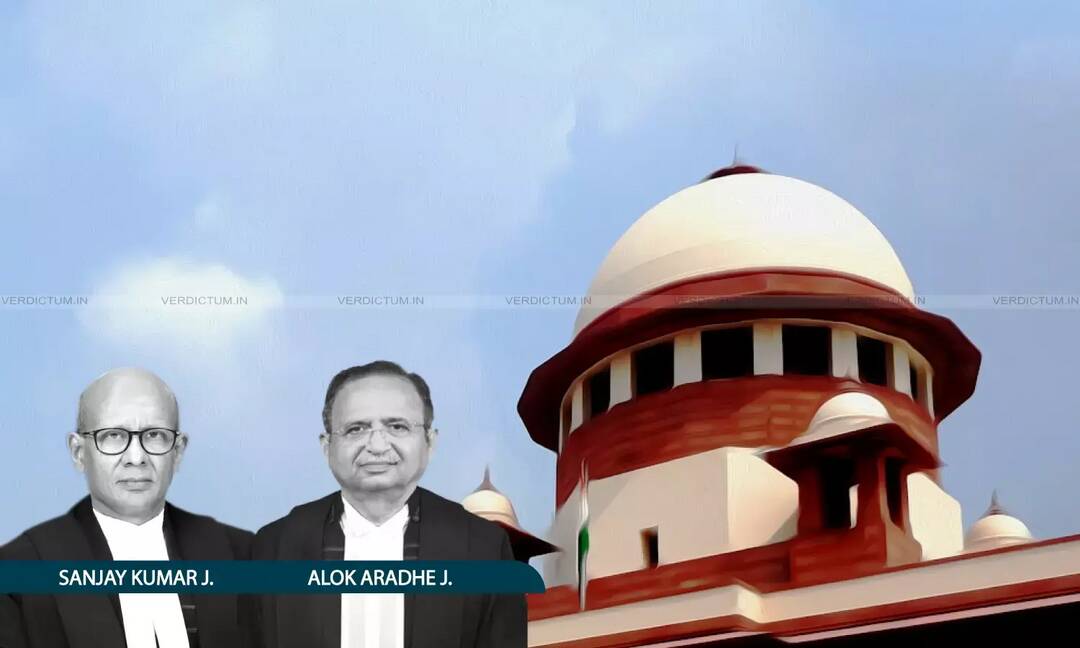
Substitution of Sole Arbitator Warranted Once Mandate Ends: SC
The Supreme Court of India has recently made a significant pronouncement regarding the substitution of a sole arbitrator in arbitration proceedings. In a landmark judgment, the Court has held that the substitution of a sole arbitrator is warranted when their mandate ceases to exist. This decision is expected to have far-reaching implications for arbitration proceedings in India, and it is essential to understand the reasoning behind this judgment.
The Supreme Court’s decision was made in the case of Mohan Lal Fatehpuria v. MS Bharat Textiles & Ors., where the Court was faced with the question of whether the substitution of a sole arbitrator is necessary when their mandate expires. The Court’s answer to this question has provided clarity on the issue and has established a clear precedent for future cases.
According to the Court, when the mandate of a sole arbitrator ceases to exist, it is necessary to substitute them with a new arbitrator. The Court explained that on the expiry of the initial or extended period, the arbitrator cannot proceed, and their mandate terminates, subject to a court order passed in a proceeding under Section 29A(4) of the Arbitration and Conciliation Act. This means that once the arbitrator’s mandate expires, they no longer have the authority to continue with the arbitration proceedings, and a new arbitrator must be appointed to take their place.
The Court’s decision is based on the principle that an arbitrator’s mandate is limited to a specific period, and once that period expires, their authority to act as an arbitrator comes to an end. This principle is essential to ensure that arbitration proceedings are conducted in a fair and efficient manner. If an arbitrator’s mandate were to continue indefinitely, it could lead to delays and inefficiencies in the arbitration process, which would undermine the purpose of arbitration as a speedy and cost-effective means of dispute resolution.
The Supreme Court’s decision also highlights the importance of Section 29A(4) of the Arbitration and Conciliation Act, which provides that the arbitrator’s mandate terminates on the expiry of the initial or extended period, subject to a court order. This provision ensures that the arbitrator’s mandate is limited to a specific period and that they cannot continue with the arbitration proceedings beyond that period without a court order.
The implications of the Supreme Court’s decision are significant. It means that parties to an arbitration agreement must be aware of the arbitrator’s mandate and ensure that a new arbitrator is appointed if the existing one’s mandate expires. Failure to do so could lead to delays and inefficiencies in the arbitration process, which could ultimately undermine the effectiveness of arbitration as a means of dispute resolution.
In conclusion, the Supreme Court’s decision in Mohan Lal Fatehpuria v. MS Bharat Textiles & Ors. is a significant development in the law of arbitration in India. The Court’s holding that the substitution of a sole arbitrator is warranted when their mandate ceases to exist provides clarity and certainty on the issue. It is essential for parties to an arbitration agreement to be aware of the arbitrator’s mandate and to take steps to ensure that a new arbitrator is appointed if the existing one’s mandate expires.
The decision also highlights the importance of Section 29A(4) of the Arbitration and Conciliation Act, which provides that the arbitrator’s mandate terminates on the expiry of the initial or extended period, subject to a court order. This provision ensures that the arbitrator’s mandate is limited to a specific period and that they cannot continue with the arbitration proceedings beyond that period without a court order.
Overall, the Supreme Court’s decision is a welcome development in the law of arbitration in India. It provides clarity and certainty on the issue of substitution of a sole arbitrator and ensures that arbitration proceedings are conducted in a fair and efficient manner.
About the Author