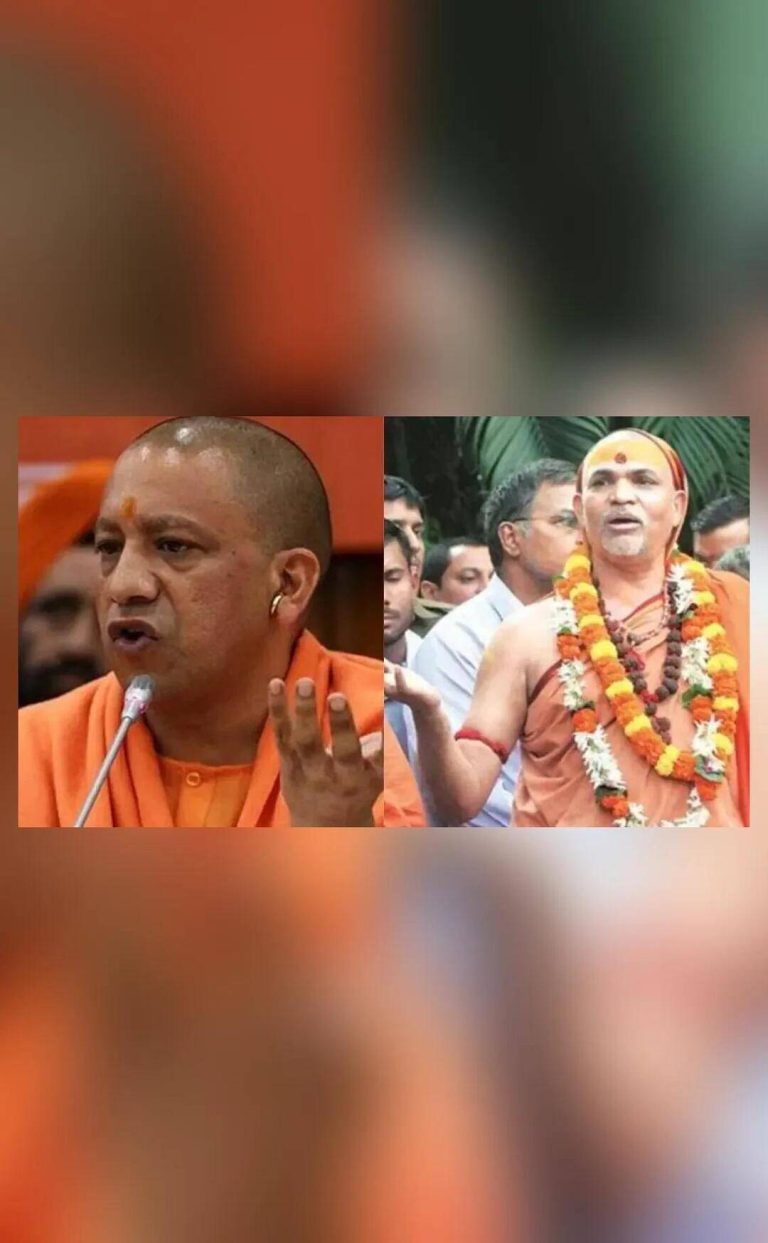
Prove you are Hindu, ban beef export: Shankaracharya to CM Yogi
In a bold and provocative move, Shankaracharya Swami Avimukteshwaranad Saraswati has given a 40-day “ultimatum” to Uttar Pradesh Chief Minister Yogi Adityanath to prove his commitment to Hindu values. The ultimatum comes with two specific demands: to halt beef exports from the state of Uttar Pradesh and to declare the cow as ‘Rajya Mata’ (mother of the state). This development has sparked a heated debate about the role of religion in politics and the protection of cow rights in India.
The Shankaracharya, a prominent spiritual leader, has been at the forefront of the cow protection movement in India. He has been vocal about his demands for the protection of cows and has often criticized the government for not doing enough to prevent cow slaughter and beef exports. The latest move is seen as an escalation of his efforts to pressure the government into taking concrete action on the issue.
The ultimatum was issued after the Shankaracharya returned to his Varanasi math (monastery) following a protest at the Prayagraj Magh Mela, where he was allegedly stopped by the administration from taking a holy dip. The incident sparked widespread outrage among Hindu groups, who accused the government of interfering with the Shankaracharya’s religious rights.
The demand to declare the cow as ‘Rajya Mata’ is not new, but it has gained significant traction in recent years. Many Hindu groups and politicians have been advocating for the cow to be given the status of a mother figure, citing its importance in Hindu mythology and culture. The idea is to elevate the cow to a sacred status, making it a symbol of national pride and reverence.
However, the demand to ban beef exports from Uttar Pradesh is a more complex issue. India is one of the largest exporters of beef in the world, and the industry is worth billions of dollars. A ban on beef exports would have significant economic implications, affecting not just the livelihoods of those involved in the industry but also the country’s trade balance.
Moreover, the issue of beef exports is not just about economics; it is also about the rights of different communities to consume beef. While the cow is considered sacred by Hindus, other communities, such as Muslims and Christians, consume beef as part of their dietary habits. A ban on beef exports would be seen as an infringement on their rights, leading to potential social and communal tensions.
The ultimatum has put Chief Minister Yogi Adityanath in a difficult position. As a Hindu nationalist leader, he is under pressure to respond to the demands of the Shankaracharya and other Hindu groups. However, he also has to balance the interests of different communities and industries in the state. The 40-day deadline has sparked a sense of urgency, and it remains to be seen how the government will respond to the demands.
The issue has also sparked a debate about the role of religion in politics. While the Shankaracharya’s demands are rooted in his religious beliefs, they have significant political implications. The BJP, which is in power in Uttar Pradesh, has often been accused of using religion as a tool for political mobilization. The ultimatum has raised questions about the blurring of lines between religion and politics and the potential consequences for the country’s secular fabric.
In conclusion, the ultimatum issued by Shankaracharya Swami Avimukteshwaranad Saraswati to Chief Minister Yogi Adityanath has sparked a heated debate about cow protection, beef exports, and the role of religion in politics. While the demands are rooted in religious beliefs, they have significant political and economic implications. The 40-day deadline has put the government under pressure to respond, and it remains to be seen how the situation will unfold.
As the country waits with bated breath to see how the government will respond to the ultimatum, one thing is clear: the issue of cow protection and beef exports is here to stay. It is a complex and contentious issue that requires careful consideration and nuanced debate. As the government navigates this complex issue, it must balance the interests of different communities and industries while also respecting the religious beliefs of its citizens.
About the Author