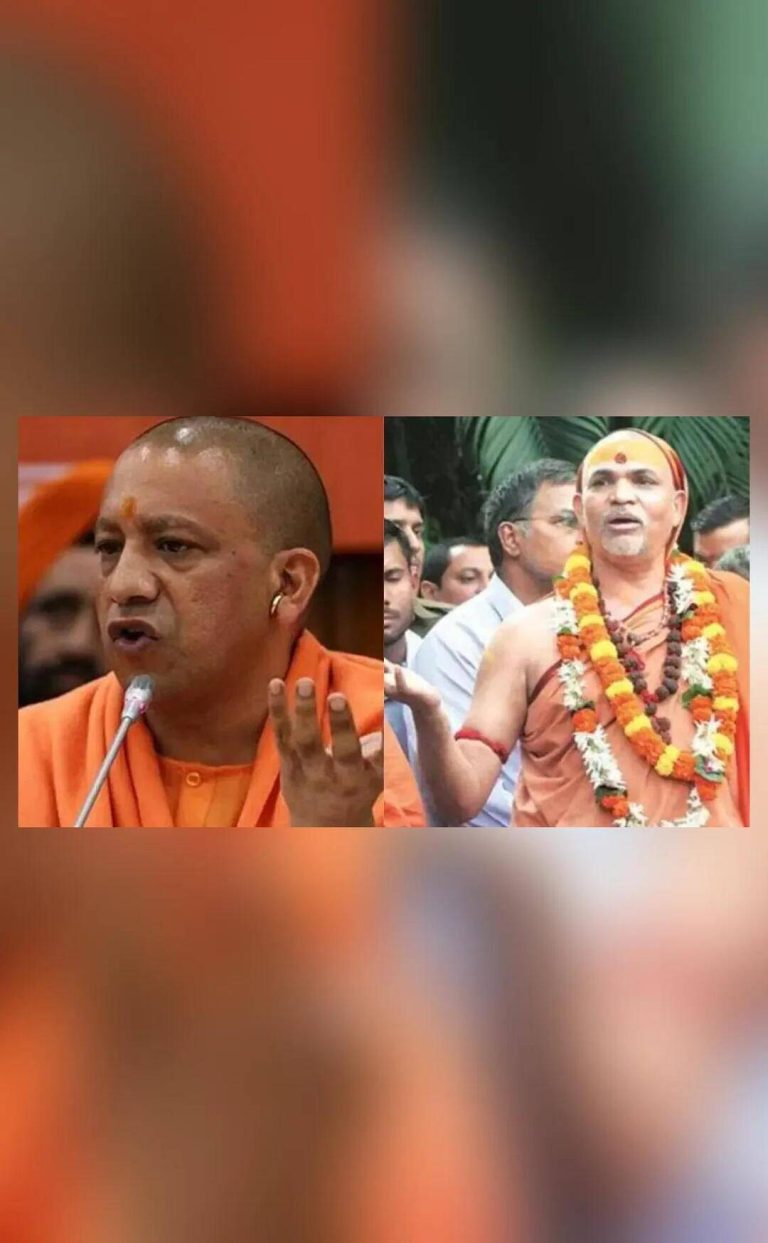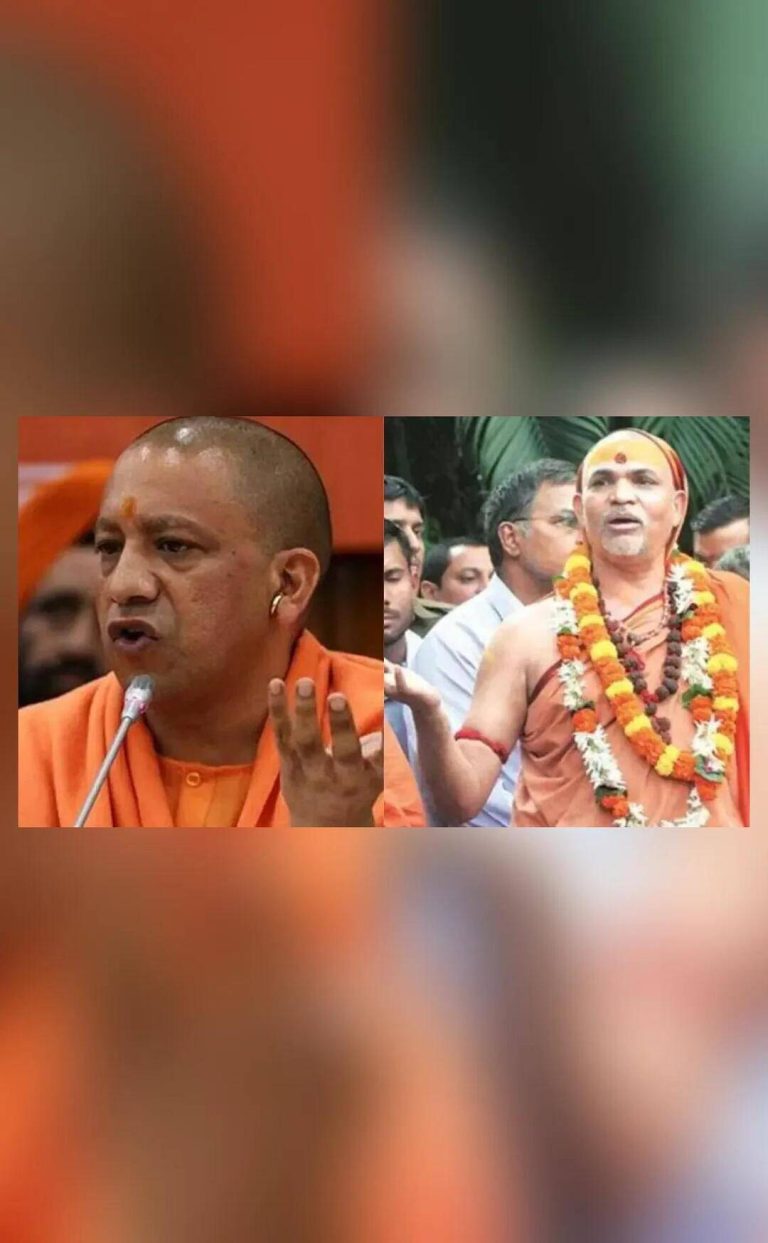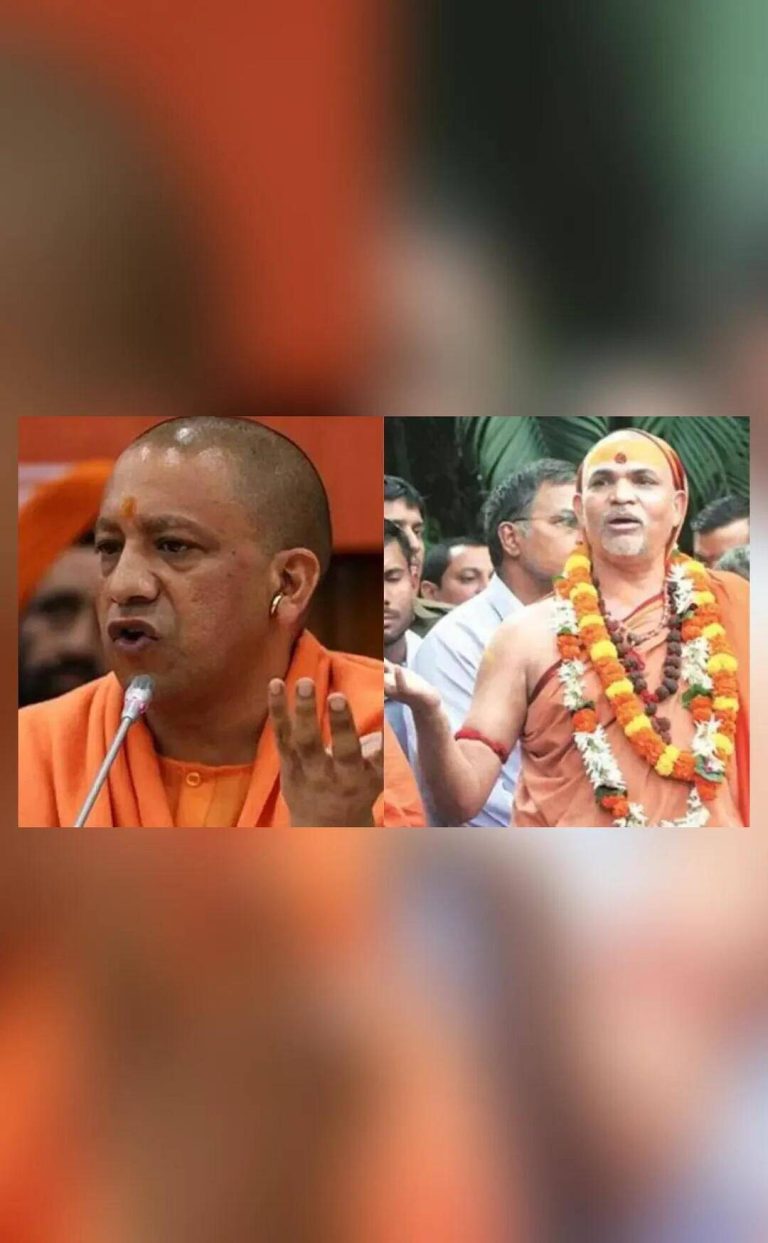
Prove you are Hindu, ban beef export: Shankaracharya to CM Yogi
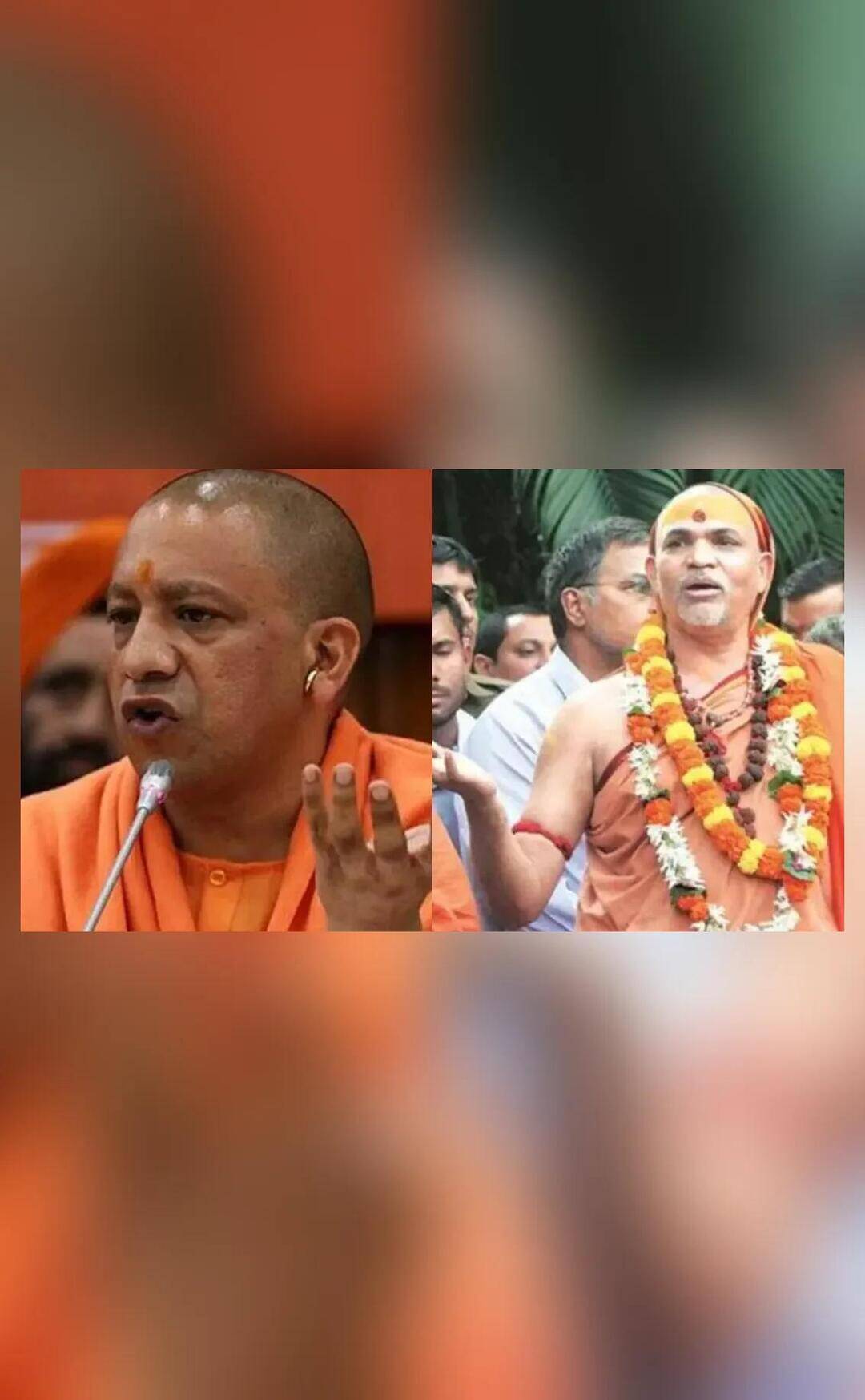
In a bold and provocative statement, Shankaracharya Swami Avimukteshwaranand Saraswati has given a 40-day “ultimatum” to Uttar Pradesh Chief Minister Yogi Adityanath to prove his commitment to Hindu values. The Shankaracharya, a prominent Hindu spiritual leader, has demanded that the CM take two significant steps to demonstrate his dedication to the faith: halt beef exports from the state and declare the cow as ‘Rajya Mata’ (mother of the state).
This ultimatum comes after the Shankaracharya returned to his Varanasi math (monastery) following a period of protest during the Prayagraj Magh Mela, a significant Hindu festival. According to reports, the administration had prevented him from taking a holy dip in the Ganges River, sparking outrage and prompting his protest. The Shankaracharya’s demands have now shifted the focus to the state government’s policies and actions regarding Hindu values and the protection of cows.
The demand to ban beef exports from Uttar Pradesh is a long-standing one, with many Hindu organizations and individuals advocating for a complete halt to the trade. The cow is considered a sacred animal in Hinduism, and its slaughter is widely viewed as a sacrilegious act. By allowing beef exports, the state government is seen as condoning the killing of cows, which is anathema to many Hindus.
The Shankaracharya’s call to declare the cow as ‘Rajya Mata’ is also significant, as it would formalize the animal’s revered status in the state. This move would not only acknowledge the cow’s importance in Hindu culture but also provide a legal framework for its protection. By granting the cow the status of ‘Rajya Mata’, the state government would be recognizing its role as a symbol of Hindu heritage and values.
The 40-day ultimatum given by the Shankaracharya has sparked a lively debate, with many Hindus expressing support for his demands. The issue has also drawn attention to the complex and often contentious relationship between politics and religion in India. While some argue that the state government should prioritize economic development and secularism, others believe that it has a duty to protect and promote Hindu values, given the state’s significant Hindu population.
The response from the state government has been cautious, with no official statement issued so far. However, it is likely that the CM will face significant pressure to address the Shankaracharya’s demands, particularly given the approaching elections and the importance of Hindu votes in the state.
The Shankaracharya’s protest and ultimatum have also highlighted the growing assertiveness of Hindu religious leaders in Indian politics. As the country’s religious landscape continues to evolve, it is likely that we will see more instances of spiritual leaders weighing in on political issues and advocating for policies that align with their values.
In conclusion, the Shankaracharya’s demands to CM Yogi Adityanath have sparked a critical debate about the role of Hindu values in Indian politics. The call to ban beef exports and declare the cow as ‘Rajya Mata’ has resonated with many Hindus, who see these steps as essential to protecting their faith and heritage. As the state government navigates this complex issue, it will be interesting to see how it balances the competing demands of economic development, secularism, and Hindu values.
Ultimately, the outcome of this situation will depend on the state government’s willingness to engage with the Shankaracharya’s demands and the broader Hindu community. If the CM is able to find a way to address these concerns while maintaining the state’s economic and social development, it could have significant implications for the future of Hindu-Muslim relations and the role of religion in Indian politics.
About the Author