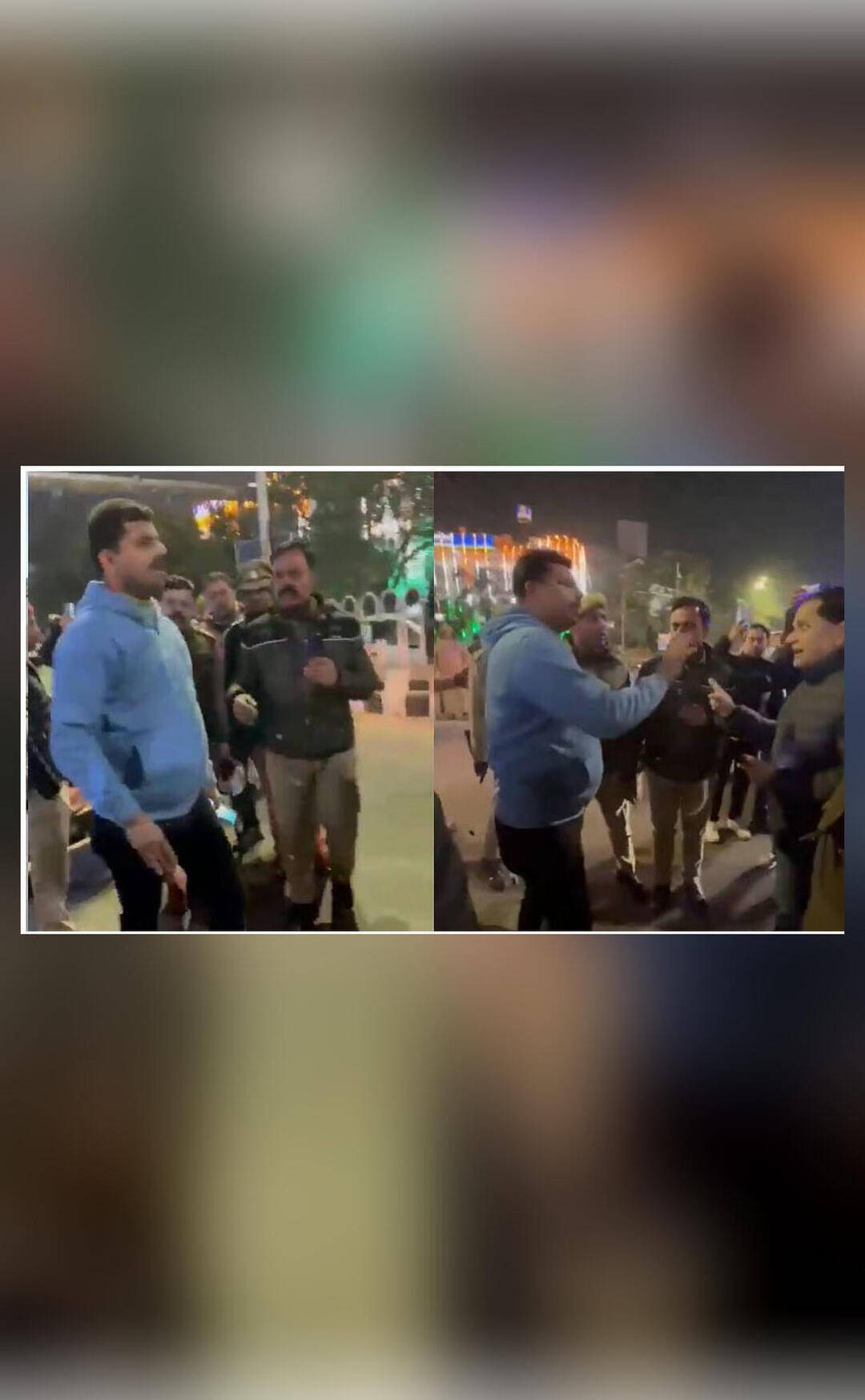
Policeman rams car onto barricades & yells at DCP in Lucknow, held
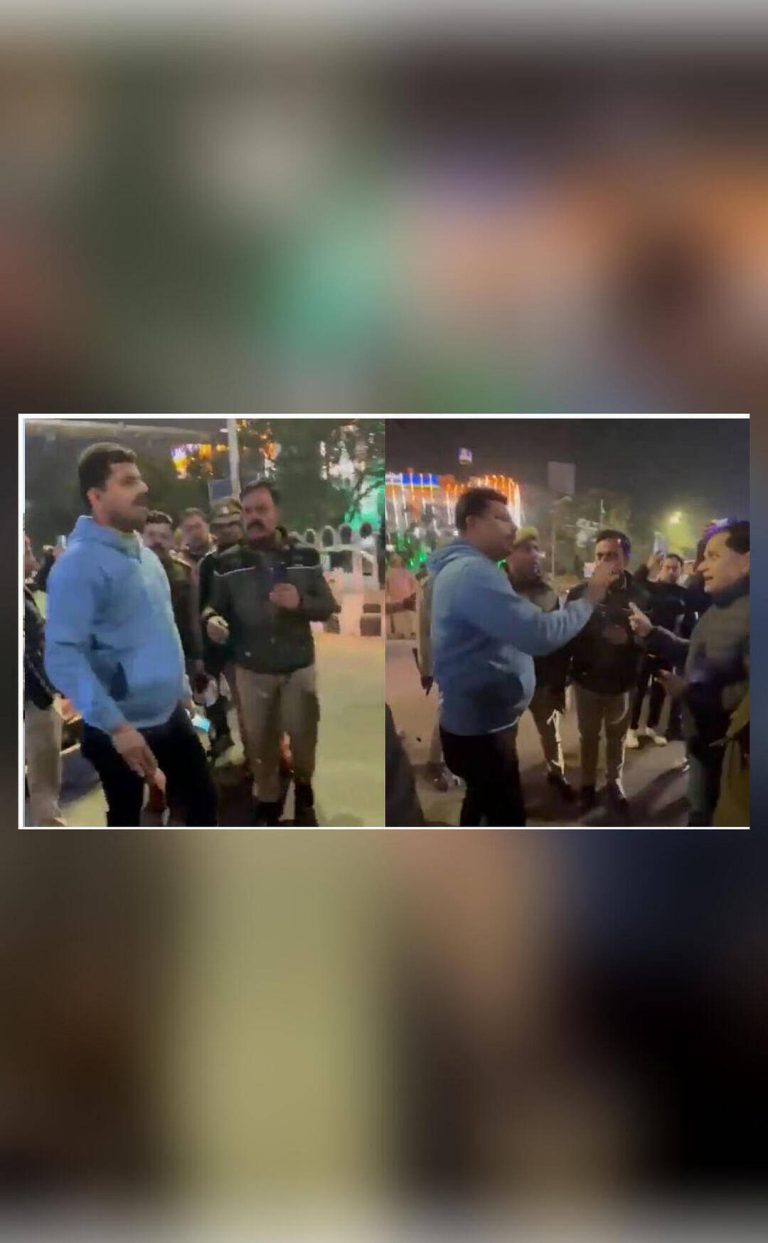
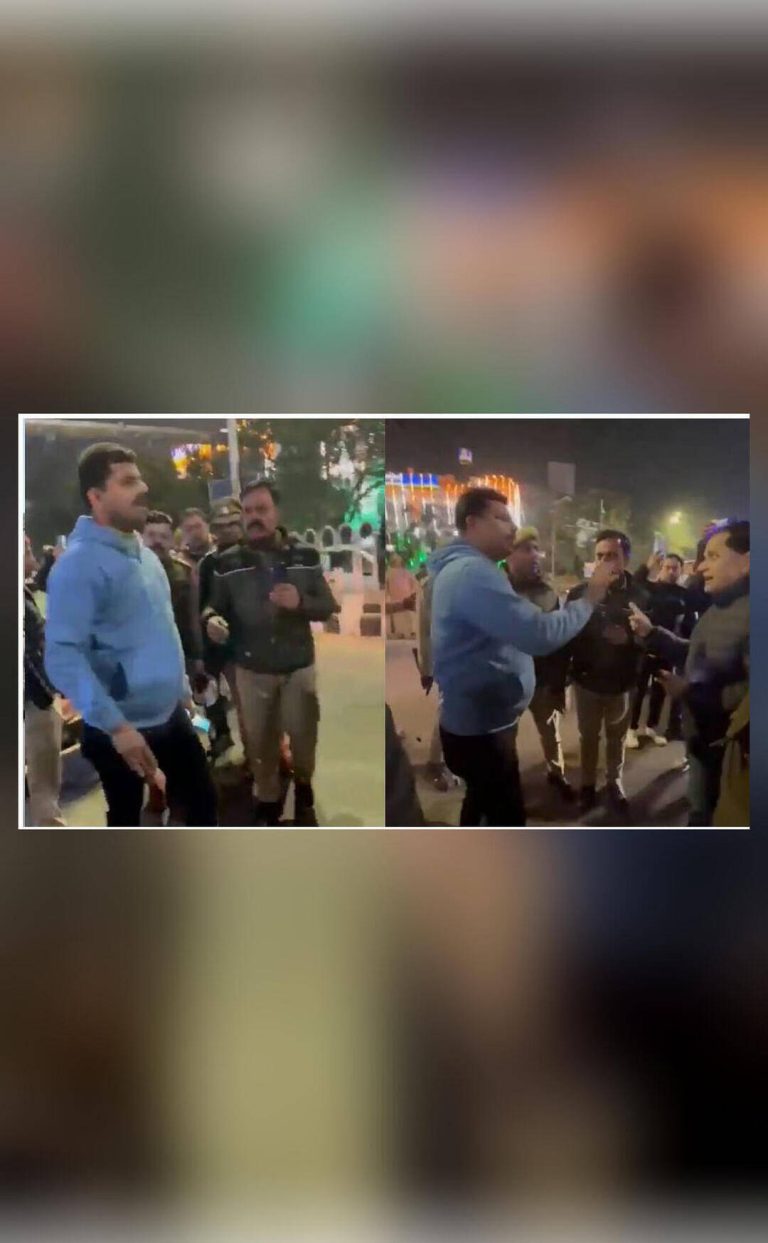
In a shocking incident that has raised concerns about the behavior of law enforcement officials, a Sub Inspector in Lucknow allegedly drove his car into traffic barricades at the city’s Hazratganj crossing on Thursday. The incident took a more disturbing turn when the Sub Inspector misbehaved with the Traffic DCP, Kamlesh Dixit, yelling at him. The police have since arrested the accused and ordered a medical examination to confirm whether he was drunk at the time of the incident.
According to eyewitnesses, the Sub Inspector’s car rammed into the barricades at the Hazratganj crossing, causing a commotion in the area. When the Traffic DCP, Kamlesh Dixit, approached the Sub Inspector to question him about the incident, he was met with aggressive behavior. The Sub Inspector allegedly yelled at DCP Dixit, creating a scene that drew the attention of passersby.
The police have taken swift action against the Sub Inspector, arresting him and initiating departmental and legal proceedings. The authorities have also ordered a medical examination to determine whether the Sub Inspector was under the influence of alcohol at the time of the incident. The presence of alcohol bottles in the Sub Inspector’s vehicle has further fueled suspicions that he may have been drunk.
The incident has raised questions about the conduct of law enforcement officials and the need for stricter disciplinary measures to ensure that they uphold the highest standards of behavior. The fact that a Sub Inspector, who is expected to enforce the law and maintain order, could engage in such reckless and irresponsible behavior is a cause for concern.
The police have a crucial role to play in maintaining public trust and confidence, and incidents like these can erode that trust. It is essential for law enforcement agencies to take prompt and decisive action against officials who engage in misconduct, ensuring that they are held accountable for their actions.
The incident in Lucknow is a reminder that police officials are not above the law and must be subject to the same rules and regulations as the general public. The authorities must take a firm stance against misconduct and ensure that officials who engage in such behavior are dealt with swiftly and severely.
In recent years, there have been several instances of police misconduct in India, ranging from bribery and corruption to violence and abuse of power. These incidents have highlighted the need for greater accountability and transparency within law enforcement agencies.
The government has taken steps to address these concerns, including the introduction of police reforms and the establishment of independent oversight bodies. However, more needs to be done to ensure that police officials are held accountable for their actions and that the public has confidence in the ability of law enforcement agencies to maintain order and uphold the law.
In the case of the Sub Inspector in Lucknow, the police have taken the right step by arresting him and initiating departmental and legal proceedings. The medical examination will help determine whether the Sub Inspector was under the influence of alcohol, and if so, what measures can be taken to prevent such incidents in the future.
The incident is a reminder that police officials are human beings who can make mistakes, but it is how they are held accountable for those mistakes that matters. The public expects law enforcement officials to uphold the highest standards of behavior, and it is the responsibility of the authorities to ensure that they do so.
In conclusion, the incident in Lucknow is a disturbing reminder of the need for greater accountability and transparency within law enforcement agencies. The police have taken the right step by arresting the Sub Inspector and initiating departmental and legal proceedings. However, more needs to be done to address the underlying issues that contribute to police misconduct and to ensure that officials who engage in such behavior are held accountable for their actions.
About the Author