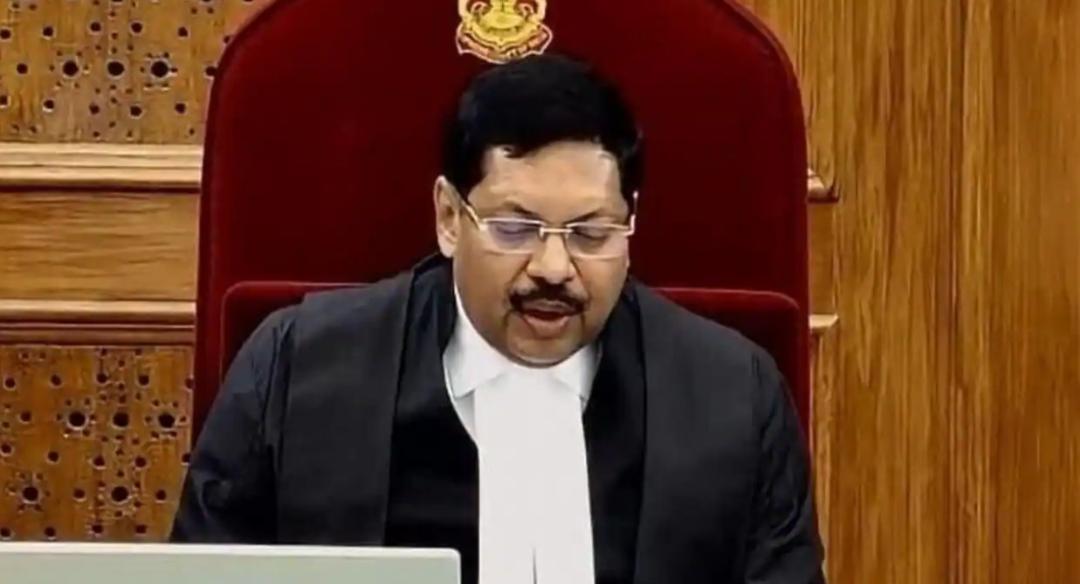
Passing ‘bulldozer order’ was my most important one: CJI Gavai
As the tenure of Chief Justice of India (CJI) BR Gavai comes to an end, he has reflected on his time in office and identified one particular judgement as the most significant of his career. In a recent statement, CJI Gavai expressed his pride in delivering a verdict against “bulldozer justice,” a term used to describe the practice of demolishing homes of individuals accused or convicted of crimes. The CJI’s comments have sparked a wider conversation about the balance between law and order, and the protection of individual rights.
At the heart of CJI Gavai’s judgement is a simple yet profound question: “How can a house be demolished just because a person is accused of a crime or convicted of it?” This inquiry gets to the core of the issue, highlighting the potential for abuse and the lack of due process that can occur when such actions are taken. The CJI’s concern is not only with the principle of justice but also with the human impact of such measures. Demolishing a home can have far-reaching consequences, affecting not just the individual accused but also their family members, who may be innocent and have done nothing wrong.
The practice of “bulldozer justice” has been criticized by many as a form of collective punishment, where the actions of one individual are used to justify harsh measures against others. This approach can lead to a breakdown in trust between law enforcement and the communities they serve, exacerbating social tensions and potentially creating more problems than it solves. By speaking out against this practice, CJI Gavai has underscored the importance of upholding the rule of law and protecting the rights of all individuals, regardless of their background or circumstances.
CJI Gavai’s judgement is also significant because it reflects a commitment to the principles of justice and fairness that underpin the Indian legal system. The Constitution of India guarantees certain fundamental rights to all citizens, including the right to life, liberty, and property. The demolition of homes without due process or adequate compensation raises serious concerns about the protection of these rights. By intervening in such cases, the judiciary plays a crucial role in ensuring that the executive does not overstep its authority and that the rights of citizens are safeguarded.
As CJI Gavai prepares to retire on November 23, his legacy will be remembered for this significant judgement, among others. He will be succeeded by CJI-designate Justice Surya Kant, who will take office on November 24. The transition marks an important moment for the Indian judiciary, as it continues to navigate the complexities of the legal landscape and address the challenges of the 21st century.
In the context of “bulldozer justice,” the judiciary faces a delicate balancing act. On one hand, it must ensure that those who break the law are held accountable for their actions. On the other hand, it must protect the rights of individuals and prevent the misuse of power by the state. CJI Gavai’s judgement serves as a reminder of the importance of this balance and the need for a nuanced approach to justice that takes into account the complexities of each case.
The implications of CJI Gavai’s judgement extend beyond the specific context of “bulldozer justice.” They speak to a broader issue of how the legal system responds to social and political pressures. In times of crisis or unrest, there may be a temptation to resort to drastic measures that compromise individual rights. However, such approaches can have long-term consequences that undermine the very fabric of society. By upholding the principles of justice and due process, the judiciary helps to ensure that the rule of law is maintained, even in the face of adversity.
In conclusion, CJI Gavai’s judgement against “bulldozer justice” is a landmark decision that highlights the importance of protecting individual rights and upholding the rule of law. As he prepares to retire, his legacy will be remembered for this significant contribution to the Indian judiciary. The transition to a new CJI offers an opportunity for reflection on the role of the judiciary in safeguarding the rights of citizens and ensuring that justice is served in a fair and impartial manner.
About the Author