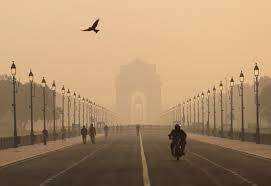
No link between air pollution & deaths: Govt
The Indian government has sparked a controversy by claiming that there is no conclusive data to establish a direct link between air pollution and deaths in the country. Minister of State for Health, Prataprao Jadhav, made this statement in the Rajya Sabha on Tuesday, citing that the health effects of air pollution are a complex interplay of various factors. According to Jadhav, these factors include food habits, occupational habits, socioeconomic status, medical history, immunity, and heredity, among others.
The statement has raised eyebrows, as it comes at a time when air pollution has become a major concern in India, with several cities consistently ranking among the most polluted in the world. The government’s claim has been met with skepticism by environmentalists and health experts, who argue that there is overwhelming evidence to suggest that air pollution is a significant contributor to mortality rates in the country.
Jadhav’s statement is based on the idea that the relationship between air pollution and health is not straightforward. He argued that the health effects of air pollution are a “synergistic manifestation of factors,” which means that they are the result of a complex interplay between multiple variables. While this is certainly true, it does not necessarily mean that air pollution is not a significant contributor to health problems.
In fact, numerous studies have shown that air pollution is a major risk factor for a range of health problems, including respiratory and cardiovascular disease, cancer, and even neurological disorders. The World Health Organization (WHO) estimates that nine out of ten people worldwide breathe polluted air, and that air pollution is responsible for seven million premature deaths every year.
In India, the problem of air pollution is particularly acute. The country is home to some of the most polluted cities in the world, with Delhi and other major urban centers consistently ranking among the top ten most polluted cities globally. The air quality in these cities is often hazardous, with levels of particulate matter (PM2.5) and other pollutants exceeding safe limits by several times.
The health impacts of air pollution in India are significant. According to a study published in the journal Lancet, air pollution is responsible for over 1.2 million premature deaths in India every year. This is a staggering number, and it highlights the urgent need for action to address the problem of air pollution in the country.
Despite the evidence, the government’s claim that there is no conclusive data to establish a direct link between air pollution and deaths has sparked controversy. Many have argued that the government is downplaying the problem of air pollution, and that its statement is not supported by scientific evidence.
So, what does the evidence say? Is there really no link between air pollution and deaths in India? The answer is complex. While it is true that the relationship between air pollution and health is multifaceted, and that many factors contribute to health outcomes, the evidence suggests that air pollution is a significant contributor to mortality rates in India.
Studies have shown that exposure to air pollution is associated with a range of health problems, including respiratory and cardiovascular disease, cancer, and even neurological disorders. In India, the problem of air pollution is particularly acute, with high levels of particulate matter (PM2.5) and other pollutants in the air.
The government’s claim that there is no conclusive data to establish a direct link between air pollution and deaths is not supported by the evidence. In fact, numerous studies have demonstrated a clear link between air pollution and health outcomes in India.
For example, a study published in the journal Environmental Health Perspectives found that exposure to air pollution in Delhi was associated with a significant increase in mortality rates. The study found that for every 10 microgram per cubic meter increase in PM2.5, there was a 3% increase in mortality rates.
Another study published in the journal Lancet found that air pollution was responsible for over 1.2 million premature deaths in India every year. The study used a novel approach to estimate the health impacts of air pollution, and found that the problem was particularly acute in urban areas.
In conclusion, the government’s claim that there is no conclusive data to establish a direct link between air pollution and deaths in India is not supported by the evidence. While it is true that the relationship between air pollution and health is complex, and that many factors contribute to health outcomes, the evidence suggests that air pollution is a significant contributor to mortality rates in the country.
It is imperative that the government takes immediate action to address the problem of air pollution in India. This includes implementing policies to reduce emissions from vehicles and industries, increasing the use of clean energy, and improving public transportation.
The government must also invest in research and development to better understand the health impacts of air pollution, and to identify effective strategies for reducing exposure. This includes supporting studies on the health effects of air pollution, and working with international partners to develop new technologies and approaches for reducing emissions.
Ultimately, the problem of air pollution in India requires a comprehensive and multifaceted approach. It requires the government, businesses, and individuals to work together to reduce emissions, improve air quality, and protect public health.
News Source: https://x.com/PTI_News/status/1998360503333355572
About the Author