No link between air pollution & deaths: Govt
The Indian government has made a statement that has sparked debate and controversy among environmentalists and health experts. Minister of State for Health, Prataprao Jadhav, told the Rajya Sabha on Tuesday that there was no conclusive data in India to establish a direct link between deaths exclusively with air pollution. This statement has raised eyebrows, as it seems to downplay the well-documented risks associated with air pollution.
According to Jadhav, “The health effects of air pollution are a synergistic manifestation of factors, which include food habits, occupational habits, socioeconomic status, medical history, immunity, heredity, etc.” This statement suggests that the government believes that air pollution is just one of many factors that contribute to health problems, and that it is not the sole cause of deaths. While it is true that many factors can contribute to health issues, the scientific consensus is clear: air pollution is a significant and independent risk factor for a range of health problems, including respiratory and cardiovascular disease.
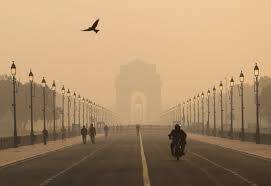
The World Health Organization (WHO) estimates that nine out of ten people worldwide breathe polluted air, and that air pollution is responsible for seven million premature deaths each year. In India, the problem is particularly acute, with many cities experiencing severe air pollution due to a combination of factors, including rapid urbanization, industrialization, and the use of fossil fuels. The Indian government’s statement has been met with skepticism by many experts, who point out that the evidence linking air pollution to health problems is overwhelming.
One of the main concerns is that the government’s statement may be used to downplay the need for urgent action to address air pollution. If the government is suggesting that air pollution is not a major contributor to health problems, it may be less likely to take the necessary steps to reduce pollution levels. This could have serious consequences for public health, as air pollution continues to pose a significant threat to the health and wellbeing of Indians.
Another issue is that the government’s statement seems to be at odds with the available scientific evidence. Numerous studies have shown that air pollution is a major risk factor for a range of health problems, including heart disease, stroke, and lung cancer. The evidence is clear: exposure to polluted air can have serious and long-lasting health consequences, and it is not just one of many factors that contribute to health problems.
It is also worth noting that the government’s statement may be seen as an attempt to shift the blame away from pollution and onto other factors, such as lifestyle or genetics. While it is true that these factors can play a role in health outcomes, it is not a valid excuse for failing to address the root causes of air pollution. The government has a responsibility to protect the health and wellbeing of its citizens, and this includes taking action to reduce pollution levels.
In recent years, India has made some progress in addressing air pollution, including the implementation of new emission standards for vehicles and the promotion of clean energy sources. However, much more needs to be done to address the scale and complexity of the problem. The government’s statement suggests that it may not be taking the issue seriously enough, and that it may be prioritizing economic growth over public health.
In conclusion, the Indian government’s statement that there is no link between air pollution and deaths is misleading and potentially harmful. The scientific evidence is clear: air pollution is a significant and independent risk factor for a range of health problems, and it is not just one of many factors that contribute to health issues. The government has a responsibility to protect the health and wellbeing of its citizens, and this includes taking urgent action to address air pollution.
As the world’s second-most populous country, India has a critical role to play in addressing the global problem of air pollution. The government’s statement suggests that it may not be taking this responsibility seriously enough, and that it may be prioritizing economic growth over public health. It is time for the government to take a more proactive and evidence-based approach to addressing air pollution, and to prioritize the health and wellbeing of its citizens.
Source: https://x.com/PTI_News/status/1998360503333355572
About the Author