No link between air pollution & deaths: Govt
The Indian government has made a startling claim that there is no conclusive data to establish a direct link between deaths and air pollution in the country. This statement was made by Minister of State for Health, Prataprao Jadhav, in the Rajya Sabha on Tuesday. According to Jadhav, the health effects of air pollution are not solely caused by air pollution, but are rather a complex interplay of various factors.
“The health effects of air pollution are a synergistic manifestation of factors, which include food habits, occupational habits, socioeconomic status, medical history, immunity, heredity, etc,” he said. This statement has sparked a debate about the relationship between air pollution and health in India, with many experts and activists expressing surprise and concern over the government’s claim.
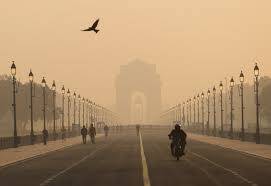
Air pollution is a major environmental and health issue in India, with many cities across the country experiencing severe levels of pollution. The air quality in cities like Delhi, Mumbai, and Kolkata is often hazardous, with high levels of particulate matter, nitrogen dioxide, and other pollutants. This has led to a significant increase in respiratory problems, cardiovascular diseases, and other health issues among the population.
Despite the growing body of evidence linking air pollution to poor health outcomes, the government’s claim that there is no direct link between the two has raised eyebrows. Many experts argue that the relationship between air pollution and health is well-established and that the government’s statement is misleading.
“There is overwhelming evidence to suggest that air pollution is a major cause of premature death and disease in India,” said Dr. Kumar, a public health expert. “The government’s claim that there is no direct link between air pollution and deaths is not supported by scientific evidence. Air pollution is a major risk factor for cardiovascular disease, respiratory disease, and other health problems, and the government should take immediate action to reduce pollution levels.”
The government’s statement has also been criticized by environmental activists, who argue that it is an attempt to downplay the severity of the air pollution problem in India. “The government’s claim is a classic case of denial and obfuscation,” said Alok, an environmental activist. “The fact is that air pollution is a major killer in India, and the government needs to take urgent action to address the problem. Instead of making misleading statements, the government should focus on implementing policies to reduce pollution levels and protect public health.”
The issue of air pollution is complex and multifaceted, and there are many factors that contribute to poor air quality in India. These include the rapid growth of industries, vehicles, and construction activities, as well as the lack of effective regulations and enforcement mechanisms. However, the government’s claim that there is no direct link between air pollution and deaths oversimplifies the issue and ignores the overwhelming evidence to the contrary.
In recent years, there have been numerous studies that have demonstrated the link between air pollution and poor health outcomes in India. For example, a study published in the journal Lancet found that air pollution was responsible for an estimated 1.2 million deaths in India in 2017. Another study published in the journal Environmental Health Perspectives found that exposure to particulate matter was associated with increased risk of cardiovascular disease and respiratory disease in India.
These studies and others like them provide strong evidence of the link between air pollution and health in India. They suggest that the government’s claim that there is no direct link between the two is not supported by scientific evidence. Instead, the government should focus on implementing policies to reduce pollution levels and protect public health.
Some of the measures that the government can take to address the air pollution problem include increasing the use of clean energy sources, improving fuel efficiency standards for vehicles, and implementing stricter emissions regulations for industries. The government can also promote the use of public transport, walking, and cycling, and invest in green infrastructure such as parks and green roofs.
In conclusion, the government’s claim that there is no direct link between air pollution and deaths in India is not supported by scientific evidence. The relationship between air pollution and health is complex and multifaceted, and there are many factors that contribute to poor air quality in India. However, the overwhelming evidence suggests that air pollution is a major cause of premature death and disease in India, and the government should take immediate action to reduce pollution levels and protect public health.
Source: https://x.com/PTI_News/status/1998360503333355572
About the Author