No link between air pollution & deaths: Govt
The Indian government has made a startling claim that there is no conclusive data to establish a direct link between air pollution and deaths in the country. This statement was made by Minister of State for Health, Prataprao Jadhav, in the Rajya Sabha on Tuesday. According to Jadhav, the health effects of air pollution are a complex interplay of various factors, including food habits, occupational habits, socioeconomic status, medical history, immunity, and heredity.
The minister’s statement has sparked a heated debate about the impact of air pollution on public health in India. While the government claims that there is no direct link between air pollution and deaths, many experts and researchers argue that the evidence suggests otherwise. Air pollution is a major environmental risk factor for health, and studies have shown that it can cause a range of health problems, from respiratory diseases to cardiovascular disease and even cancer.
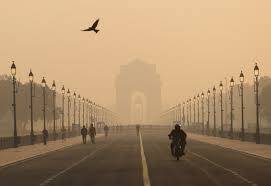
In recent years, India has struggled with severe air pollution, particularly in urban areas. The capital city of Delhi, for example, has been ranked as one of the most polluted cities in the world, with air quality indexes often reaching hazardous levels. The pollution is caused by a combination of factors, including vehicle emissions, industrial activity, and the burning of biomass and fossil fuels.
Despite the severity of the problem, the government’s claim that there is no direct link between air pollution and deaths has raised eyebrows. Many experts argue that the evidence is clear: air pollution is a major public health risk, and it is responsible for a significant number of premature deaths in India every year.
So, what does the evidence say? Studies have shown that air pollution can cause a range of health problems, from mild symptoms like coughing and wheezing to life-threatening conditions like heart attacks and strokes. The World Health Organization (WHO) estimates that air pollution is responsible for around 7 million premature deaths worldwide every year, with the majority of these deaths occurring in low- and middle-income countries like India.
In India, the problem is particularly acute. A study published in the journal Lancet Planetary Health found that air pollution was responsible for around 1.2 million premature deaths in India in 2017, with the majority of these deaths occurring in urban areas. The study also found that the economic cost of air pollution in India was around $150 billion, which is equivalent to around 3% of the country’s GDP.
So, why is the government claiming that there is no direct link between air pollution and deaths? One possible reason is that the government is trying to downplay the severity of the problem. By claiming that the health effects of air pollution are a complex interplay of various factors, the government may be trying to shift the blame away from pollution and onto other factors like food habits and socioeconomic status.
However, this approach is unlikely to be effective in the long run. The evidence is clear: air pollution is a major public health risk, and it requires urgent attention from policymakers. Rather than trying to downplay the problem, the government should be taking concrete steps to reduce pollution and protect public health.
Some possible solutions include increasing the use of clean energy sources like solar and wind power, improving fuel efficiency standards for vehicles, and implementing stricter emissions controls on industries. The government could also invest in public education campaigns to raise awareness about the risks of air pollution and promote behaviors that reduce exposure to pollution, like wearing masks and avoiding outdoor activities during peak pollution hours.
In conclusion, the government’s claim that there is no direct link between air pollution and deaths is unlikely to be credible in the face of overwhelming evidence to the contrary. Air pollution is a major public health risk in India, and it requires urgent attention from policymakers. Rather than trying to downplay the problem, the government should be taking concrete steps to reduce pollution and protect public health.
Source: https://x.com/PTI_News/status/1998360503333355572
About the Author