No link between air pollution & deaths: Govt
The Indian government has made a surprising statement, claiming that there is no conclusive data to establish a direct link between air pollution and deaths in the country. This statement was made by Minister of State for Health, Prataprao Jadhav, in the Rajya Sabha on Tuesday. According to Jadhav, the health effects of air pollution are a complex manifestation of various factors, including food habits, occupational habits, socioeconomic status, medical history, immunity, and heredity.
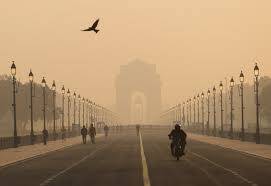
The statement has sparked a heated debate, with many experts and environmentalists expressing their disagreement with the government’s stance. Air pollution has been a major concern in India, with many cities consistently ranking among the most polluted in the world. The toxic air has been linked to a range of health problems, from respiratory issues to cardiovascular disease and even cancer.
However, Jadhav’s statement suggests that the government does not believe that air pollution is the sole cause of these health problems. Instead, he argued that the health effects of air pollution are the result of a combination of factors, including lifestyle choices, occupation, and socioeconomic status. This implies that the government is shifting the focus away from air pollution as a primary cause of health issues and towards other factors that may be contributing to the problem.
The statement has been met with skepticism by many, who argue that the government is downplaying the role of air pollution in causing health problems. They point to a wealth of scientific evidence that suggests a clear link between air pollution and adverse health effects. For example, studies have shown that exposure to particulate matter (PM) 2.5, a common air pollutant, can increase the risk of cardiovascular disease, respiratory problems, and even premature death.
Moreover, the government’s statement seems to be at odds with its own data. According to the Ministry of Environment, Forest and Climate Change, air pollution is responsible for an estimated 1.2 million premature deaths in India every year. This is a staggering number, and it suggests that air pollution is a major public health concern that cannot be ignored.
So, why is the government downplaying the link between air pollution and deaths? One possible reason is that the government is trying to shift the blame away from itself and onto individual citizens. By suggesting that lifestyle choices and socioeconomic factors are the primary causes of health problems, the government may be trying to avoid taking responsibility for addressing the root causes of air pollution.
Another possible reason is that the government is trying to avoid taking tough measures to reduce air pollution. Implementing policies to reduce air pollution, such as increasing fuel standards, promoting renewable energy, and improving public transportation, can be costly and politically unpopular. By downplaying the link between air pollution and deaths, the government may be trying to avoid the political backlash that comes with taking tough action to address the problem.
Regardless of the reasons behind the government’s statement, it is clear that air pollution remains a major public health concern in India. The government must take immediate action to address the problem, including implementing policies to reduce air pollution, increasing funding for research and development, and promoting public awareness and education.
In conclusion, the government’s statement that there is no link between air pollution and deaths is a concerning development that has sparked a heated debate. While the statement may be an attempt to shift the focus away from air pollution as a primary cause of health issues, it is clear that the problem remains a major concern. The government must take immediate action to address the problem, including implementing policies to reduce air pollution and promoting public awareness and education.
Source: https://x.com/PTI_News/status/1998360503333355572
About the Author