No link between air pollution & deaths: Govt
The Indian government has made a statement that has sparked controversy and debate among environmentalists and health experts. Minister of State for Health, Prataprao Jadhav, told the Rajya Sabha on Tuesday that there was no conclusive data in India to establish a direct link between deaths exclusively with air pollution. This statement has raised eyebrows, as it seems to contradict the overwhelming evidence from around the world that air pollution is a significant contributor to premature deaths.
According to Jadhav, “The health effects of air pollution are a synergistic manifestation of factors, which include food habits, occupational habits, socioeconomic status, medical history, immunity, heredity, etc.” This statement suggests that the government believes that air pollution is just one of many factors that contribute to health problems, and that it is not possible to isolate its impact on mortality rates.
However, this view is not supported by the majority of scientific research on the subject. Studies have consistently shown that exposure to poor air quality can lead to a range of health problems, including respiratory and cardiovascular disease, cancer, and even premature death. The World Health Organization (WHO) estimates that nine out of ten people worldwide breathe polluted air, and that air pollution is responsible for seven million premature deaths every year.
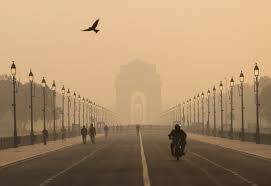
In India, the problem of air pollution is particularly acute. The country is home to some of the most polluted cities in the world, and the air quality in many urban areas is often hazardous to human health. The government’s own data shows that air pollution is a major public health concern, with millions of people affected by poor air quality every year.
Despite this, the government’s statement suggests that it is downplaying the role of air pollution in causing deaths. This has led to criticism from environmentalists and health experts, who argue that the government is not taking the problem of air pollution seriously enough.
One of the main concerns is that the government’s statement may be used to justify inaction on air pollution. If the government does not accept that air pollution is a major contributor to premature deaths, it may not feel the need to take urgent action to address the problem. This could have serious consequences for public health, as air pollution continues to affect millions of people across the country.
Another concern is that the government’s statement may be based on flawed data or a lack of understanding of the science. The government has been criticized in the past for its handling of environmental issues, and its statement on air pollution has raised fears that it is not taking the problem seriously enough.
In recent years, there have been several studies that have highlighted the link between air pollution and premature deaths in India. One study published in the journal Lancet found that air pollution was responsible for over 1.2 million deaths in India in 2017. Another study published in the journal Environmental Health Perspectives found that exposure to poor air quality was associated with an increased risk of cardiovascular disease and stroke.
These studies, and many others like them, provide strong evidence that air pollution is a major public health concern in India. They suggest that the government’s statement is not supported by the scientific evidence, and that urgent action is needed to address the problem of air pollution.
So, what can be done to address the problem of air pollution in India? Firstly, the government needs to take the problem seriously and acknowledge the link between air pollution and premature deaths. This means accepting the scientific evidence and using it to inform policy decisions.
Secondly, the government needs to take urgent action to reduce air pollution. This could include measures such as increasing the use of clean energy, improving fuel efficiency, and promoting the use of electric vehicles. The government could also implement policies to reduce emissions from industrial sources, such as power plants and factories.
Thirdly, the government needs to improve its monitoring and reporting of air pollution. This includes setting up a network of air quality monitoring stations across the country, and making the data available to the public in real-time.
Finally, the government needs to educate the public about the risks of air pollution and the steps they can take to protect themselves. This could include awareness campaigns, as well as programs to promote the use of masks and other protective equipment.
In conclusion, the government’s statement that there is no link between air pollution and deaths is not supported by the scientific evidence. Air pollution is a major public health concern in India, and urgent action is needed to address the problem. The government needs to take the problem seriously, and use the scientific evidence to inform its policy decisions. By working together, we can reduce air pollution and improve public health in India.
News source: https://x.com/PTI_News/status/1998360503333355572
About the Author