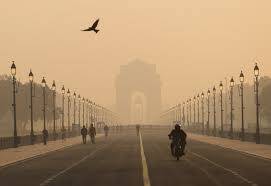
No link between air pollution & deaths: Govt
In a statement that has sparked widespread debate and discussion, Minister of State for Health, Prataprao Jadhav, told the Rajya Sabha on Tuesday that there was no conclusive data in India to establish a direct link between deaths exclusively with air pollution. This statement has significant implications for the country, where air pollution is a major concern, particularly in urban areas. According to Jadhav, “The health effects of air pollution are a synergistic manifestation of factors, which include food habits, occupational habits, socioeconomic status, medical history, immunity, heredity, etc.” This means that while air pollution is certainly a contributing factor to health problems, it is not the sole cause of deaths, and other factors also play a significant role.
This statement has been met with skepticism by many, who point out that air pollution is a well-established risk factor for a range of health problems, including respiratory and cardiovascular disease. The World Health Organization (WHO) has estimated that air pollution is responsible for an estimated 7 million premature deaths worldwide each year, with the majority of these deaths occurring in low- and middle-income countries. In India, where air pollution is a major problem, particularly in cities such as Delhi and Mumbai, the health impacts of air pollution are a major concern.
Despite the lack of conclusive data, there is a significant body of evidence that suggests a link between air pollution and health problems. Studies have shown that exposure to air pollution can increase the risk of respiratory problems, such as asthma and chronic obstructive pulmonary disease (COPD), as well as cardiovascular disease, including heart attacks and strokes. Air pollution has also been linked to an increased risk of lung cancer, and may also have other health effects, such as neurodegenerative disease and cognitive impairment.
So, why has the government concluded that there is no link between air pollution and deaths? One possible reason is that the data on air pollution and health effects in India is limited, and more research is needed to fully understand the relationship between the two. While there are many studies that have investigated the health effects of air pollution in other countries, the evidence base in India is less well developed. Additionally, the government may be taking a cautious approach, recognizing that the relationship between air pollution and health effects is complex, and influenced by many different factors.
Another possible reason for the government’s conclusion is that it is attempting to downplay the significance of air pollution as a public health issue. Air pollution is a major problem in India, and addressing it will require significant investment and effort. By suggesting that there is no link between air pollution and deaths, the government may be attempting to avoid taking responsibility for addressing the problem. However, this approach is unlikely to be effective in the long term, as the health impacts of air pollution are likely to continue to be felt, and the public is becoming increasingly aware of the issue.
In recent years, there has been growing concern about the health impacts of air pollution in India, and a increasing demand for action to address the problem. The government has taken some steps to address air pollution, including the introduction of new emissions standards for vehicles, and the promotion of cleaner fuels, such as liquefied petroleum gas (LPG) and compressed natural gas (CNG). However, much more needs to be done to address the problem, including the implementation of more effective policies to reduce emissions from industrial sources, and the promotion of sustainable transportation options, such as walking and cycling.
In conclusion, the statement by Minister of State for Health, Prataprao Jadhav, that there is no conclusive data to establish a direct link between deaths exclusively with air pollution, is a complex and multifaceted issue. While it is true that the relationship between air pollution and health effects is influenced by many different factors, the evidence suggests that air pollution is a significant risk factor for a range of health problems. The government’s conclusion may be an attempt to downplay the significance of air pollution as a public health issue, but it is unlikely to be effective in the long term. Instead, the government should take a proactive approach to addressing air pollution, including the implementation of more effective policies to reduce emissions, and the promotion of sustainable transportation options.
Source: https://x.com/PTI_News/status/1998360503333355572
About the Author