No link between air pollution & deaths: Govt
The Indian government has sparked a heated debate with its recent claim that there is no conclusive evidence to establish a direct link between air pollution and deaths. Minister of State for Health, Prataprao Jadhav, made this statement in the Rajya Sabha on Tuesday, citing the complexity of factors that contribute to health effects. According to Jadhav, “The health effects of air pollution are a synergistic manifestation of factors, which include food habits, occupational habits, socioeconomic status, medical history, immunity, heredity, etc.” This statement has raised eyebrows among environmentalists and health experts, who argue that the government is downplaying the severity of air pollution in India.
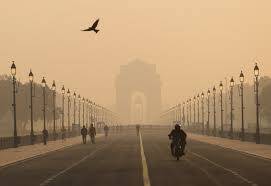
Air pollution has been a major concern in India, with the country being home to some of the most polluted cities in the world. The toxic air in cities like Delhi, Mumbai, and Kolkata has been linked to a range of health problems, including respiratory diseases, cardiovascular diseases, and even cancer. The World Health Organization (WHO) has estimated that air pollution is responsible for approximately 7 million premature deaths worldwide each year, with a significant proportion of these deaths occurring in India.
However, the government’s claim that there is no direct link between air pollution and deaths is not entirely unfounded. While air pollution is undoubtedly a major public health risk, the relationship between air pollution and health effects is complex and influenced by a range of factors. For example, an individual’s socioeconomic status, occupation, and lifestyle can all impact their exposure to air pollution and their susceptibility to its health effects. Additionally, the presence of other environmental and health risks, such as poor sanitation and inadequate healthcare, can also contribute to the overall burden of disease in India.
Despite these complexities, many experts argue that the government’s statement is misleading and underplays the significance of air pollution as a public health risk. Dr. Kumar, a leading environmental health expert, noted that “while it is true that the relationship between air pollution and health effects is complex, the evidence is clear that air pollution is a major contributor to ill health and premature death in India.” He added that “the government’s statement is a classic example of confusion and delay, which will only serve to undermine efforts to address this critical public health issue.”
The government’s claim has also been criticized for its lack of scientific basis. According to a recent study published in the journal Environmental Health Perspectives, exposure to poor air quality is responsible for approximately 1.2 million premature deaths in India each year. The study used advanced modeling techniques to estimate the health effects of air pollution in India and found that the majority of these deaths were due to cardiovascular and respiratory diseases.
Furthermore, the government’s statement has been seen as a attempt to deflect attention from the need for urgent action to address air pollution in India. The country has been criticized for its lack of effective policies and regulations to control air pollution, and the government’s statement has been seen as a way to avoid taking responsibility for the problem. As one environmental activist noted, “the government’s statement is a cop-out, and it will only serve to delay the implementation of much-needed measures to reduce air pollution and protect public health.”
In conclusion, the government’s claim that there is no link between air pollution and deaths is a controversial and misleading statement that has sparked a heated debate among environmentalists and health experts. While the relationship between air pollution and health effects is complex, the evidence is clear that air pollution is a major public health risk in India, and urgent action is needed to address this issue. The government must take responsibility for the problem and implement effective policies and regulations to reduce air pollution and protect public health.
The government’s statement has also raised questions about the role of the government in protecting public health and the environment. As one expert noted, “the government has a responsibility to protect the health and well-being of its citizens, and it must take a proactive approach to addressing the issue of air pollution.” This includes implementing policies and regulations to control air pollution, investing in clean energy and transportation, and educating the public about the risks of air pollution.
Ultimately, the government’s claim that there is no link between air pollution and deaths is a wake-up call for Indians to demand more action from their government to address this critical public health issue. As one activist noted, “we need to hold our government accountable for the health and well-being of our citizens, and we must demand that they take urgent action to reduce air pollution and protect public health.”
Source: https://x.com/PTI_News/status/1998360503333355572
About the Author