No link between air pollution & deaths: Govt
The Indian government has made a statement that has sparked controversy and debate among environmentalists and health experts. Minister of State for Health, Prataprao Jadhav, told the Rajya Sabha on Tuesday that there was no conclusive data in India to establish a direct link between deaths exclusively with air pollution. This statement has raised eyebrows, as it seems to contradict the widely accepted notion that air pollution is a significant contributor to mortality rates worldwide.
According to Jadhav, “The health effects of air pollution are a synergistic manifestation of factors, which include food habits, occupational habits, socioeconomic status, medical history, immunity, heredity, etc.” This implies that the government believes that air pollution is just one of many factors that contribute to health problems, and that it is not possible to isolate its impact on mortality rates.
The statement has been met with skepticism by many experts, who point out that there is a wealth of evidence from around the world that suggests a clear link between air pollution and premature death. The World Health Organization (WHO) estimates that nine out of ten people worldwide breathe polluted air, and that air pollution is responsible for seven million premature deaths every year. In India, the problem is particularly acute, with the country being home to some of the most polluted cities in the world.
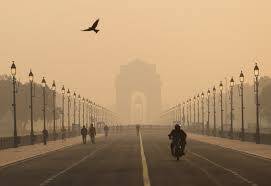
Delhi, the capital city, is a prime example. The city’s air quality is notoriously poor, with high levels of particulate matter, nitrogen dioxide, and other pollutants. The situation is so bad that the government has been forced to implement measures such as odd-even traffic restrictions and bans on construction activity to try and improve the air quality. Despite these efforts, the city’s residents continue to suffer from a range of health problems, including respiratory diseases, cardiovascular disease, and even cancer.
So, how can the government claim that there is no link between air pollution and deaths? The answer lies in the way that the data is being interpreted. While it is true that there are many factors that contribute to health problems, including those mentioned by Jadhav, it is also true that air pollution is a significant contributor to mortality rates. The problem is that the government is looking at the data in isolation, rather than as part of a broader picture.
For example, a study published in the journal Lancet found that air pollution was responsible for 1.2 million premature deaths in India in 2017. This is a staggering number, and one that suggests that air pollution is a major public health problem in the country. However, the government is arguing that this number is not conclusive, and that other factors such as diet, lifestyle, and socioeconomic status also play a role.
While it is true that these factors are important, it is also true that air pollution is a significant contributor to health problems. The government’s statement seems to be downplaying the impact of air pollution, and this has raised concerns among environmentalists and health experts. They argue that the government is not taking the problem seriously enough, and that more needs to be done to address the issue.
So, what can be done to address the problem of air pollution in India? The first step is to acknowledge the scale of the problem, and to recognize the link between air pollution and mortality rates. This requires a concerted effort from the government, as well as from individuals and organizations. Some possible solutions include increasing the use of clean energy, improving fuel efficiency, and implementing policies to reduce emissions.
The government can also take steps to improve the air quality in cities, such as Delhi. This could include measures such as increasing the number of green spaces, improving waste management, and reducing the number of vehicles on the road. Individuals can also make a difference, by making choices such as using public transport, carpooling, or driving electric vehicles.
In conclusion, the government’s statement that there is no link between air pollution and deaths is a controversial one. While it is true that there are many factors that contribute to health problems, it is also true that air pollution is a significant contributor to mortality rates. The government needs to take the problem seriously, and to take concrete steps to address it. This requires a concerted effort from all stakeholders, including the government, individuals, and organizations.
Source: https://x.com/PTI_News/status/1998360503333355572
About the Author