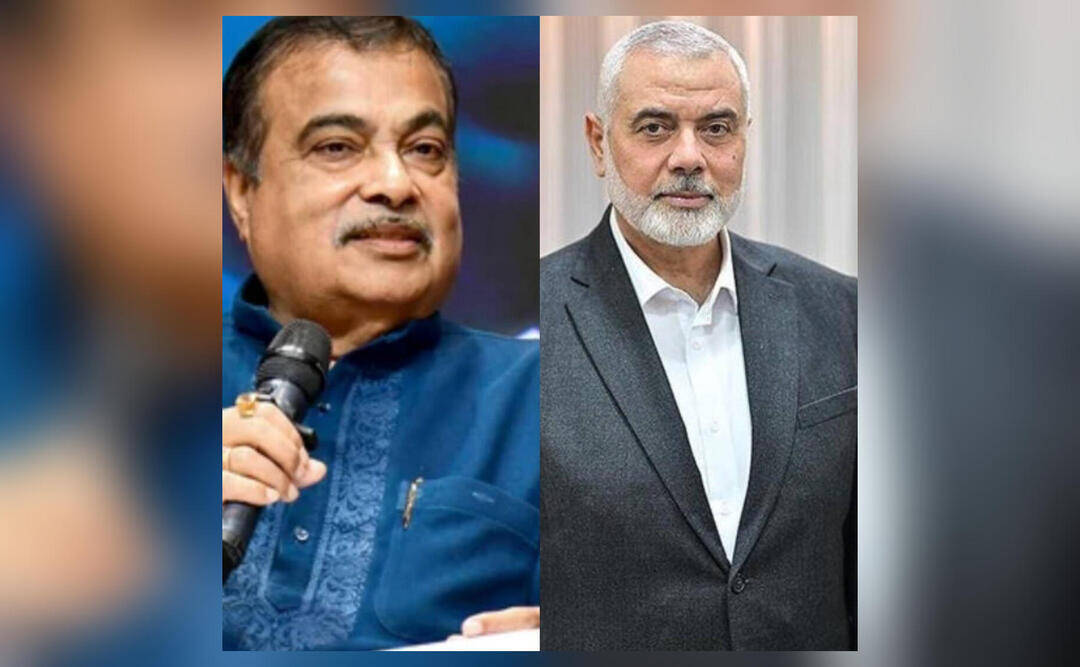
Nitin Gadkari says he met Hamas leader Ismail Haniyeh hours before his murder in Iran
In a shocking revelation, Union Minister Nitin Gadkari disclosed that he had met with Hamas political chief Ismail Haniyeh in Tehran, just hours before the latter’s assassination in 2024. The meeting took place when both Gadkari and Haniyeh were in attendance at the inauguration of Masoud Pezeshkian, a significant event that brought together various dignitaries from around the world.
According to Gadkari, after attending the ceremony, he returned to his hotel, unaware of the dramatic events that were about to unfold. It was only later, when the Indian ambassador informed him that they would have to leave immediately due to the assassination of Ismail Haniyeh, that Gadkari became aware of the shocking turn of events.
The revelation by Gadkari has sent shockwaves across the globe, as it highlights the intricate web of international relations and the complex dynamics at play in the region. The fact that a high-ranking Indian minister had met with the Hamas leader just hours before his murder raises several questions about the circumstances surrounding the assassination and the potential implications for India’s relations with Iran and other countries in the region.
Ismail Haniyeh, the political chief of Hamas, was a key figure in the Palestinian Islamist movement, and his assassination has been widely condemned by various countries and organizations. The incident has also sparked a heated debate about the role of external actors, including Israel and the United States, in the region and their potential involvement in the assassination.
Gadkari’s meeting with Haniyeh has been seen as a significant development, as it underscores the growing ties between India and various countries in the Middle East. In recent years, India has been actively engaging with countries in the region, including Iran, Saudi Arabia, and the United Arab Emirates, as part of its efforts to strengthen economic and strategic partnerships.
The meeting between Gadkari and Haniyeh is also significant in the context of India’s relations with Palestine. India has traditionally been a strong supporter of the Palestinian cause, and the meeting between the two leaders highlights the country’s continued commitment to the Palestinian people.
However, the assassination of Haniyeh has also raised concerns about the safety and security of Indian dignitaries traveling abroad. The fact that Gadkari was in close proximity to the assassination and had to be evacuated from the country highlights the risks and challenges faced by Indian leaders when engaging with foreign leaders and attending international events.
As the investigation into the assassination of Ismail Haniyeh continues, the international community is watching with bated breath to see how the situation unfolds. The revelation by Gadkari has added a new dimension to the story, and it remains to be seen how India will respond to the developments and what implications it will have for the country’s relations with Iran and other countries in the region.
In conclusion, the meeting between Nitin Gadkari and Ismail Haniyeh, just hours before the latter’s assassination, is a significant development that highlights the complex dynamics of international relations. As the situation continues to unfold, it is essential to monitor the developments closely and assess the potential implications for India and the region.
About the Author