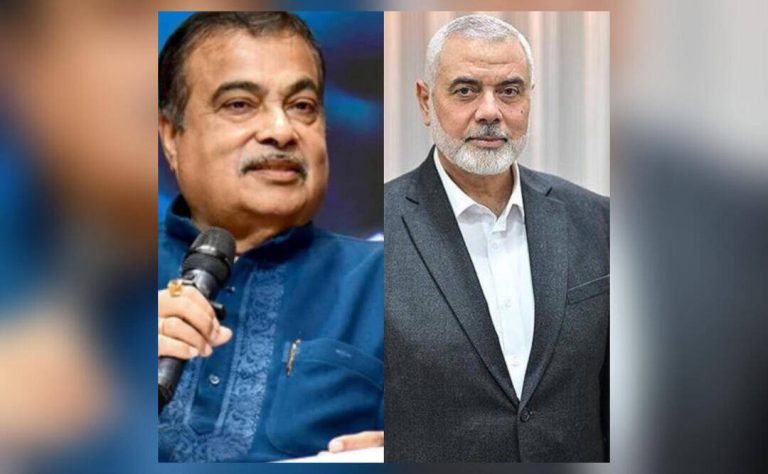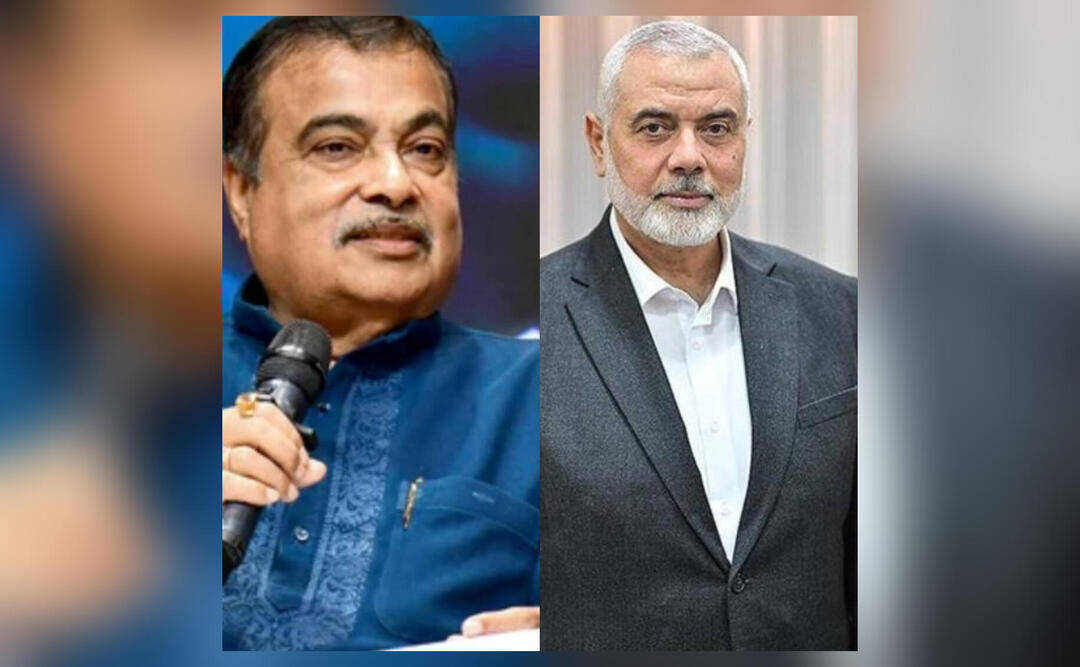
Nitin Gadkari says he met Hamas leader Ismail Haniyeh hours before his murder in Iran
In a shocking revelation, Union Minister Nitin Gadkari has disclosed that he met Hamas political chief Ismail Haniyeh in Tehran, just hours before the latter’s assassination in 2024. This statement has sent shockwaves across the globe, given the sensitive nature of the meeting and the subsequent events that unfolded.
According to Gadkari, he and Haniyeh were both in attendance at the inauguration of Masoud Pezeshkian, an event that brought together dignitaries from various countries. Following the ceremony, Gadkari claimed that he returned to his hotel, unaware of the events that would soon transpire. It was only later, when the Indian ambassador approached him, that he was informed of the assassination and the need for their immediate departure from the country.
This revelation raises several questions about the circumstances surrounding Haniyeh’s murder and the potential implications for international relations. The fact that Gadkari, a high-ranking Indian official, was in close proximity to the Hamas leader just hours before his death has sparked widespread curiosity and speculation.
The assassination of Ismail Haniyeh has been attributed to various parties, with some pointing fingers at Israeli intelligence agency Mossad, while others suggest the involvement of the Iranian Revolutionary Guard Corps (IRGC). The exact circumstances of his death remain shrouded in mystery, with different accounts emerging from various sources.
Gadkari’s meeting with Haniyeh has been seen as a significant development, given the complex geopolitical dynamics at play. India’s relations with Iran and Israel are multifaceted, with the country maintaining diplomatic ties with both nations. The fact that an Indian minister was in close proximity to a prominent Hamas leader, who was subsequently assassinated, has raised eyebrows and sparked debate about the potential consequences for India’s foreign policy.
The Indian government has thus far maintained a cautious stance on the matter, with officials declining to comment on the specifics of Gadkari’s meeting with Haniyeh. However, the revelation has sparked a flurry of activity in diplomatic circles, with analysts and experts attempting to decipher the implications of this unexpected development.
As the investigation into Haniyeh’s assassination continues, the international community remains on high alert, with many countries closely monitoring the situation. The fact that a high-ranking Indian official was involved, albeit indirectly, has added a new layer of complexity to the already delicate situation.
In the midst of this chaos, one thing is clear: the assassination of Ismail Haniyeh has sent shockwaves across the globe, with far-reaching consequences for international relations and global security. As the world struggles to come to terms with this unexpected development, one cannot help but wonder what other secrets lie hidden beneath the surface, waiting to be uncovered.
The revelation of Gadkari’s meeting with Haniyeh serves as a poignant reminder of the intricate web of international relations, where diplomacy and geopolitics often intersect in unexpected ways. As the world navigates this complex landscape, it is essential to remain vigilant and informed, keeping a close eye on developments as they unfold.
In conclusion, the statement by Union Minister Nitin Gadkari has shed new light on the events surrounding the assassination of Ismail Haniyeh, highlighting the complex and often secretive nature of international diplomacy. As the world continues to grapple with the implications of this development, one thing is certain: the assassination of the Hamas leader will have far-reaching consequences, shaping the course of global events in the days and weeks to come.
About the Author