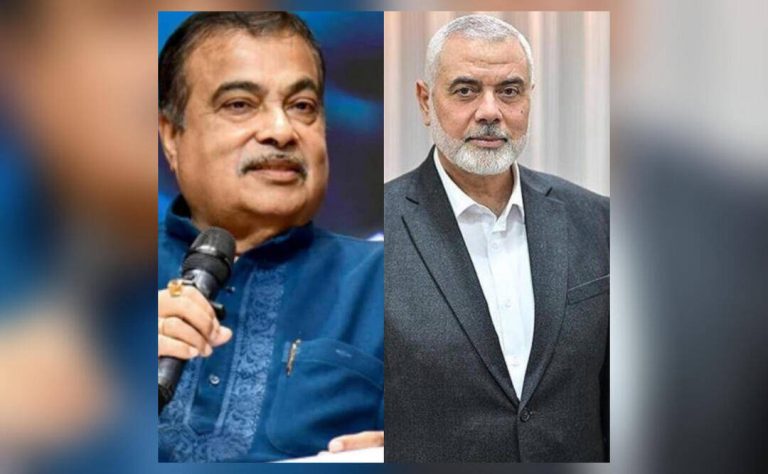
Nitin Gadkari says he met Hamas leader Ismail Haniyeh hours before his murder in Iran
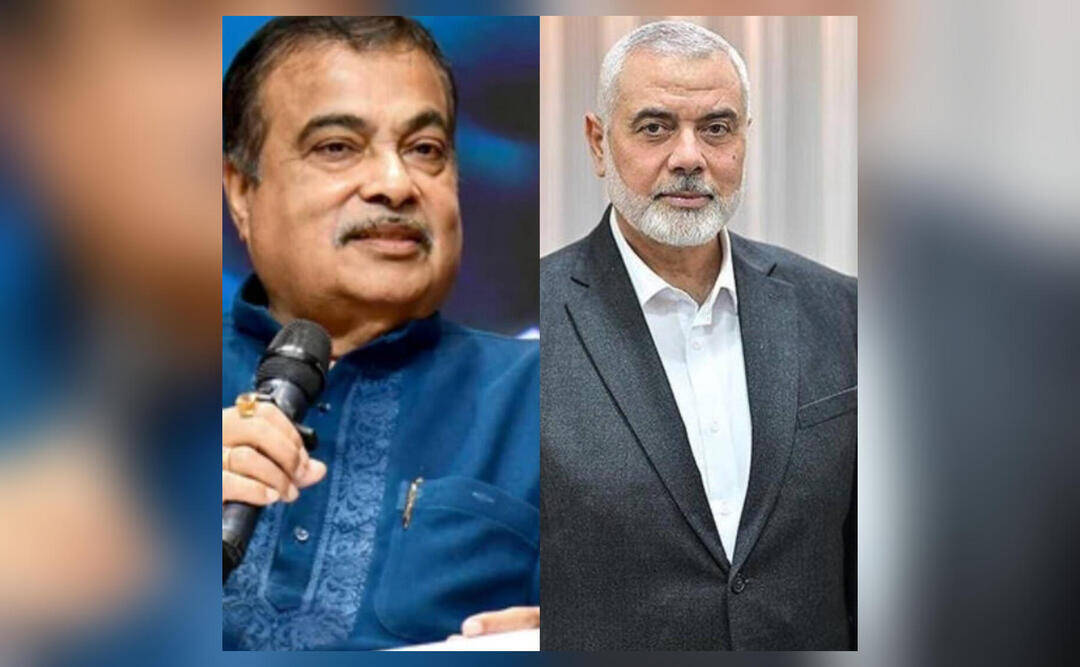
In a shocking revelation, Union Minister Nitin Gadkari has disclosed that he met Hamas political chief Ismail Haniyeh in Tehran, Iran, just hours before the latter’s assassination. This unexpected encounter took place in 2024, when both Gadkari and Haniyeh were in attendance at the inauguration of Masoud Pezeshkian, a prominent Iranian figure. The meeting has sent shockwaves across the globe, given the sensitive nature of Haniyeh’s position and the geopolitical implications of his murder.
According to Gadkari, the meeting was a chance encounter, and the two leaders engaged in a cordial conversation. After the inauguration ceremony, Gadkari returned to his hotel, unaware of the events that were about to unfold. It was only later, when the Indian ambassador informed him of the assassination, that Gadkari realized the gravity of the situation. The ambassador reportedly told Gadkari that they would have to leave Iran immediately, given the sensitive circumstances surrounding Haniyeh’s murder.
The assassination of Ismail Haniyeh has sparked widespread outrage and condemnation, with many pointing fingers at Israel’s Mossad and the Iranian Revolutionary Guard Corps (IRGC). The killing has significant implications for the Middle East peace process and has raised concerns about the escalating tensions between Israel and Iran. As the investigation into Haniyeh’s murder continues, the international community is watching with bated breath, eager to uncover the truth behind this shocking event.
Gadkari’s revelation has added a new layer of complexity to the story, given his position as a senior Indian minister. The fact that he met Haniyeh just hours before the assassination has raised questions about the nature of their conversation and whether Gadkari had any inkling of the danger that Haniyeh faced. While Gadkari has not disclosed any details about their conversation, it is clear that the meeting was a significant one, given the circumstances.
The meeting between Gadkari and Haniyeh is also significant because of the Indian government’s stance on the Israel-Palestine conflict. India has traditionally maintained a neutral position on the issue, but in recent years, there have been signs of a shift in its stance. The meeting between Gadkari and Haniyeh may be seen as an attempt to reach out to the Palestinian leadership and to strengthen India’s ties with the region.
As the investigation into Haniyeh’s murder continues, the international community is eagerly awaiting more information about the circumstances surrounding his death. The fact that Gadkari met Haniyeh just hours before the assassination has added a new twist to the story, and it remains to be seen how this will impact the ongoing probe. One thing is certain, however: the assassination of Ismail Haniyeh has sent shockwaves across the globe, and its implications will be felt for a long time to come.
In the wake of Haniyeh’s murder, there have been widespread calls for calm and restraint. The international community has urged all parties involved to exercise caution and to avoid any actions that could escalate the situation further. As the region teeters on the brink of chaos, it is essential that leaders from across the globe come together to find a peaceful solution to the conflict.
The meeting between Gadkari and Haniyeh may be seen as a small step in this direction, given the Indian government’s efforts to reach out to the Palestinian leadership. However, much more needs to be done to address the underlying issues that have led to the current crisis. The international community must come together to find a lasting solution to the Israel-Palestine conflict, one that takes into account the concerns and aspirations of all parties involved.
As the world watches with bated breath, one thing is clear: the assassination of Ismail Haniyeh has marked a significant turning point in the Middle East peace process. The events that unfold in the coming days and weeks will be crucial in determining the course of history in the region. For now, the revelation that Nitin Gadkari met Haniyeh just hours before his murder serves as a poignant reminder of the complexities and challenges that lie ahead.
In conclusion, the meeting between Nitin Gadkari and Ismail Haniyeh has added a new layer of complexity to the story of Haniyeh’s assassination. As the investigation continues, the international community is eagerly awaiting more information about the circumstances surrounding his death. The Indian government’s stance on the Israel-Palestine conflict will be closely watched, given the country’s traditional neutrality on the issue. One thing is certain, however: the assassination of Ismail Haniyeh has marked a significant turning point in the Middle East peace process, and its implications will be felt for a long time to come.
About the Author