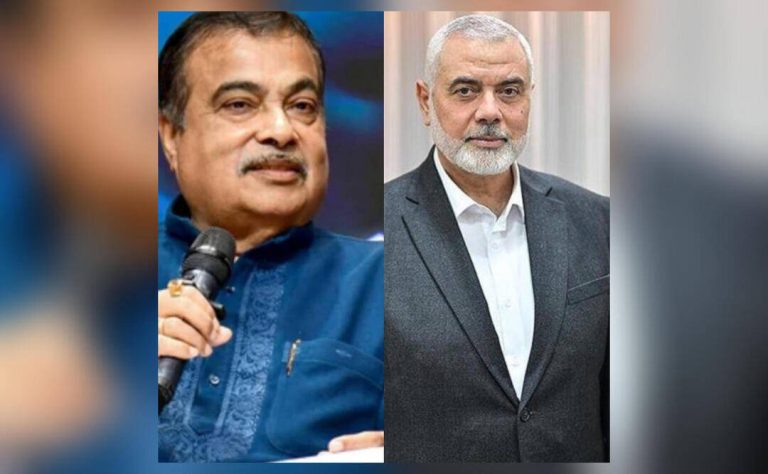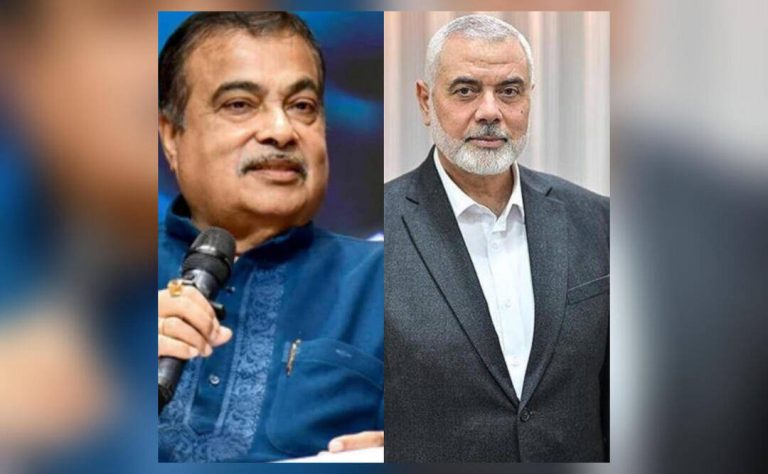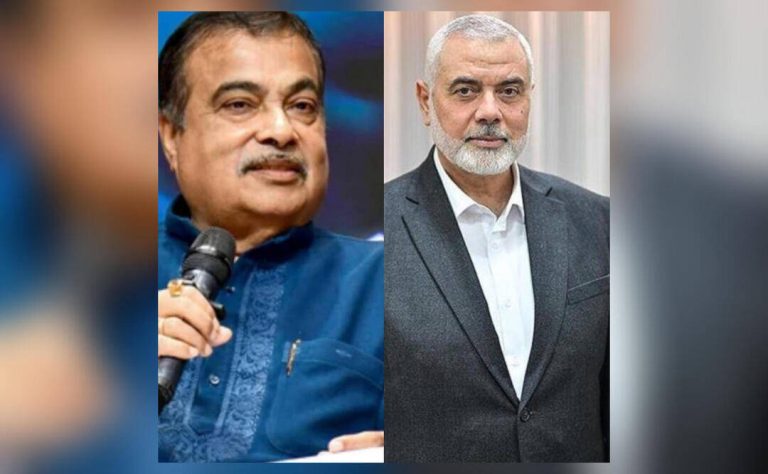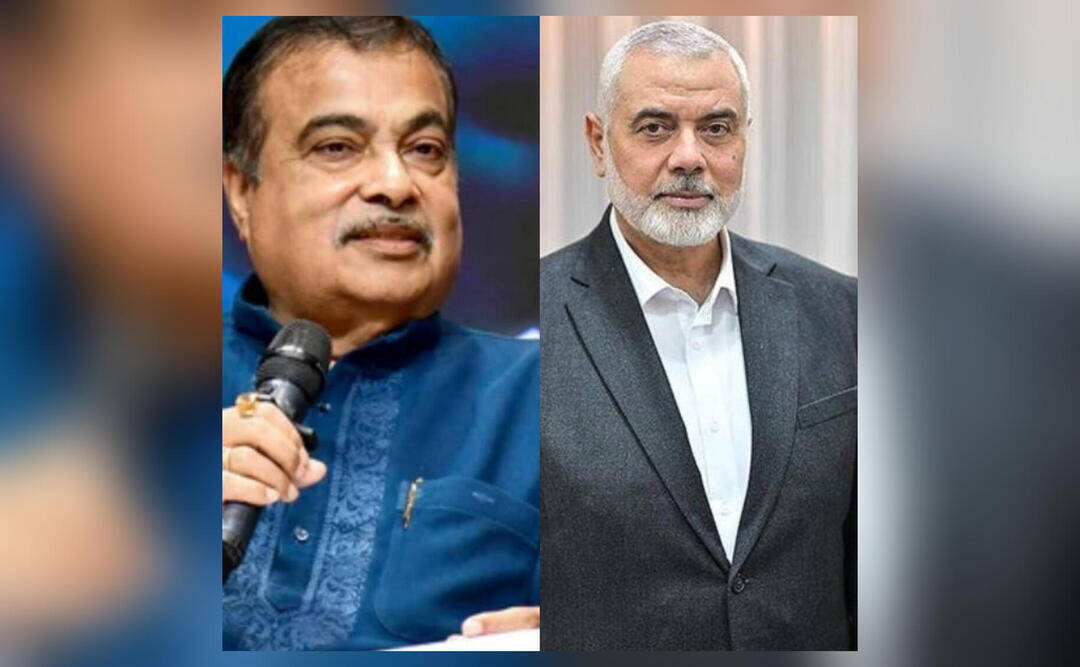
Nitin Gadkari says he met Hamas leader Ismail Haniyeh hours before his murder in Iran
In a shocking revelation, Union Minister Nitin Gadkari has disclosed that he met Hamas political chief Ismail Haniyeh in Tehran, just hours before the latter’s assassination in 2024. The two leaders were both in attendance at the inauguration of Masoud Pezeshkian, and it was during this event that they had a brief meeting. According to Gadkari, after the ceremony, he returned to his hotel, unaware of the dramatic turn of events that would unfold later that day.
As reported by various news outlets, Ismail Haniyeh was assassinated in Iran, sending shockwaves throughout the international community. The circumstances surrounding his death are still shrouded in mystery, with various factions and countries being implicated in the incident. The Israeli Mossad and the Iranian Revolutionary Guard Corps (IRGC) are among those being suspected of involvement in the assassination.
Gadkari, who was in Iran to attend the inauguration ceremony, revealed that he had a meeting with Haniyeh during the event. He stated that after the ceremony, he returned to his hotel, where he was later informed by the Indian ambassador that they would have to leave the country immediately due to the assassination. This sudden turn of events must have been a shocking and unsettling experience for Gadkari, who had just met with the Hamas leader hours before his murder.
The revelation of Gadkari’s meeting with Haniyeh has significant implications, given the sensitive nature of the relationship between India and the Middle East. As a prominent leader in the Indian government, Gadkari’s interactions with foreign dignitaries are closely watched and analyzed. The fact that he met with Haniyeh, a key figure in the Palestinian Islamist movement, just hours before his assassination, raises questions about the circumstances surrounding the event.
It is worth noting that the Indian government has not officially commented on the nature of Gadkari’s meeting with Haniyeh. However, the fact that the two leaders met in person suggests that there may have been some level of diplomatic engagement or discussion between India and Hamas. This could have significant implications for India’s foreign policy in the region, particularly given the country’s historically complex relationships with both Israel and the Palestinian Authority.
The assassination of Ismail Haniyeh has sparked a wave of condemnation and outrage throughout the Middle East and beyond. The incident has been widely denounced as a cowardly and provocative act, and has raised concerns about the escalating tensions in the region. As the investigation into Haniyeh’s murder continues, it is likely that more details will emerge about the circumstances surrounding his death, including the potential involvement of various countries and factions.
In the meantime, the revelation of Gadkari’s meeting with Haniyeh serves as a poignant reminder of the complex and often treacherous nature of international diplomacy. The fact that a prominent Indian leader was in close proximity to a key figure in the Palestinian Islamist movement, just hours before his assassination, highlights the delicate and often unpredictable nature of global politics.
As the world continues to grapple with the implications of Haniyeh’s murder, it is essential to consider the broader context of the incident. The Middle East is a region marked by deep-seated conflicts, complex alliances, and competing interests. The assassination of a key figure like Haniyeh has the potential to destabilize the region further, and could have far-reaching consequences for global security and diplomacy.
In conclusion, the revelation of Nitin Gadkari’s meeting with Ismail Haniyeh hours before his assassination in Iran is a significant development that highlights the complex and often sensitive nature of international diplomacy. As the investigation into Haniyeh’s murder continues, it is essential to consider the broader implications of the incident, and to work towards promoting greater understanding and cooperation between nations.
About the Author