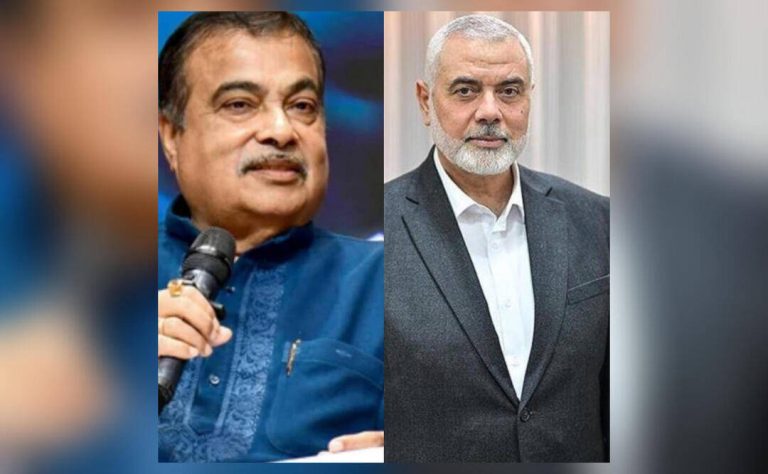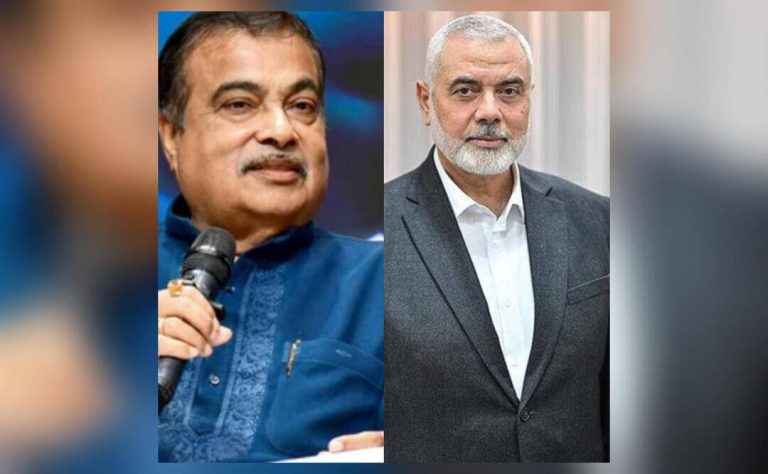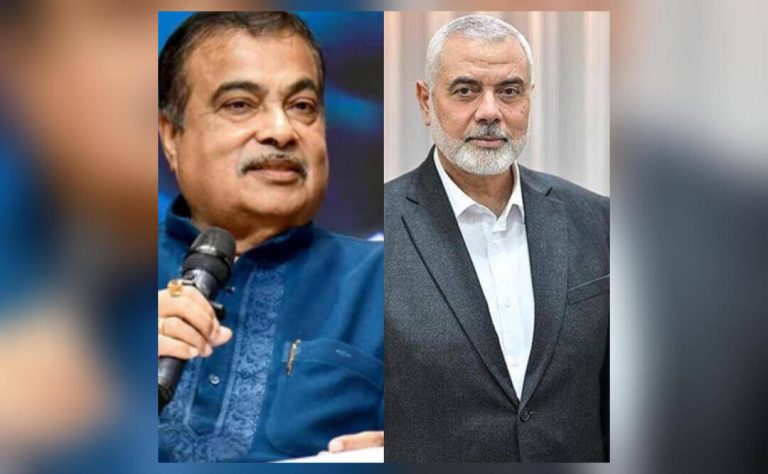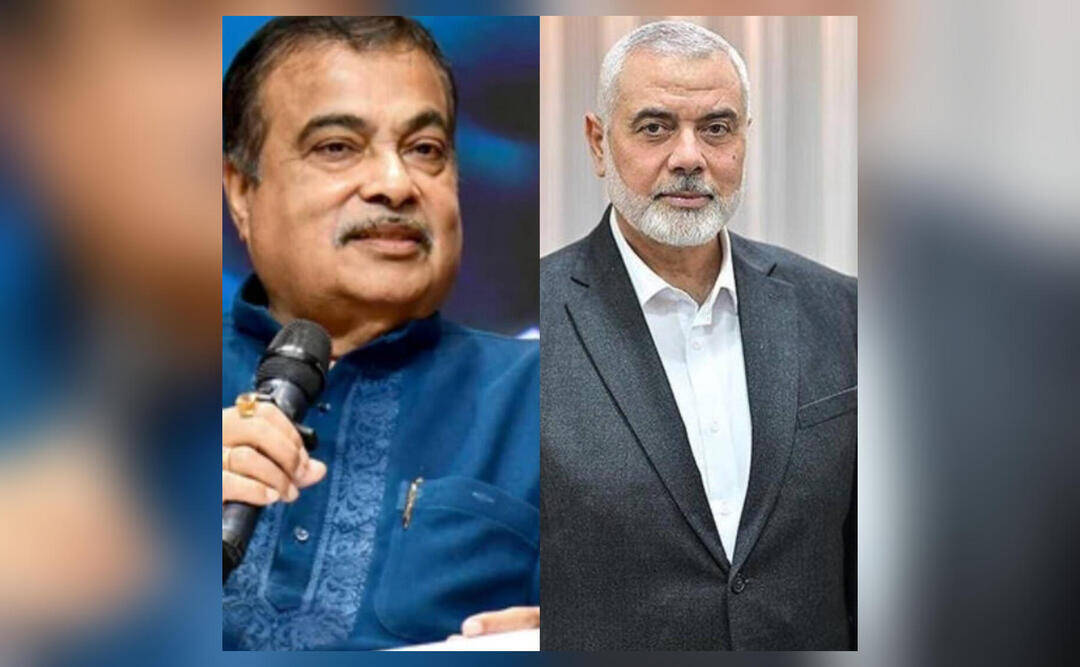
Nitin Gadkari says he met Hamas leader Ismail Haniyeh hours before his murder in Iran
In a shocking revelation, Union Minister Nitin Gadkari has disclosed that he met with Hamas political chief Ismail Haniyeh in Tehran, just hours before the latter’s assassination in 2024. The meeting took place during the inauguration ceremony of Masoud Pezeshkian, where both Gadkari and Haniyeh were in attendance. This surprising encounter has sent shockwaves across the globe, given the sensitive nature of Haniyeh’s position and the geopolitics involved.
According to Gadkari, after attending the inauguration ceremony, he returned to his hotel, unaware of the impending danger that loomed over Haniyeh. It was only later, when the Indian ambassador informed him of the assassination, that Gadkari realized the gravity of the situation. The ambassador instructed Gadkari that they would have to leave Iran immediately, in light of the recent developments.
The assassination of Ismail Haniyeh has sparked widespread outrage and condemnation, with many pointing fingers at Israel’s Mossad and the Iranian Revolutionary Guard Corps (IRGC). The incident has escalated tensions in the region, with many countries calling for calm and restraint. The fact that a high-ranking Indian minister like Nitin Gadkari was in close proximity to the events, albeit unknowingly, has added a new dimension to the story.
Gadkari’s meeting with Haniyeh, although brief, is significant in the context of India’s diplomatic relations with the Middle East. As a Union Minister, Gadkari’s interactions with foreign leaders are closely watched and analyzed, given India’s strategic interests in the region. The fact that he met with Haniyeh, a prominent figure in the Palestinian resistance movement, suggests that India is keen to engage with all stakeholders in the region, regardless of their political affiliations.
The inauguration of Masoud Pezeshkian, which served as the backdrop for Gadkari’s meeting with Haniyeh, was a significant event in itself. Pezeshkian, an Iranian politician, has been a key figure in the country’s political landscape, and his inauguration was attended by dignitaries from across the globe. The presence of both Gadkari and Haniyeh at the ceremony highlights the complex web of relationships that exist between countries and political movements in the Middle East.
As the investigation into Haniyeh’s assassination continues, many questions remain unanswered. The role of Mossad and the IRGC, in particular, has come under scrutiny, with many speculating about their involvement in the killing. The fact that Gadkari was in Tehran at the time of the assassination, and met with Haniyeh just hours before his death, has raised eyebrows, although there is no suggestion of any wrongdoing on the part of the Indian minister.
In the aftermath of the assassination, the international community has called for restraint and calm. The United States, the European Union, and other major powers have issued statements condemning the killing, while also urging all parties to avoid escalating the situation further. India, too, has expressed its concern over the developments, with the Ministry of External Affairs issuing a statement calling for peace and stability in the region.
As the situation continues to unfold, one thing is clear: the assassination of Ismail Haniyeh has significant implications for the Middle East and beyond. The fact that Nitin Gadkari, a senior Indian minister, was in close proximity to the events, has added a new dimension to the story, highlighting the complex and often fraught nature of international diplomacy.
In conclusion, the revelation that Nitin Gadkari met with Hamas leader Ismail Haniyeh hours before his assassination in Iran has sent shockwaves across the globe. The incident has highlighted the sensitive nature of geopolitics in the Middle East, where alliances and rivalries can shift quickly. As the investigation into Haniyeh’s killing continues, one thing is clear: the international community must come together to promote peace and stability in the region, and to prevent further escalation of the conflict.
About the Author