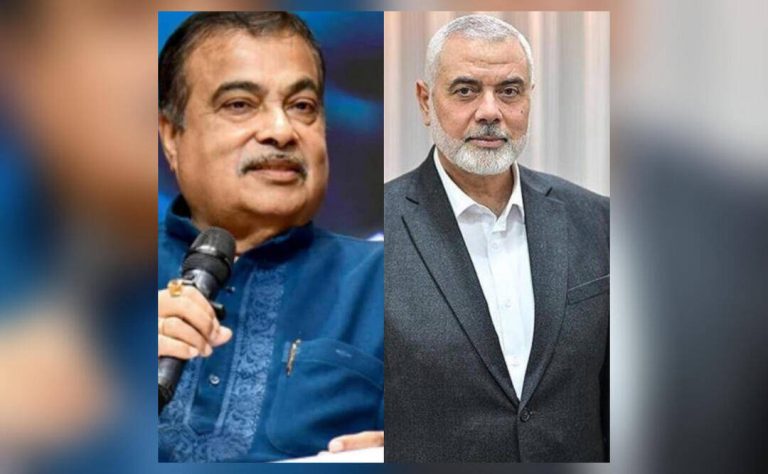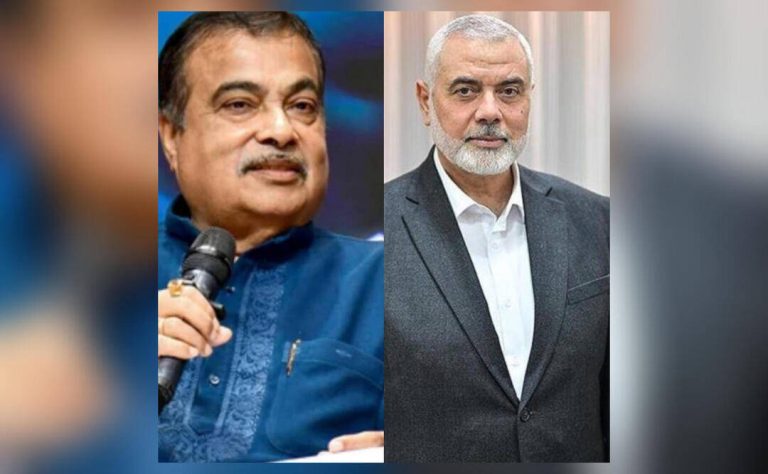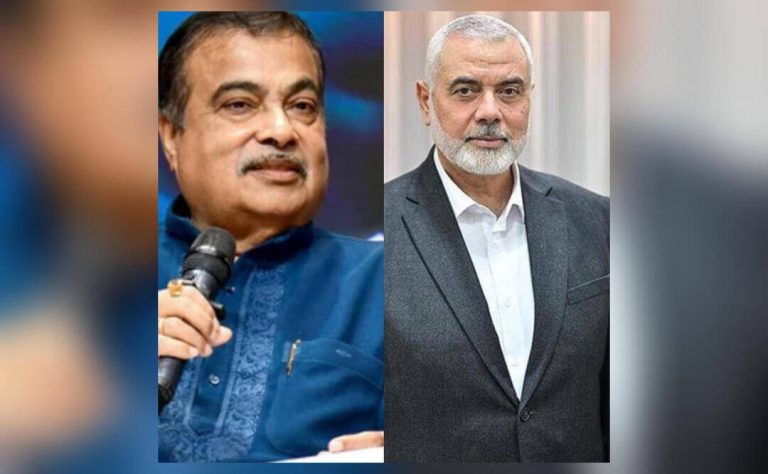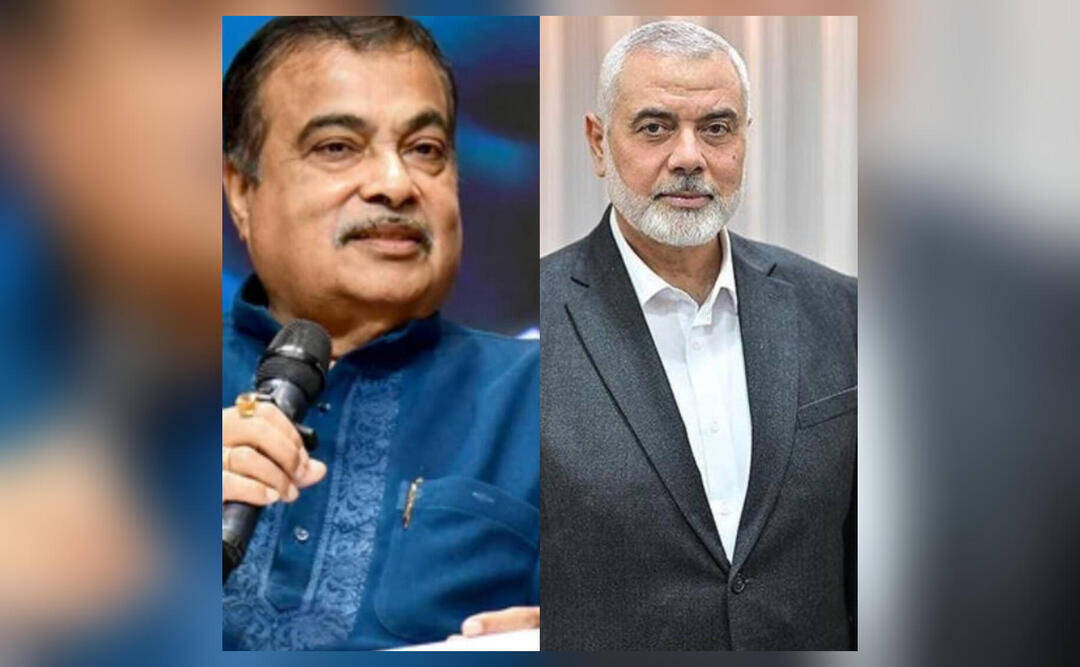
Nitin Gadkari says he met Hamas leader Ismail Haniyeh hours before his murder in Iran
In a shocking revelation, Union Minister Nitin Gadkari has disclosed that he met Hamas political chief Ismail Haniyeh in Tehran, just hours before the latter was assassinated in 2024. This extraordinary encounter took place when both Gadkari and Haniyeh were in Iran to attend the inauguration of Masoud Pezeshkian, a significant event that brought together various dignitaries from around the world.
According to Gadkari, after attending the ceremony, he returned to his hotel, unaware of the dramatic events that were about to unfold. It was only later, when the Indian ambassador contacted him, that he learned about the shocking assassination of Ismail Haniyeh. The ambassador informed Gadkari that they would have to leave the country immediately due to the sensitive situation that had arisen.
This astonishing claim by Nitin Gadkari has sent shockwaves throughout the diplomatic and political circles, as it highlights the complex web of relationships between different nations and organizations. The fact that a high-ranking Indian minister was in close proximity to a prominent Hamas leader, just before his murder, raises several questions about the nature of their meeting and the circumstances surrounding the assassination.
Ismail Haniyeh, as the political chief of Hamas, was a key figure in the Palestinian Islamist movement, which has been at the forefront of the Israeli-Palestinian conflict. His assassination in Iran has been attributed to the Israeli intelligence agency Mossad, although the exact circumstances of his killing are still shrouded in mystery.
Gadkari’s revelation has also sparked interest in the Indian government’s stance on the Israeli-Palestinian conflict. While India has traditionally maintained good relations with both Israel and Palestine, this incident has brought to the forefront the complexities of its diplomatic relationships in the region.
The meeting between Gadkari and Haniyeh, although brief, is significant in the context of India’s growing engagement with the Middle East. In recent years, India has been strengthening its ties with various countries in the region, including Iran, Israel, and the Gulf states. This has been driven by a desire to enhance its energy security, promote trade and investment, and counterbalance the influence of other major powers in the region.
However, this increased engagement also poses challenges for India, as it navigates the complex and often contentious relationships between different nations and organizations in the Middle East. The assassination of Ismail Haniyeh, and Gadkari’s meeting with him just hours before, highlights the risks and uncertainties involved in this delicate balancing act.
As the investigation into Haniyeh’s assassination continues, it remains to be seen how this incident will impact India’s relationships with the countries involved. The Indian government will need to carefully calibrate its response to the situation, taking into account its own strategic interests and the sensitivities of its partners in the region.
In conclusion, the revelation by Nitin Gadkari about his meeting with Ismail Haniyeh has added a new dimension to the complex and intrigue-ridden world of international diplomacy. As the situation continues to unfold, it will be important to monitor the developments closely and assess their implications for India’s relationships with the countries involved.
About the Author