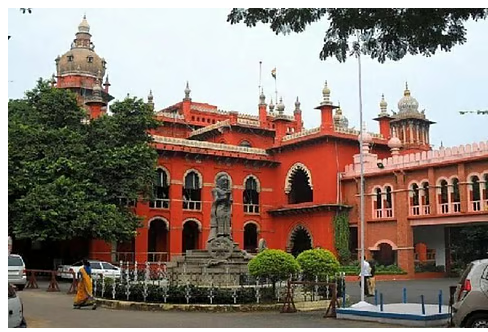
HC Rejects TN Govt’s Plea Against Lighting Holy ‘Deep’ Near Dargah
The Madras High Court on Thursday made a significant ruling, dismissing the Tamil Nadu government’s appeal against the court’s order directing the lighting of a holy ‘deep’ near a dargah. The court’s decision was straightforward, stating, “The appeal, filed with an ulterior motive, is dismissed.” This development comes after the diya was not lit at the designated place following the court’s initial direction, and was instead lit at another spot.
The case revolves around a long-standing dispute between devotees and the state government regarding the lighting of a holy ‘deep’ near the dargah located on the Thiruparankundram hill. The Thiruparankundram hill is a site of significant religious importance, with both Hindu and Muslim places of worship situated in close proximity. The dispute has been ongoing for several years, with devotees seeking to light the holy ‘deep’ as part of their religious rituals, while the government has expressed concerns over potential communal tensions and law and order issues.
The Madras High Court’s initial order to allow the lighting of the holy ‘deep’ near the dargah was based on the principles of religious freedom and the right to practice one’s faith without undue interference from the state. The court’s decision was seen as a significant victory for the devotees, who had been seeking to perform their religious rituals without hindrance.
However, the Tamil Nadu government filed an appeal against the court’s order, citing concerns over public order and safety. The government argued that allowing the lighting of the holy ‘deep’ near the dargah could lead to communal tensions and potentially disrupt the peace in the area. The government’s appeal was seen as an attempt to override the court’s initial order and restrict the devotees’ right to practice their faith.
The Madras High Court’s dismissal of the government’s appeal is a significant development in the case. By stating that the appeal was filed with an “ulterior motive,” the court has essentially accused the government of attempting to undermine the devotees’ right to religious freedom. The court’s decision sends a strong message that the state cannot interfere with the fundamental rights of citizens, including the right to practice one’s faith, without a valid and compelling reason.
The court’s ruling also highlights the importance of upholding the principles of secularism and religious tolerance in India. The country’s constitution guarantees the right to freedom of religion, and it is the duty of the state to ensure that this right is protected and respected. By dismissing the government’s appeal, the Madras High Court has reaffirmed its commitment to upholding the constitution and protecting the rights of all citizens, regardless of their religious affiliation.
The implications of the court’s ruling are significant, not just for the devotees involved in the case but also for the broader community. The decision sets a precedent for similar cases involving disputes over religious rituals and practices. It also sends a message to state governments that they cannot use concerns over public order and safety as a pretext to restrict the fundamental rights of citizens.
In conclusion, the Madras High Court’s dismissal of the Tamil Nadu government’s appeal against the lighting of a holy ‘deep’ near a dargah is a significant victory for the devotees and a reaffirmation of the principles of religious freedom and secularism. The court’s decision highlights the importance of upholding the constitution and protecting the rights of all citizens, regardless of their religious affiliation. As the case continues to unfold, it will be interesting to see how the state government responds to the court’s ruling and whether the devotees will finally be able to light the holy ‘deep’ near the dargah without hindrance.
About the Author