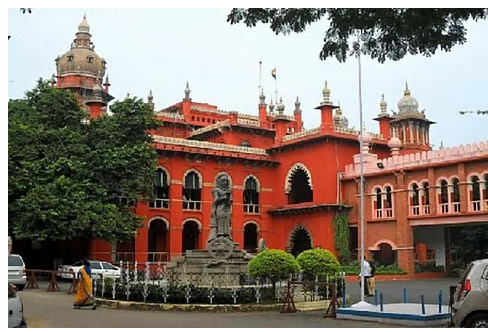
HC Rejects TN Govt’s Plea Against Lighting Holy ‘Deep’ Near Dargah
In a significant development, the Madras High Court on Thursday dismissed the Tamil Nadu government’s appeal against the court’s order directing to light a holy ‘deep’ near a dargah. The court’s decision comes after the state government had challenged the earlier order, citing concerns over potential law and order issues. However, the court was not convinced by the government’s arguments and observed that the appeal was filed with an ulterior motive.
The controversy began when a group of devotees approached the court seeking permission to light a holy ‘deep’ near the dargah located at the foot of the Thiruparankundram hill in Tamil Nadu. The court had earlier directed the authorities to allow the devotees to light the ‘deep’ near the dargah, but the order was not complied with. Instead, the ‘deep’ was lit at a different location, away from the dargah.
The Tamil Nadu government had appealed against the court’s order, arguing that lighting the ‘deep’ near the dargah could lead to law and order issues and disturb the peace in the area. However, the court was not convinced by the government’s arguments and dismissed the appeal, observing that it was filed with an ulterior motive.
The court’s decision is significant, as it upholds the right of devotees to practice their faith and perform their religious rituals without any hindrance. The lighting of the holy ‘deep’ is an essential part of Hindu rituals, and the court’s order ensures that devotees can perform this ritual without any obstruction.
The case highlights the ongoing tensions between different religious groups in India, where the rights of one community are often seen as being in conflict with the rights of another. The court’s decision, however, sends a clear message that the rights of all citizens, regardless of their religion, must be respected and protected.
The Thiruparankundram hill is a sacred site for both Hindus and Muslims, with a temple dedicated to Lord Murugan located at the top of the hill and a dargah located at the foot of the hill. The area has been a flashpoint for communal tensions in the past, with both communities claiming rights over the site.
The court’s decision is also significant, as it comes at a time when there are growing concerns over the erosion of secular values in India. The country’s secular fabric is under threat, with rising intolerance and bigotry threatening to tear apart the social fabric. The court’s decision, however, reinforces the principles of secularism and upholds the rights of all citizens, regardless of their religion.
In its order, the court observed that the appeal filed by the Tamil Nadu government was not genuine and was motivated by ulterior considerations. The court said that the government’s arguments were not convincing and that the appeal was an attempt to thwart the court’s earlier order.
The court’s decision has been welcomed by Hindu groups, who see it as a victory for their right to practice their faith. The Tamil Nadu government, however, has not commented on the court’s decision, and it is unclear whether it will appeal the order in a higher court.
The case highlights the complexities of India’s secular landscape, where the rights of different communities often come into conflict. The court’s decision, however, reinforces the principles of secularism and upholds the rights of all citizens, regardless of their religion.
In conclusion, the Madras High Court’s decision to reject the Tamil Nadu government’s appeal against lighting a holy ‘deep’ near a dargah is a significant development that upholds the rights of devotees to practice their faith. The court’s decision sends a clear message that the rights of all citizens, regardless of their religion, must be respected and protected. The case highlights the ongoing tensions between different religious groups in India, but the court’s decision reinforces the principles of secularism and ensures that the rights of all citizens are protected.
About the Author